The best approach to jewelry for humid weather is not to search for one supposedly weatherproof metal. Read each piece by construction, surface finish, base metal, attached materials, and how it contacts the body. In hot, humid conditions, lighter pieces with less trapped contact area can be easier to manage, while sweat, sunscreen, fragrance, salt, and damp storage make careful after-wear handling more important. No material category alone proves that a piece is waterproof, sweat-proof, tarnish-proof, hypoallergenic, or suitable for continuous wear.
Humidity changes the environment around jewelry, but it does not tell you exactly how a particular piece will behave. A solid metal ring, a gold-surfaced silver earring, a plated mixed-material pendant, and a pearl necklace may all look equally polished in a photograph while requiring different choices on a hot day.
What humidity changes—and what it does not prove
Humidity means more moisture is present in the air. On the body, hot humid weather can also mean more perspiration, longer periods of damp skin, sunscreen or lotion transfer, and slower evaporation beneath broad rings, cuffs, collars, or close-fitting components. These conditions can increase the amount of moisture, salt, oil, and cosmetic residue sitting against a jewelry surface.
For silver, the Canadian Conservation Institute explains that tarnish is primarily associated with reaction to sulfur-containing gases and that higher relative humidity can accelerate tarnishing when those pollutants are present. Humidity therefore matters, but it is not a stand-alone explanation for every change of color. Nor does discoloration automatically reveal whether you are seeing tarnish, residue, wear to a surface layer, corrosion of an underlying metal, or a reaction involving an attached material.
The same caution applies to the best jewelry for humid weather. A construction that performs well for one wearer, climate, or routine cannot automatically be promoted as universally sweat-proof or skin-safe. Individual skin response is separate from metal category, and the most vulnerable material in a mixed piece may determine how it should be worn and cared for.
How sweat affects jewelry
Understanding how sweat affects jewelry starts with what perspiration leaves behind. Sweat contains water and salts and can mix with skin oils, sunscreen, fragrance, makeup, dust, and other residues. When water evaporates, those residues may remain around posts, chain links, ring interiors, clasps, textured recesses, and the junctions between materials.
Repeated contact creates a more complicated surface environment. Salts can retain moisture, cosmetic films can collect dirt, and plated or coated high-contact areas can experience friction because the surface layer and the metal beneath it are not the same thing.
GIA advises keeping jewelry away from potentially damaging chemicals and notes that everyday products such as lotion, hairspray, perfume, and other cosmetics can affect precious metals and may be especially problematic for delicate or porous gem materials. In humid conditions, reducing unnecessary chemical contact is often more useful than trying to clean aggressively afterward.
Read the whole construction, not just the metal color
Useful choices about jewelry materials for humid climates start with disclosure. Ask five separate questions: What is the structural metal? Is there a surface layer or coating? What finish has been applied? Are gems or other materials attached? How are those components fixed together?
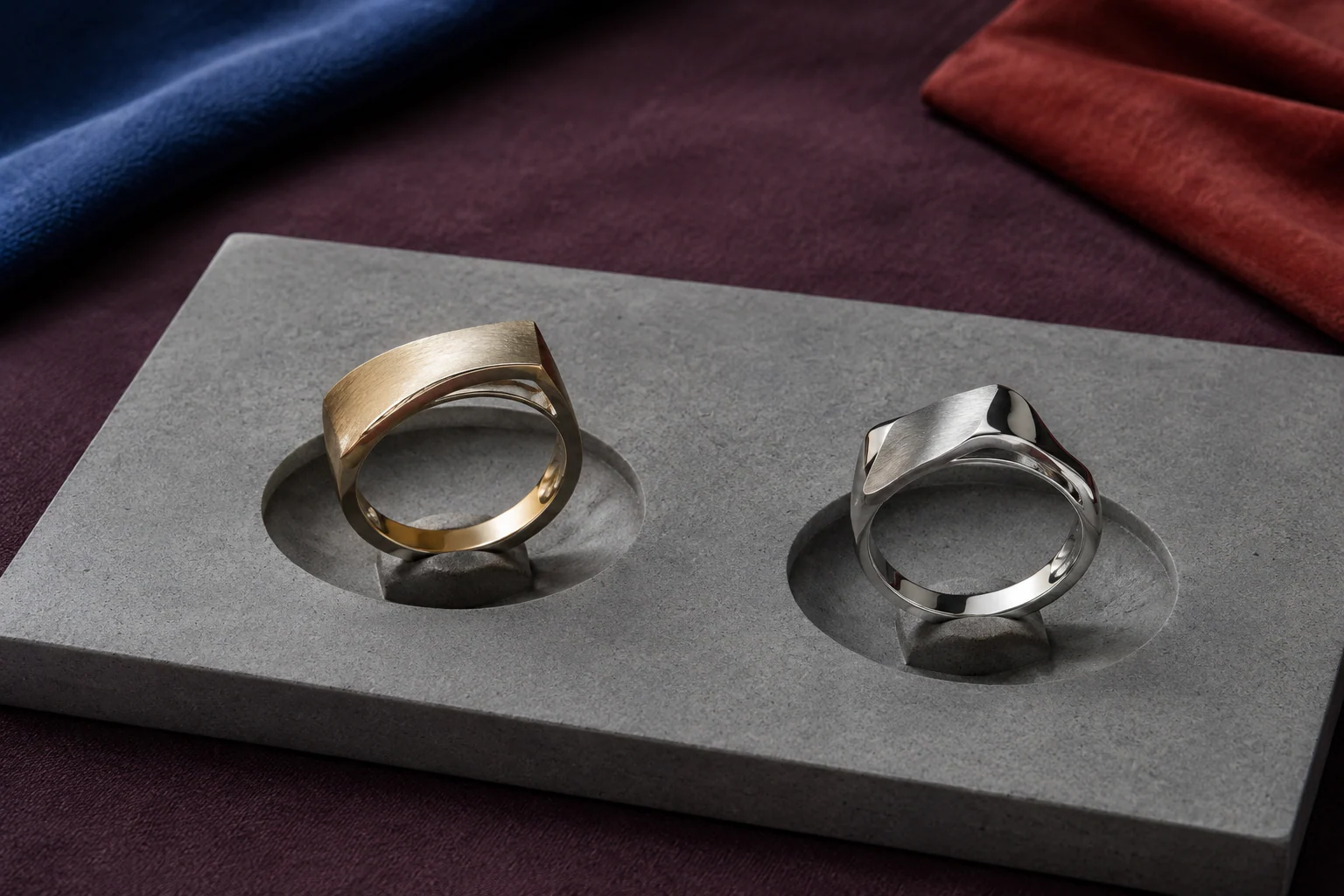
The U.S. Federal Trade Commission’s Jewelry Guides emphasize truthful representation of precious-metal content and surface applications. That matters for care because a gold-colored item is not a material description. Terms such as sterling silver, gold vermeil, gold-filled, plated, and solid gold describe materially different constructions.
Sterling silver
Sterling silver is a silver alloy rather than pure silver. In humid environments, do not treat tarnish as proof that a piece is defective or that humidity alone caused the change. Silver tarnishing is strongly connected to sulfur-containing gases, and higher humidity can increase the reaction rate when those pollutants are present. For silver jewelry in humid weather, useful habits are to limit lingering sweat and cosmetic residue, allow the piece to dry after wear, and avoid storing it while damp.
If tarnish becomes the primary issue, use the dedicated Switchroom silver-cleaning guide rather than escalating immediately to abrasive polishing, chemical dips, or home electrochemical methods.
Gold vermeil
Gold vermeil is not simply another name for any gold-colored plating. Under FTC category guidance, vermeil refers to a gold surface application over a sterling-silver base meeting specified compositional requirements. That layered construction is the relevant fact when considering gold vermeil in humid weather: the exterior gold surface and the silver beneath it should not be treated as one homogeneous material.
Heat, sweat, cosmetics, friction, and cleaning technique all interact with a surface layer over time. Avoid treating vermeil as universally waterproof or assigning it a guaranteed wear life. When detailed comparison of vermeil and gold-filled construction is the main question, continue with Gold Vermeil vs Gold Filled.
Gold-filled
Gold-filled jewelry also has a gold exterior associated with a different manufacturing construction from ordinary electroplating or vermeil. The useful humid-weather question is not whether the category is automatically “better,” but whether the maker clearly discloses the construction and gives care instructions for the complete piece.
Solid gold alloys
Solid gold jewelry is made from gold alloy throughout rather than relying on a thin exterior gold layer over another structural metal. Even so, “solid gold” does not mean pure gold, chemically invulnerable, universally skin-safe, or immune to surface change. Alloy composition, finish, solder, stones, settings, and wear conditions still matter.
Stainless steel
Stainless steel is a broad family of alloys rather than a promise that every finished jewelry piece can tolerate identical treatment. A plain steel component and a steel earring carrying a coating, adhesive, enamel, resin, stone, or another attached material may need different care.
Do not translate the word stainless into “waterproof,” “sweat-proof,” or “safe for sensitive skin.” Those are separate claims requiring separate proof.
Mixed-material and plated pieces
Mixed construction requires the most conservative reading. A piece can combine a base metal, surface plating, solder or mechanical joins, enamel, resin, stone, pearl, adhesive, textile, or intentionally oxidized sections. The strongest component does not determine the cleaning rule; the most vulnerable one often does.
If you cannot identify a coating, stone treatment, adhesive, or finish, stop before soaking, polishing, steaming, or placing the piece in an ultrasonic cleaner. Ask the maker or a qualified jewelry professional instead.
Choose a lighter, lower-friction edit
Good jewelry for tropical climates is partly a styling problem. When the air is hot and damp, you can reduce the amount of surface area that traps moisture against the body without abandoning visual interest.
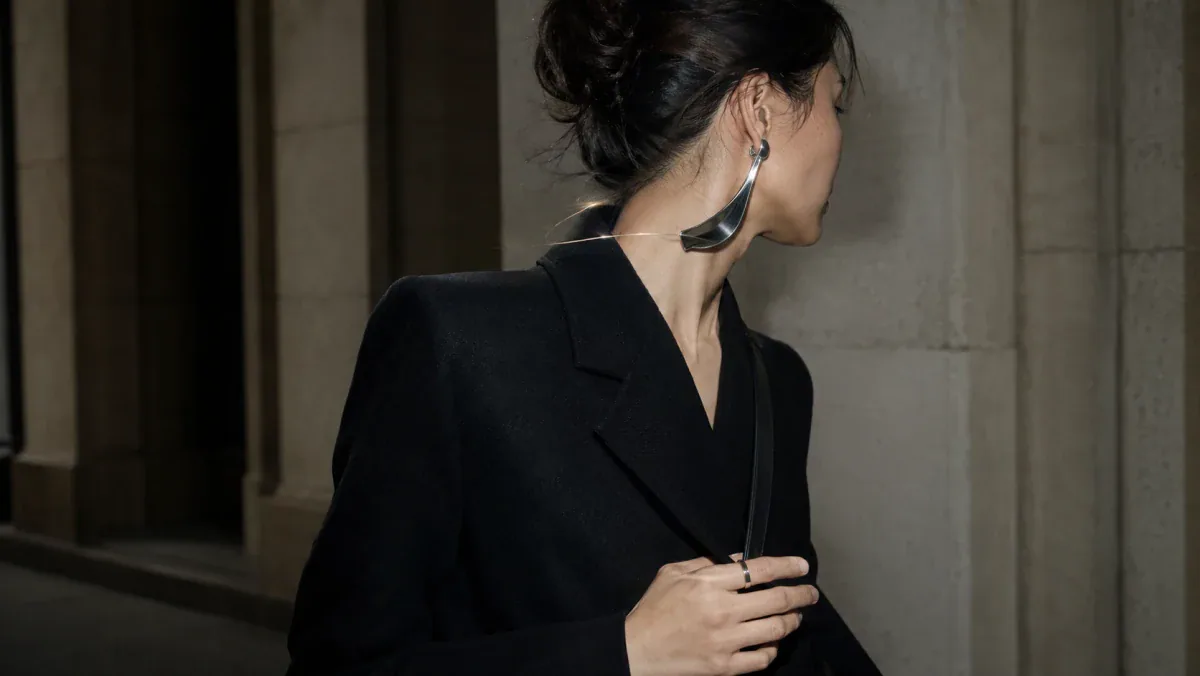
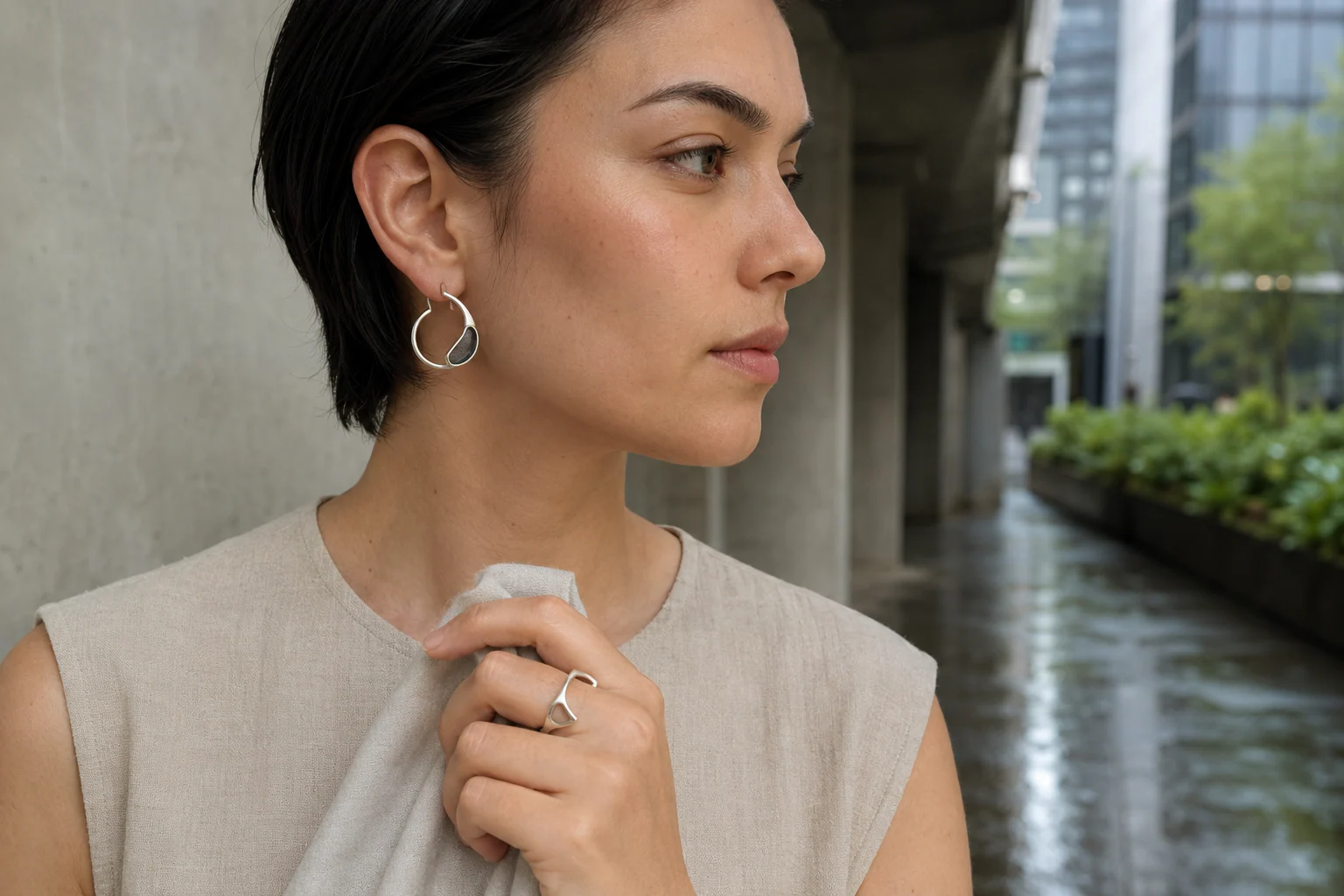
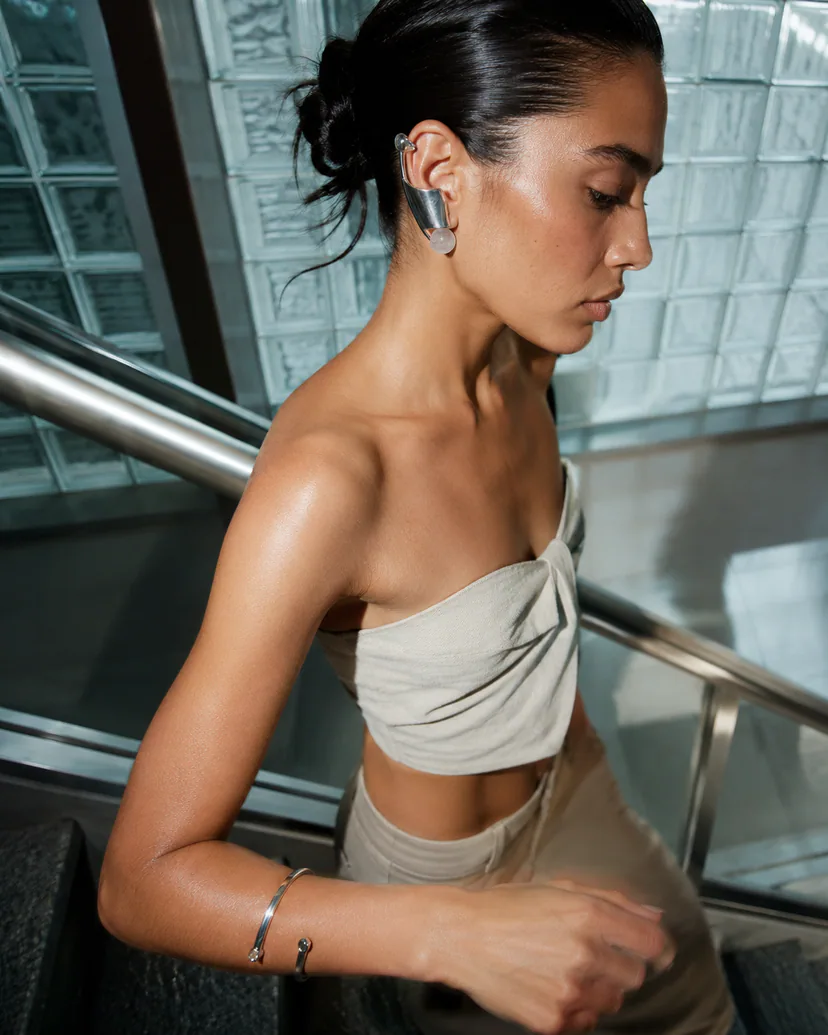
Think in terms of contact zones rather than simply “small” versus “large.” An airy sculptural earring can have strong visual presence while touching only the pierced lobe and closure. A broad rigid collar may create much more continuous skin contact. A single architectural ring can leave more exposed skin than several closely stacked bands. A pendant on an open neckline may move more freely than layers of chains compressed beneath a collar.
- Use one strong focal piece instead of automatically stacking several pieces in the same contact zone.
- Leave small areas of open skin between rings, bracelets, chains, or ear structures where the design allows.
- Watch for broad flat backs, tight cuffs, dense stacking, or heavy components that keep damp material pressed continuously against skin.
- Check that clasps, posts, receivers, hinges, and other load-bearing parts remain secure rather than choosing only by visual lightness.
Before a hot day: reduce unnecessary contact
Put fragrance, sunscreen, lotion, hair product, and makeup on before jewelry where practical, then allow those products time to settle or dry. This will not eliminate transfer, but it can reduce the amount of fresh product deposited directly onto a piece.
For travel, avoid making assumptions from destination alone. The phrase jewelry for tropical climates describes an environmental context, not a certified material class. A beach hotel, an air-conditioned office in Singapore, a rainy city commute, and a coastal dinner can expose the same jewelry to very different combinations of perspiration, seawater, pool chemicals, sunscreen, and storage conditions.
Jewelry care after sweating: a short routine
Effective jewelry care after sweating does not require an aggressive cleaning ritual after every wear. The aim is to remove loose surface residue, inspect the piece, and let moisture escape before storage.
- Remove carefully. Take the piece off over a stable surface. Do not pull an earring by a decorative element or open a clasp by twisting the wrong component.
- Inspect. Check posts, receivers, clasps, hinges, settings, joins, and plated high-contact edges. If something has become loose, stop before cleaning.
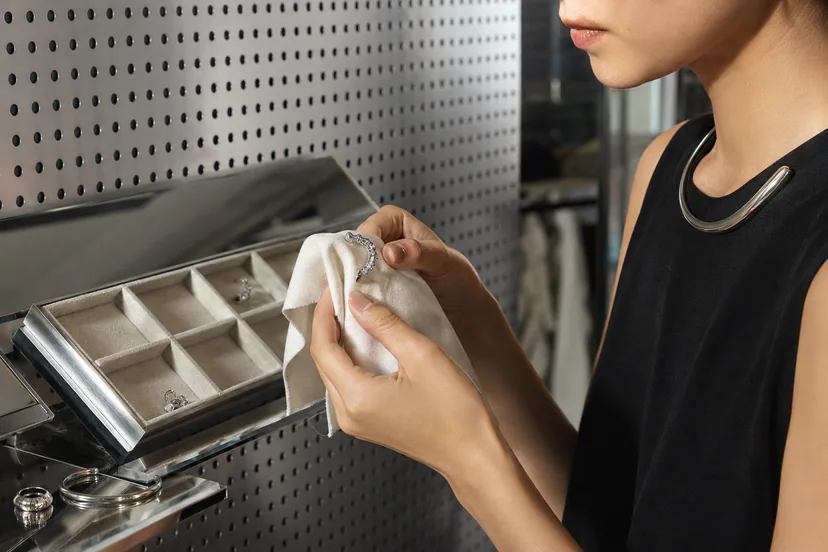
- Wipe conservatively. A clean, soft, dry, non-abrasive cloth is a sensible first step for many stable surfaces. Do not assume that polishing harder is better.
- Escalate only when construction supports it. Water, mild soap, polishing products, and other methods depend on every material and attachment in the piece. Follow maker-specific instructions.
- Dry completely. Give seams, recesses, hinges, chain links, piercings, and closures enough open-air time to dry before the piece goes into a pouch, tray, box, or travel case.
If summer residue has become a real cleaning job involving salt, sunscreen, stones, mixed materials, or unknown surfaces, use How to Clean Jewelry After Summer rather than applying one universal bath or polishing method.
How to store jewelry in humid weather
The central rule for how to store jewelry in humid weather is straightforward: do not put it away wet. A closed case is useful for limiting dust and contact, but it should not become a container for trapped perspiration, seawater, damp cloth, or cosmetic residue.
Once a piece is fully dry, separate it from harder or more abrasive pieces so surfaces do not rub together. Keep chains from tangling, protect delicate components from heavier pieces, and avoid storing jewelry directly beside perfume, cosmetics, damp bathroom items, or materials whose compatibility is unknown.
Canadian Conservation Institute guidance for silver emphasizes dry conditions and protection from tarnishing pollutants. The transferable everyday principle is to reduce persistent dampness and contaminant exposure rather than repeatedly correcting surface change later.
For a complete home system covering separation, friction, movement, visibility, and location, continue with How to Store Jewelry at Home.
A quick hot-day or pre-trip checklist
- Can you identify the structural metal, surface treatment, and attached materials?
- Does the maker provide care instructions for the complete piece?
- Are posts, clasps, hinges, settings, and joins secure?
- Can you reduce dense stacking or broad skin contact without losing the styling idea?
- Have sunscreen, perfume, lotion, and hair products had time to settle before jewelry goes on?
- Will you have a clean, dry place to remove and air the jewelry after wear?
- Are delicate pieces separated from harder items during travel?
- If swimming, heavy sweating, or uncertain chemical exposure is likely, would leaving the most vulnerable piece behind be the simpler choice?
Construction first, climate second
There is no single winner among jewelry materials for humid climates. Sterling silver has its own tarnish chemistry. Gold vermeil and other surfaced constructions need their layers respected. Gold-filled and solid gold alloys still require accurate disclosure and appropriate care. Stainless steel is not a universal performance guarantee. Mixed-material pieces must be handled according to their most vulnerable component.
Humidity is therefore best treated as a signal to pay closer attention: reduce unnecessary chemical contact, choose lower-friction styling when useful, wipe away post-wear residue conservatively, inspect load-bearing parts, and store pieces only after they are fully dry.
Read next
- How to Clean Jewelry After Summer: Sunscreen, Sweat, Salt, and Storage
- How to Clean Silver Jewelry: A Material-First Care Guide
- How to Store Jewelry at Home: Build a Drawer That Protects and Inspires
- Gold Vermeil vs Gold Filled
Sources & further reading
- U.S. Federal Trade Commission — Guides for the Jewelry, Precious Metals, and Pewter Industries
- U.S. Federal Trade Commission — Jewelry Guides for consumers
- Canadian Conservation Institute — Understanding how silver tarnishes
- Canadian Conservation Institute — Silver: Care and Tarnish Removal
- Gemological Institute of America — Tips on Caring for Jewelry