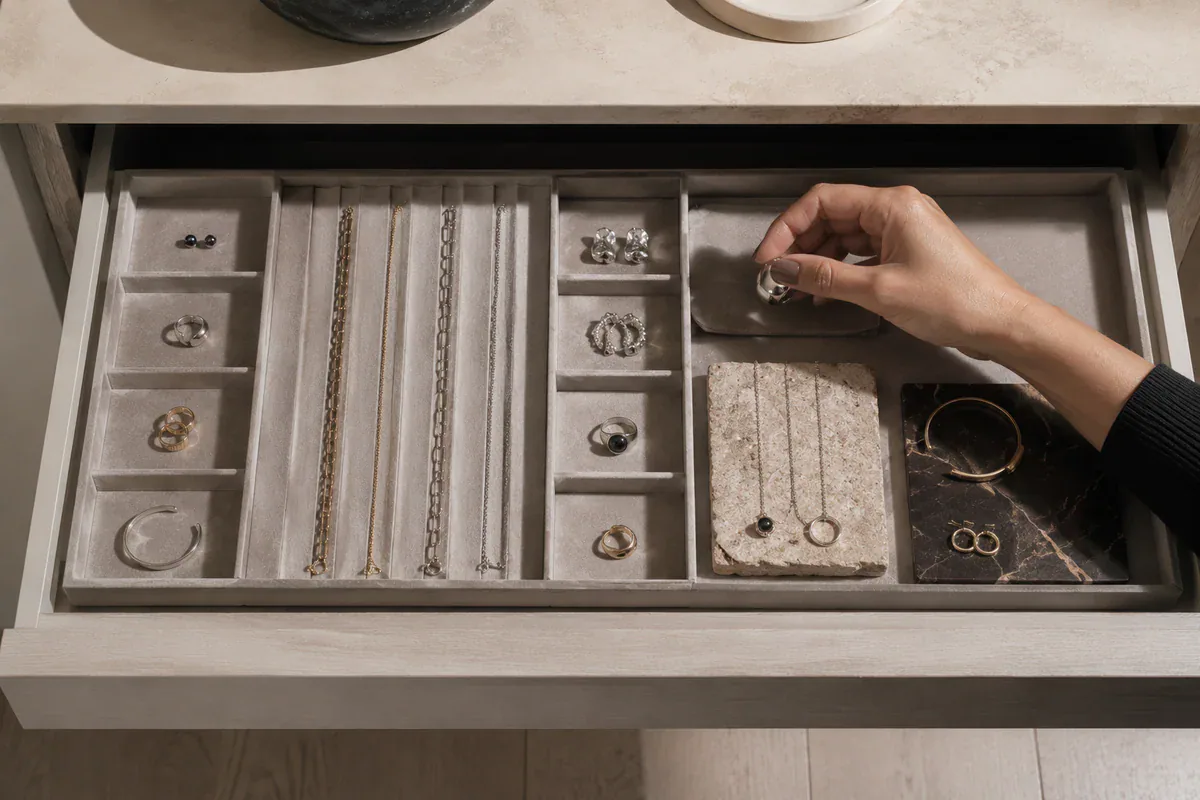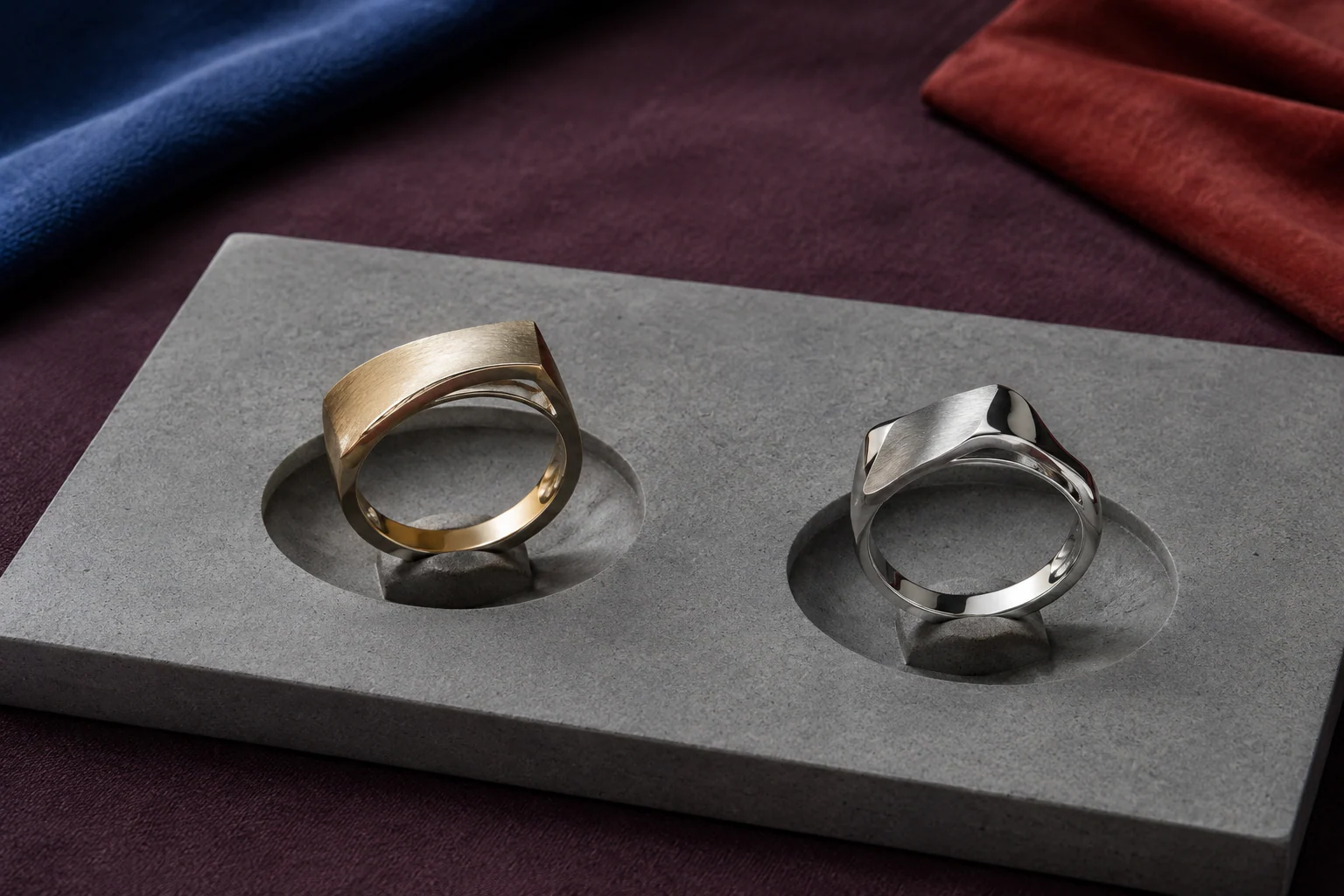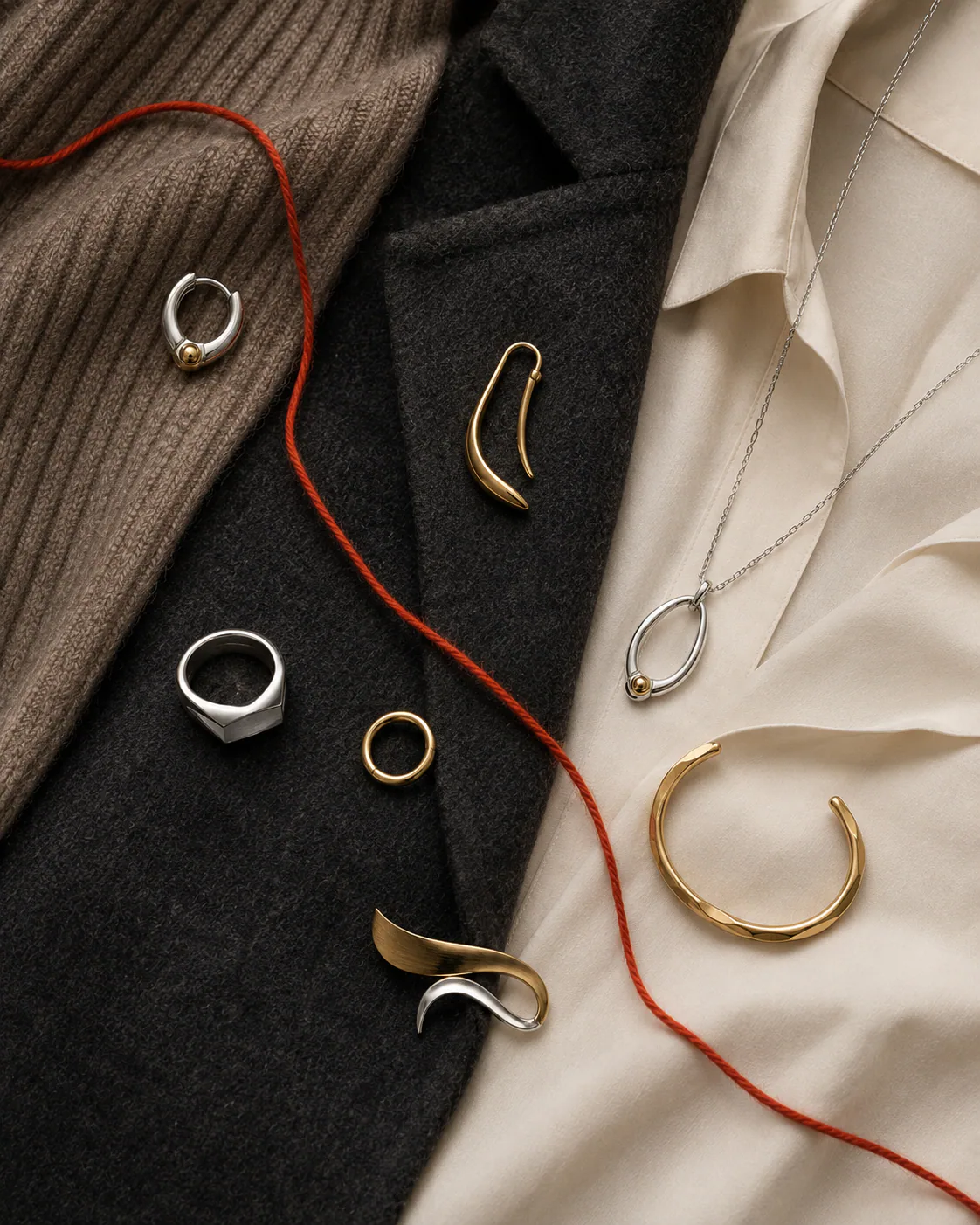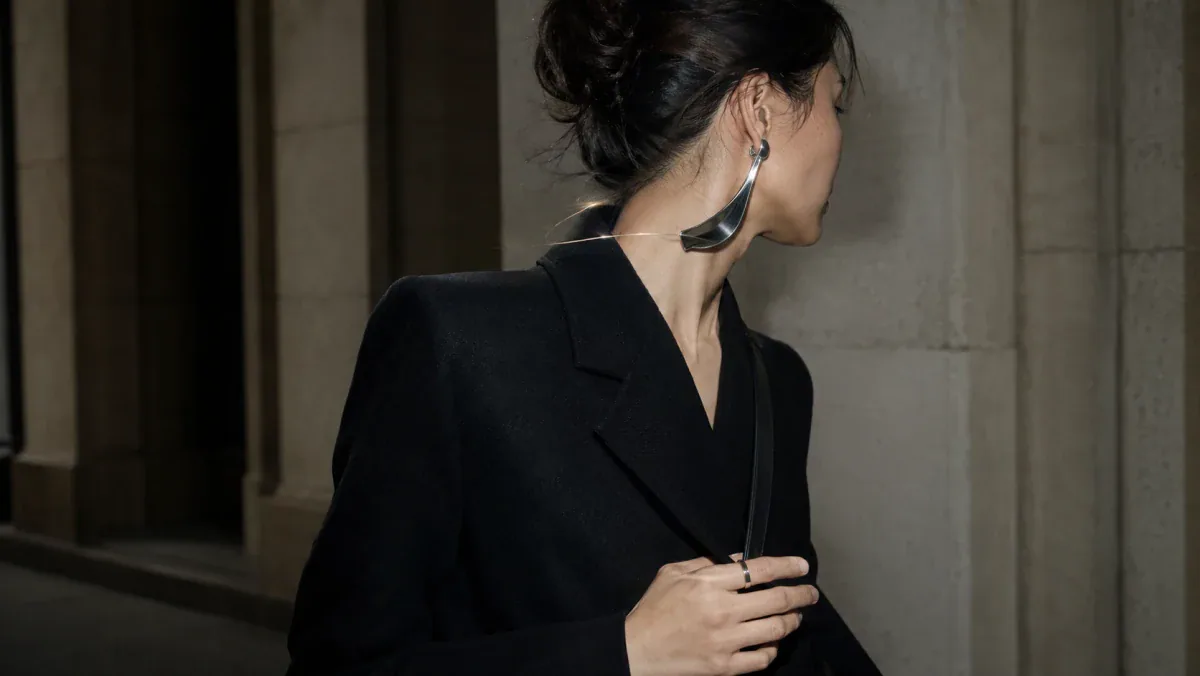
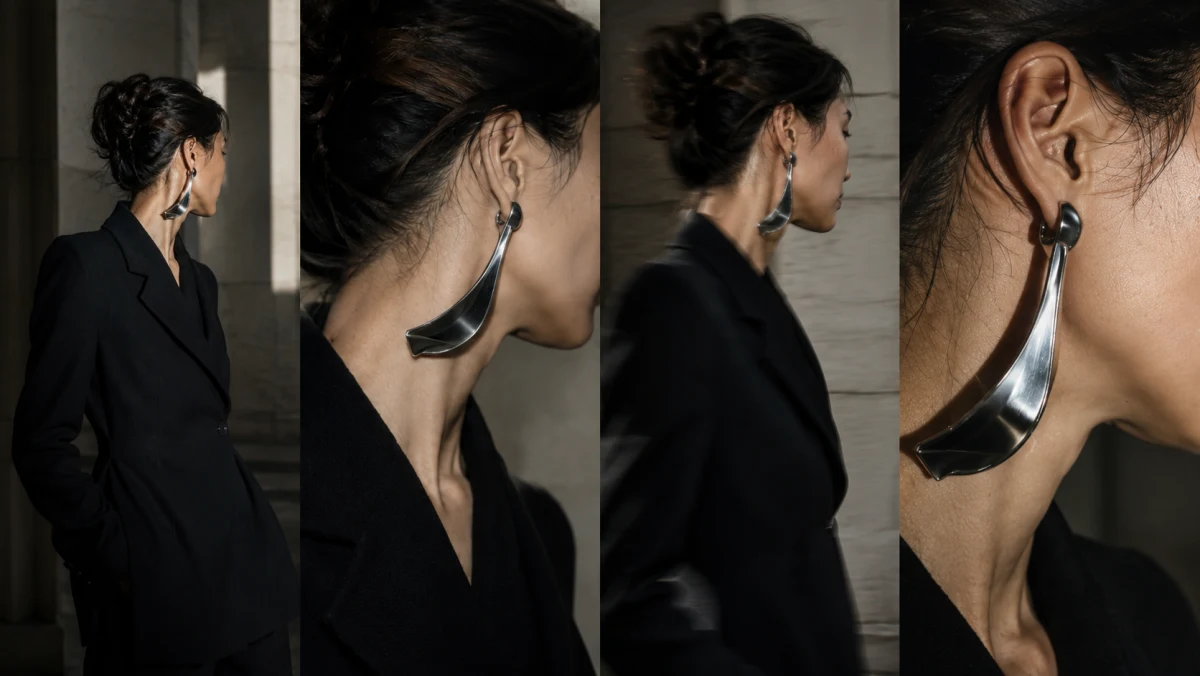
A hard flash catches one silver curve at the ear; the rest of the look stays almost architectural—dark cloth, a bare shoulder, a hand moving through shadow. That is the useful question behind Paris Fashion Week jewelry trends 2026: not simply which piece appears, but how jewelry changes the body’s scale, rhythm, and attention. Paris Fashion Week Womenswear Spring/Summer 2027 is scheduled for September 28 to October 6, 2026. This pre-runway watchlist does not pretend the shows have already supplied a verdict. It establishes what to observe as the week unfolds—and how to translate runway scale into jewelry that works in ordinary gestures.
Paris Fashion Week Jewelry Trends 2026: What We Can Responsibly Watch Before the Shows
The Fédération de la Haute Couture et de la Mode lists the official season dates, but a calendar is not a trend conclusion. Before the first look appears, the responsible approach is to define the observations that would count as proof and keep them separate from anticipation. A single oversized earring may be memorable; it does not become a direction until a similar choice repeats across several looks, houses, or styling contexts.
That distinction matters because jewelry is unusually vulnerable to fast interpretation. A runway image can hide weight, closure, or movement. A dramatic look may function because of a particular neckline, hairstyle, pace, or lighting condition that disappears in daily life.
So this is not a list of invented named trends or a premature sculptural jewelry trend verdict. It is an observation guide. Watch what designers repeat, where they place emphasis, how the pieces behave in motion, and whether the jewelry changes the silhouette or merely decorates it. Sometimes the decisive move is a narrow line at the throat, one ring placed away from the others, or a single reflective surface that interrupts matte fabric.
Four Directions to Watch: Scale, Placement, Movement, and Light
Jewelry has long operated as more than surface decoration; the V&A describes it as a universal form of adornment that has carried meanings including protection, status, and rank. In contemporary styling, those social meanings are joined by image-making: jewelry edits how a face, shoulder, hand, or torso is read. That is why the most useful reading of Paris Fashion Week accessories 2026 begins with four visual directions rather than a shopping list.
1. Scale: the visual territory of the piece
Scale is not the same as size. A thin collar can dominate a look if it creates a hard horizontal line against bare skin. A large ring can feel quiet if it sits close to the hand and echoes the garment. Ask whether the jewelry expands the body, interrupts it, or concentrates attention into one point.
2. Placement: where the eye stops
Watch for asymmetry, off-center placement, ear-to-neck transitions, stacked fingers, and pieces worn against unexpected areas of clothing. Placement can create tension without requiring excess. This is closely connected to Switchroom’s view of jewelry as a personal exhibition: the body is not a neutral display stand, but an active spatial field.
3. Movement: swing, hinge, flex or stillness
Runway jewelry styling is seen while the wearer walks. Articulation can be more important than volume. A jointed earring that changes angle with each step may create more presence than a heavier static form. Look for chains that draw lines through motion, rings that alter the hand’s gesture, and neck pieces that respond to breathing or posture.
4. Light: form, reflectivity and surface
Polished metal, satin finishes, stones, enamel, and textured surfaces behave differently under runway lighting. Hard flash can turn a small reflective edge into a visual event, while diffuse light can reveal volume and construction. Before calling something “bold,” ask whether the boldness belongs to the piece itself or to the way light is striking it.
The Runway-to-Everyday Translation Formula
The point of runway analysis is not to copy a complete look. It is to identify the design choice that caused the effect. A useful translation formula is:
Runway signal − one degree of intensity + preserved gesture + repeated visual cue = wearable direction.
- Name the signal. Is it scale, asymmetry, shine, density, movement, or placement?
- Reduce only one variable. Keep the unusual placement but choose a smaller piece; keep the scale but choose a lighter construction; keep the shine but simplify the silhouette.
- Preserve the gesture. If the runway effect comes from a long earring moving beside the jaw, a tiny stud will not translate it. Choose a shorter articulated form rather than erasing the movement completely.
- Repeat one cue elsewhere. Echo a curve, metal tone, polished edge, or geometric angle in one other place. Repetition makes the choice read as intentional.
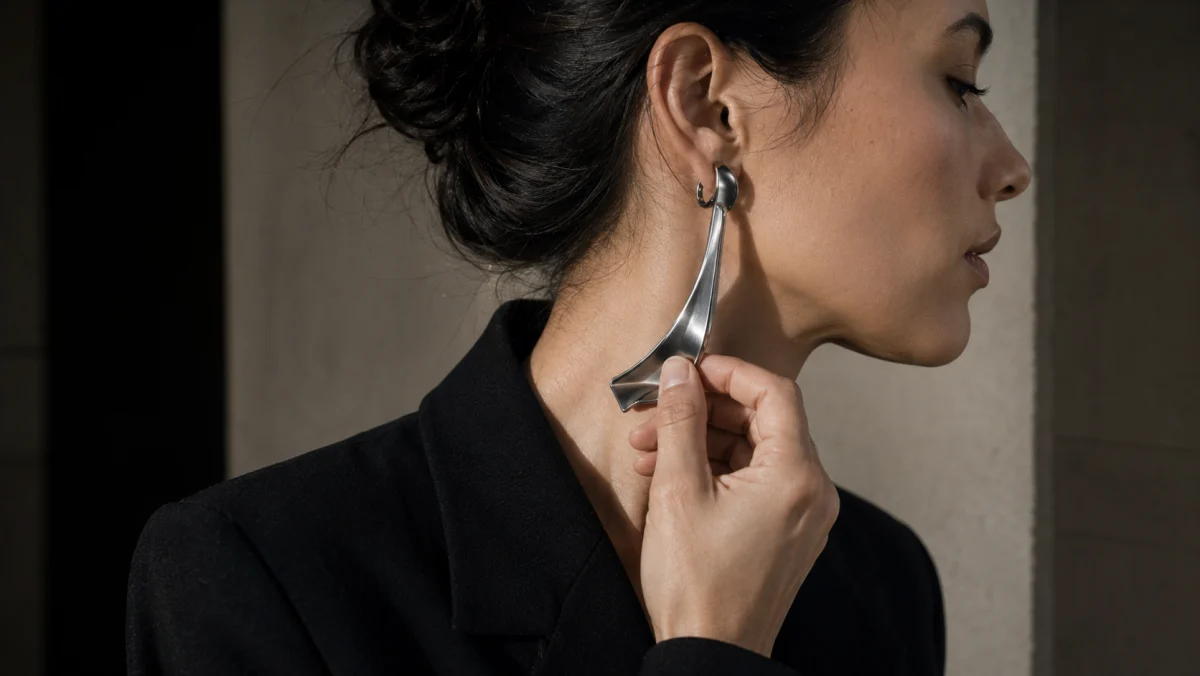
For example, imagine a runway look built around one ear-dominant form and a clean neckline. The everyday version does not need the same dimensions. It could become one sculptural earring with hair tucked back, while the rest of the jewelry remains quiet. If the runway uses several large rings across both hands, the translation might be two sculptural rings separated by negative space rather than a dense stack.
The same principle applies to a reflective collar. You could preserve its horizontal line through a shorter neck piece, then repeat the finish in a ring or cuff. Browse a broader jewelry collection by silhouette and construction rather than trying to find a literal runway duplicate.
Context is the final filter. A piece that works beautifully with a bare shoulder may fight with a shirt collar, scarf, headphone, or coat. A long earring may become impractical beside thick hair or a high neckline. The question is not whether the jewelry is “too much.” It is whether its movement and occupied space make sense for the setting.
Buy the Construction, Not the Headline
Any useful account of statement jewelry 2026 must move beyond trend language, which can make jewelry sound interchangeable. Construction is what determines whether a dramatic idea becomes a piece you can actually wear. Before buying, inspect five things.
- Weight and balance: A large-looking piece can be comfortable when its mass is distributed well; a smaller piece can pull if the weight sits far from the fastening.
- Closure: Check whether the clasp, post, hook, hinge, or ring opening feels secure and manageable for your routine.
- Edges and contact points: Look at the areas that touch skin, catch hair, meet sleeves, or sit between fingers.
- Articulation: Moving parts should create intentional motion without twisting unpredictably or striking the body uncomfortably.
- Material and finish: Ask what the piece is made from, how the surface is finished, and what care the maker recommends.
This is especially important for statement jewelry in mixed materials. Plating, pearls, porous stones, adhesives, enamel, and delicate settings may not tolerate the same cleaning method. The Gemological Institute of America’s general jewelry-care guidance also distinguishes between gem materials and settings rather than prescribing one universal treatment. Follow the seller’s care instructions first, and avoid assuming that every polished piece can be soaked, scrubbed, or ultrasonically cleaned.
When assessing earrings, think beyond the front view. Look at depth from the side, how the piece clears the jaw, and whether movement is controlled. For rings, close the hand, hold a phone, grip a bag, and test whether adjacent bands collide. A sculptural piece earns its place through both visual force and bodily intelligence.
A Pre-Runway Observation Checklist
Use this checklist while looking at official runway imagery, show videos, or verified editorial coverage. It slows down the rush to name a trend and helps distinguish a repeatable direction from a single theatrical moment.
- Repetition: Has the choice appeared more than once?
- Body zone: Is attention concentrated at the ear, throat, chest, wrist, or hand?
- Silhouette: Does the jewelry widen, lengthen, frame, puncture, or interrupt the body line?
- Motion: What happens when the wearer turns, walks, or lifts a hand?
- Light: Is the effect produced by shape, reflection, color, texture, or all four?
- Wardrobe relationship: Is the piece working with bare skin, tailoring, knitwear, transparency, or volume?
- Translation: Which single quality would you preserve for real life?
Keep screenshots or notes organized by visual choice rather than by designer name alone. A page labeled “off-center ear,” “rigid neck line,” or “rings separated by space” will become more useful than a folder of disconnected looks.
For an everyday test, place the idea into a real setting—a gallery, dinner, workday, or travel day—and ask what the jewelry needs to survive. Switchroom’s gallery dressing guide offers one context where quiet clothing and concentrated jewelry can create tension without costume.
Frequently Asked Questions
What jewelry trends should I watch at Paris Fashion Week 2026?
Watch for repeated choices in scale, placement, movement, and light rather than isolated dramatic pieces. A direction becomes more meaningful when it appears across several looks or shows.
How can I make runway jewelry wearable every day?
Keep the gesture and reduce one variable. You might preserve an off-center placement or articulated movement while choosing a smaller scale, lighter construction, or quieter finish.
Is statement jewelry still practical for daily wear?
Yes, when the piece is comfortable, secure, and compatible with your routine. Check weight, edges, closures, movement, and how it interacts with collars, sleeves, hair, and bags.
Should I buy jewelry immediately after seeing it on the runway?
Not necessarily. First identify what you actually respond to—the scale, silhouette, finish, placement, or movement—then look for a piece whose construction and materials suit repeated wear.
Paris may supply the extreme image; your task is to keep the part that changes your gesture. Explore Switchroom through form, movement, and material—not through a borrowed persona.