A coat lands over a chair, a fine knit replaces a bare neckline, and the same jewelry drawer suddenly behaves differently. The necklace that floated in August now competes with ribbing; the ring that felt quiet against skin becomes sharper beside a cuff. A useful fall jewelry capsule does not prescribe one polished persona for the season. It gives you seven pieces that can move between restraint, tension, and softness as layers change. This guide builds that approach by role, proportion, material, and placement—so you can dress for the room you are entering without buying a new identity for every outfit.

A Fall Jewelry Capsule Is an approach, Not a Uniform
The classic capsule promise is efficiency: fewer pieces, more combinations. But it becomes visually flat when every piece is chosen to disappear. The fresher question is not “What goes with everything?” It is “What lets the same wardrobe be read in several ways?”
Your capsule should contain different functions, not seven versions of tasteful neutrality. One piece holds a neckline; another interrupts it. One creates movement near the face, one changes a hand gesture, and one works over fabric. The result is a flexible jewelry wardrobe, not a miniature uniform.
Begin with three tests:
- Role: Does each piece perform a distinct visual job?
- Range: Can it work with at least two neckline or sleeve conditions?
- Identity: Does the group support more than one mood, rather than repeating a single “signature”?
This keeps the capsule small without making it timid and exposes duplicates that look different in isolation but perform the same job when worn.
The Seven Fall Jewelry Essentials
Use these as archetypes rather than a shopping script. The exact metal, stone, finish, or scale should reflect your wardrobe, comfort, and material preferences.
1. A compact ear anchor
Choose a stud, huggie, button, or close-to-lobe form with enough construction to register beside hair, collars, and scarves. It should remain legible when the outfit becomes dense. A polished plane, rounded volume, pearl-like form, or geometric interruption can work. Browse earring shapes by silhouette first, then finish.
2. A directional earring
Your second ear option should alter the line of the face: an elongated drop, articulated piece, ear cuff, asymmetric pair, or sculptural curve. It creates motion when a high neckline removes the chest as a styling zone. Visual scale and physical heaviness are not the same, so check comfort.
3. A short necklace that owns the collarbone
This piece should sit clearly above or inside an open neckline rather than hovering at its edge. Think collar-length chain, compact pendant, or structured form with a deliberate horizontal or central point. It is most useful with open shirts, scoop necks, square necks, and lower knits; adjustability increases its range.
4. A longer necklace or adjustable pendant
The long piece works over fabric, breaking the field of a fine turtleneck, knit dress, or closed shirt. Check whether the pendant flips, the chain catches on textured fibers, or the clasp becomes awkward under a coat.
5. One structural ring
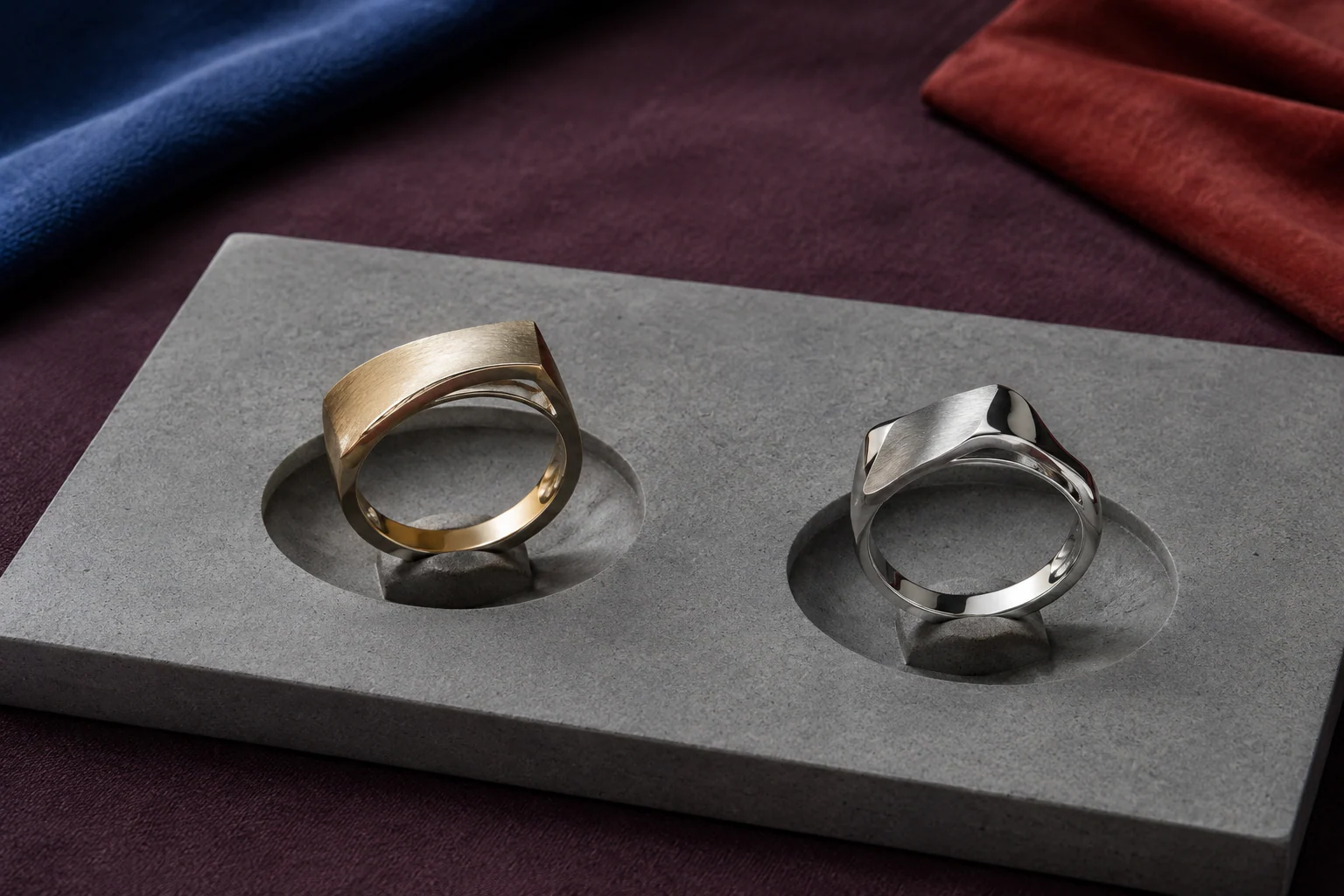
This is the hand’s focal piece: a signet, open architectural ring, articulated form, or larger volume that changes the pace of gesture. It needs a readable silhouette, not extreme size. When testing rings for the capsule, inspect the side profile; height affects gloves, pockets, and knitwear.
6. One narrow ring that acts as a connector
A slim band, textured line, small stone ring, or restrained open form connects the stronger ring to the rest. Repeat a metal, echo an earring curve, or introduce a second finish so combinations look edited rather than accumulated.
7. A pin or brooch for outer layers
Fall adds fabric between jewelry and body. A pin, brooch, or fabric-safe clip gives the capsule another surface. Place it on a lapel, cardigan, scarf edge, or structured bag only when the fastening suits the material. It can redirect a coat without requiring a necklace underneath.
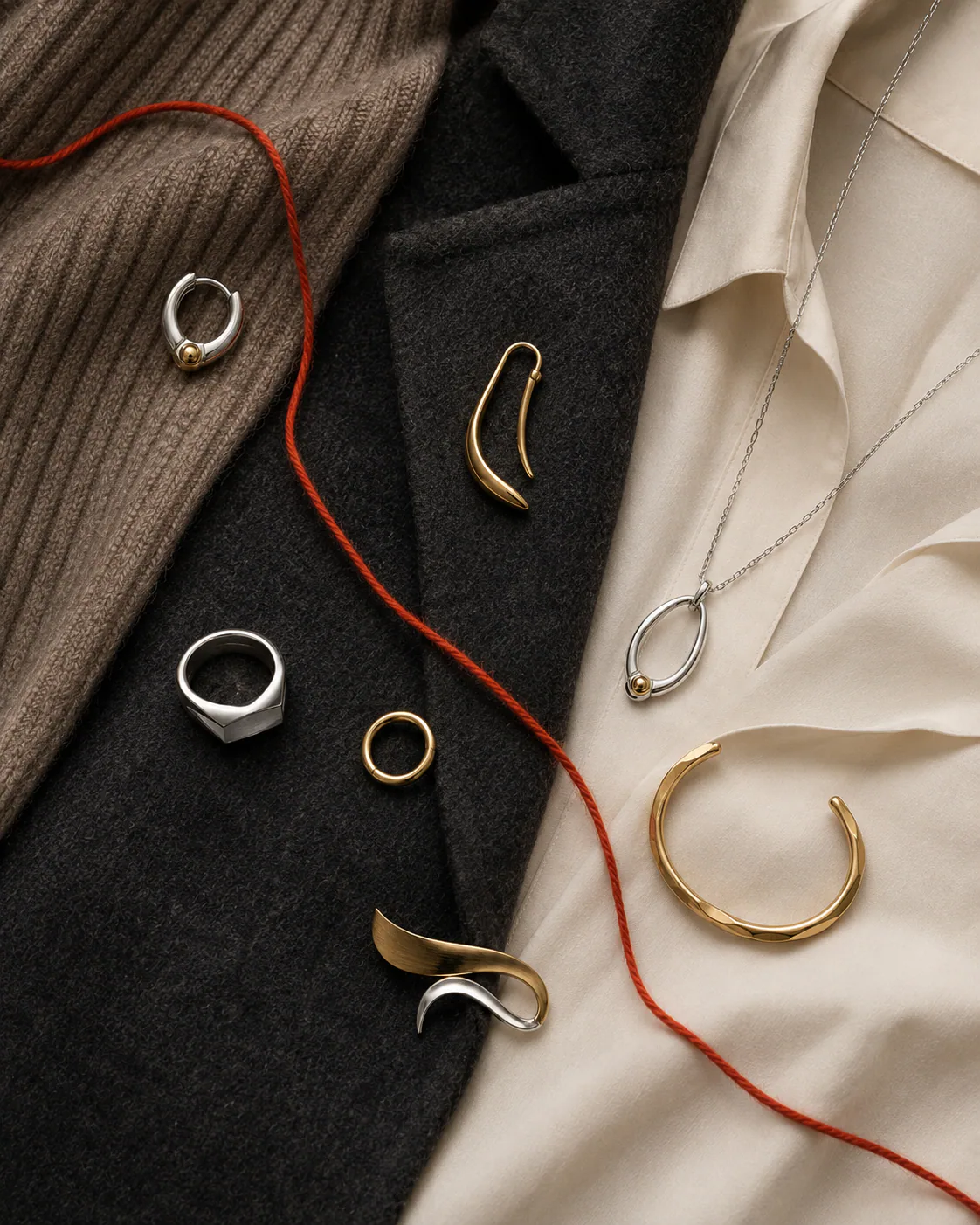
Together, the seven pieces cover face, neckline, torso, hand, and outer layer: a compact capsule jewelry collection with spatial range.
Three Moods, No Default Persona
The seven pieces become useful when they produce different readings. Instead of fixed identities such as “office” or “weekend,” build three moods that travel across contexts.
Lucid
Use the compact ear anchor, short necklace, and narrow ring. Keep one focal line and leave negative space around it. This works when you want precision without disappearance. Lucid is not minimal by default; it is controlled attention.
Charged
Use the directional earring, structural ring, and brooch. Place them in different zones rather than one cluster. An asymmetric ear plus a ring creates diagonal tension; a brooch on the opposite side can complete the route. Charge comes from placement, not automatic maximalism.
Reflective
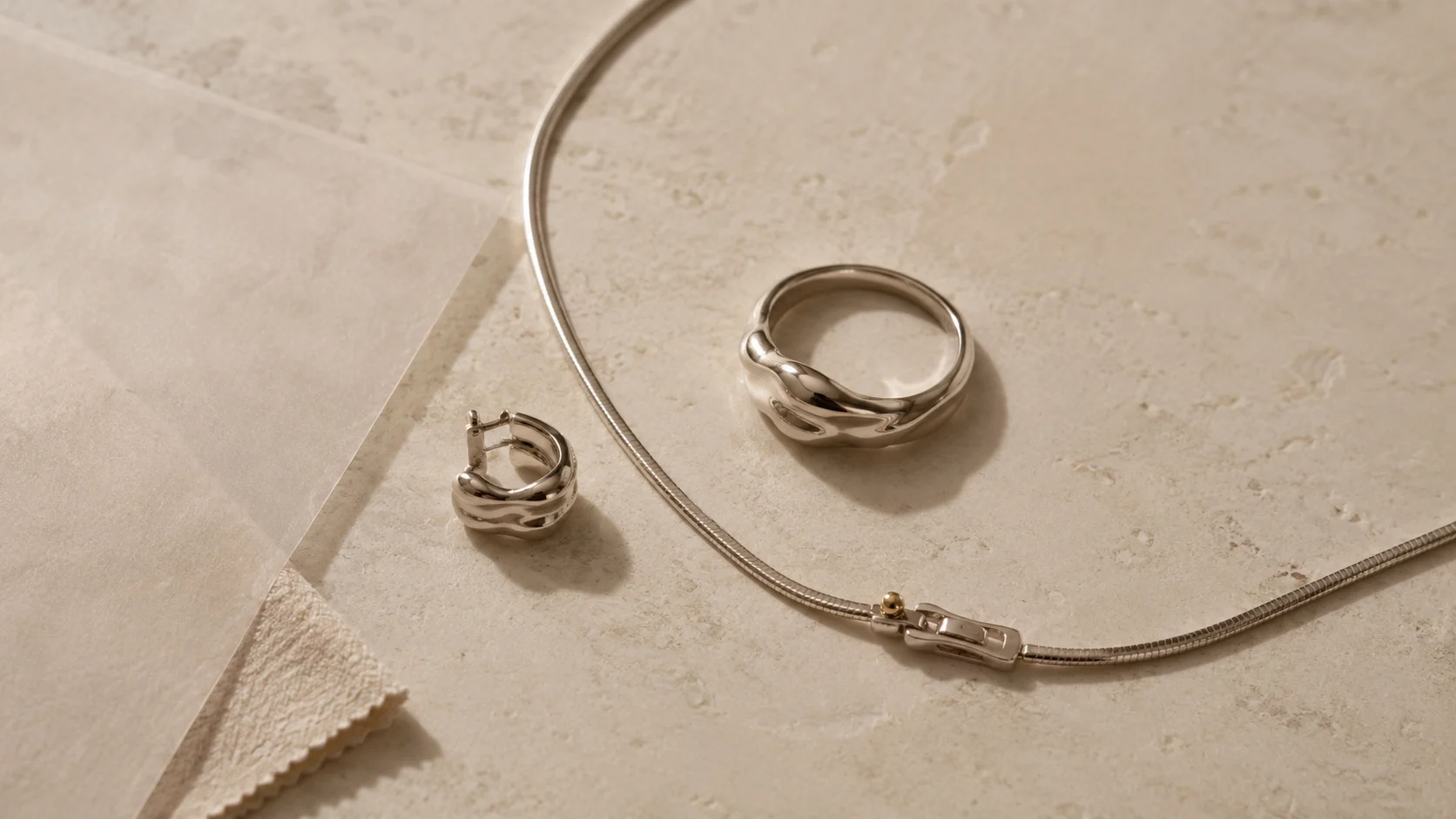
Use the long pendant, compact earring, and one or both rings. Mix a softer surface with a harder line: rounded volume against polished geometry, brushed beside mirror finish, or a pearl-like form beside an open ring. Reflective means letting light, movement, and material difference do more than color alone.
The same piece changes with its surroundings: a sculptural earring may look severe with a closed collar, intimate with bare skin, or playful beside a soft hood. Context shifts while the wearer remains coherent.
How to Style Jewelry for Layering Season
Changing necklines are the practical challenge of autumn jewelry styling. Use this formula:
Neckline density + one focal zone + one supporting echo + visible breathing room.
- Fine turtleneck: choose the long pendant or directional earrings. Add one ring that repeats a shape or finish. Avoid a short necklace that sits exactly on the collar edge unless it is intentionally rigid and stable.
- Crew neck or sweatshirt: place the focal point at the ears, hands, or over the fabric with a pendant. A necklace hidden under the neckline contributes little unless the reveal is deliberate.
- Open shirt or V-neck: use the short necklace to occupy the exposed area. Keep the earring compact, or let a single directional ear piece create asymmetry.
- Blazer or coat: decide whether the lapel, necklace, or brooch owns the center. Usually only one should lead. Rings can carry the secondary rhythm.
- Scarf, hood, or high collar: move jewelry away from the neck. Use earrings and rings, then introduce the brooch only if the fabric and fastening are compatible.
Check the look from conversational distance, not only in a close mirror. If every piece is visible at once, remove one. If construction disappears, increase scale or move the focal point. If the outfit feels divided, repeat one element—metal tone, curve, stone shape, texture, or direction.
Buy by Construction, Then Build a Care Habit
A capsule earns repeated wear, so material information matters more than a seasonal label. Identify the base metal, finish, plating description, stone or organic material, fastening, and care instructions. The U.S. Federal Trade Commission explains that gold filled, gold electroplate, and vermeil refer to different constructions, and that plating wear depends partly on use and thickness. Read the FTC consumer guide to precious-metal jewelry alongside Switchroom’s materials information.
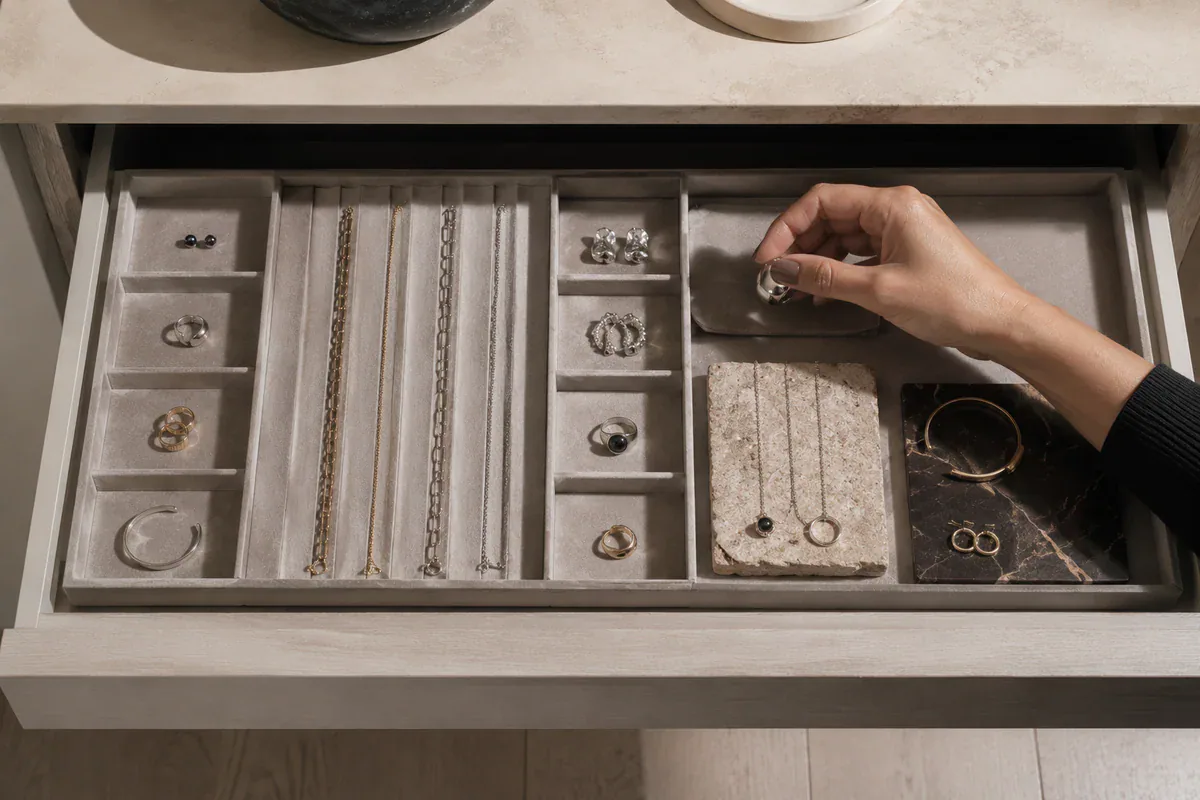
Care should follow construction. The Gemological Institute of America warns that ultrasonic cleaning is not suitable for every gemstone or treatment, and that some cosmetics, household chemicals, and chlorine can harm metals or gems. Its jewelry-care guidance favors material-specific cleaning and protective storage. GIA also recommends compartments to reduce tangling and scratching in its jewelry organization guide.
For a mixed-material capsule, default to restraint: wipe pieces with an appropriate soft cloth, dry them before storage, separate surfaces, and follow the maker’s instructions before using liquid, polish, steam, or ultrasound. Pearls, plated finishes, treated stones, adhesives, enamel, and porous materials may need different methods. There is no universal cleaning bath for all seven pieces.

The seven-piece capsule audit
- Can every piece name its visual role in one sentence?
- Do the two earrings create genuinely different face lines?
- Do the two necklaces solve different neckline conditions?
- Can the structural ring be worn comfortably with sleeves, pockets, and daily hand use?
- Does the narrow ring connect combinations rather than duplicate the focal ring?
- Can the brooch or pin be used without damaging your most-worn outer layers?
- Do you know the material and care requirements of every piece?
- Can the group create Lucid, Charged, and Reflective moods without adding another purchase?
If the answer is mostly yes, stop shopping and test combinations. Note which lengths clash with collars, which forms catch on knits, which earrings stay comfortable, and which piece changes an outfit most efficiently.
Fall Jewelry Capsule FAQs
How many pieces should be in a fall jewelry capsule?
Seven is enough to cover ears, two necklace lengths, two ring roles, and one outer-layer piece while still allowing distinct combinations. The right number is the smallest group that performs all the roles you actually use.
Should all capsule jewelry be the same metal?
No. A repeated metal or finish can create continuity, but a second metal can work when it appears intentionally in more than one place or is connected by a bridge piece. Construction, proportion, and repetition matter more than forced uniformity.
What necklace length works best with fall layers?
There is no single best length. A short necklace works with open necklines, while a longer or adjustable pendant can sit over fine knits and closed shirts. Test the exact length against your most-worn collars before buying.
How do I keep a small jewelry capsule from feeling boring?
Choose pieces with different jobs and spatial effects rather than seven quiet basics. Change the focal zone, combine hard and soft surfaces, use asymmetry, and preserve negative space so the same pieces can create multiple moods.
How should I store a seven-piece jewelry capsule?
Keep pieces dry and separated in padded slots, compartments, boxes, or individual pouches to reduce tangling and surface contact. Follow material-specific instructions, especially for plated finishes, pearls, treated stones, enamel, and delicate settings.
A fall jewelry capsule should make dressing more exact, not more obedient. Start with the roles you need, test them against real layers, and let the pieces change emphasis as the day changes. Explore the Switchroom shop as a field of possible forms—not a demand to become one fixed person.