You’re ready to leave in a lace blouse and worn jeans, but the mirror is staging a small disagreement. The blouse looks dressed for dinner; the heavy shoes belong to your actual afternoon. You pick up a necklace, put it down, and wonder whether the nails are helping.
Perhaps you want to look gentle without looking immaculately finished, or as though being agreeable was the assignment. That doesn’t require a tougher personality or an entirely different wardrobe. It might mean keeping the blouse and changing the small things around it. Jewelry and a manicure can connect clothes that seem to be having separate conversations.
In its September 2, 2026 editorial, Vogue pairs delicate layers with worn denim, leather, and substantial shoes, photographed by Collier Schorr and styled by Camilla Nickerson. The starting point here is that contrast—not an instruction to adopt an entire look.
Choose what leads, then give it a companion
Look at the largest visible area of the outfit. Is it patterned lace, a fluid skirt, a faded jacket, or a broad expanse of leather? Start there rather than with a favorite accessory. Notice what makes that surface distinctive: little openings, flowing folds, prominent seams, an uninterrupted sheen.
Now choose where the eye should go next. A hand below a lace cuff offers a different meeting place from an open collar above a denim jacket. The accessory needn’t repeat the garment literally. It can borrow something from the other end of the outfit: the visual substance of a shoe, the narrowness of a strap, the curved outline of a hem. Leave some plain fabric or visible skin around that meeting place so the relationship remains readable.
You don’t have to match every finish; that may tidy away the difference you liked. A buckle, ring, and nail needn’t all have the same shine. Choose one useful echo and let the other details vary. The ring might relate to the shoes through its outline while the nails sit closer to the blouse in color.
Soft clothes, one substantial accent
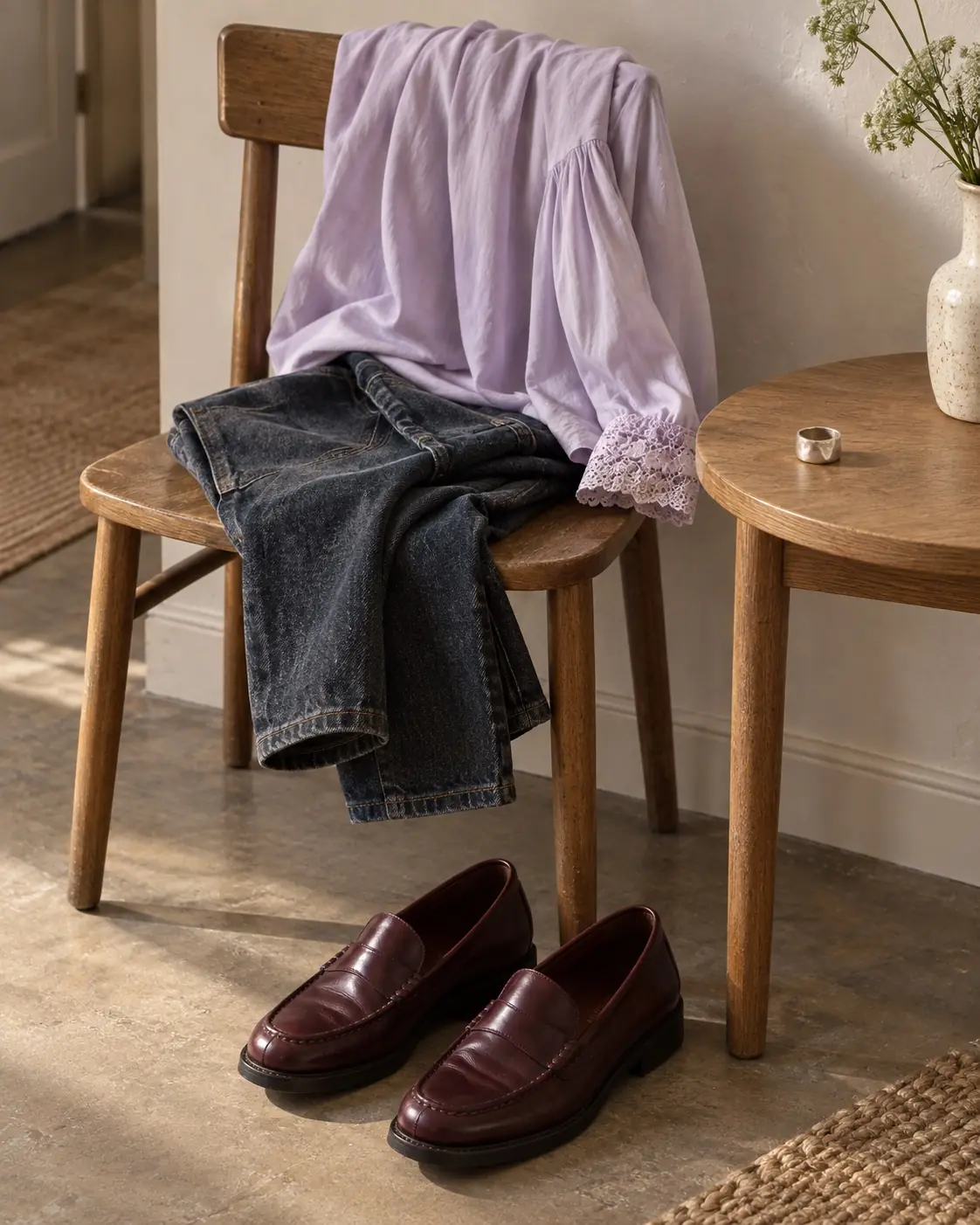
Start with an airy blouse, plain trousers, and broad-toed loafers or another substantial shoe. Let the blouse remain the largest area of detail. If its lace is intricate, choose jewelry with a simple outline rather than adding another small, elaborate pattern. A broad ring or an uneven oval bangle can answer the shoes’ visual weight without turning the whole outfit heavy.
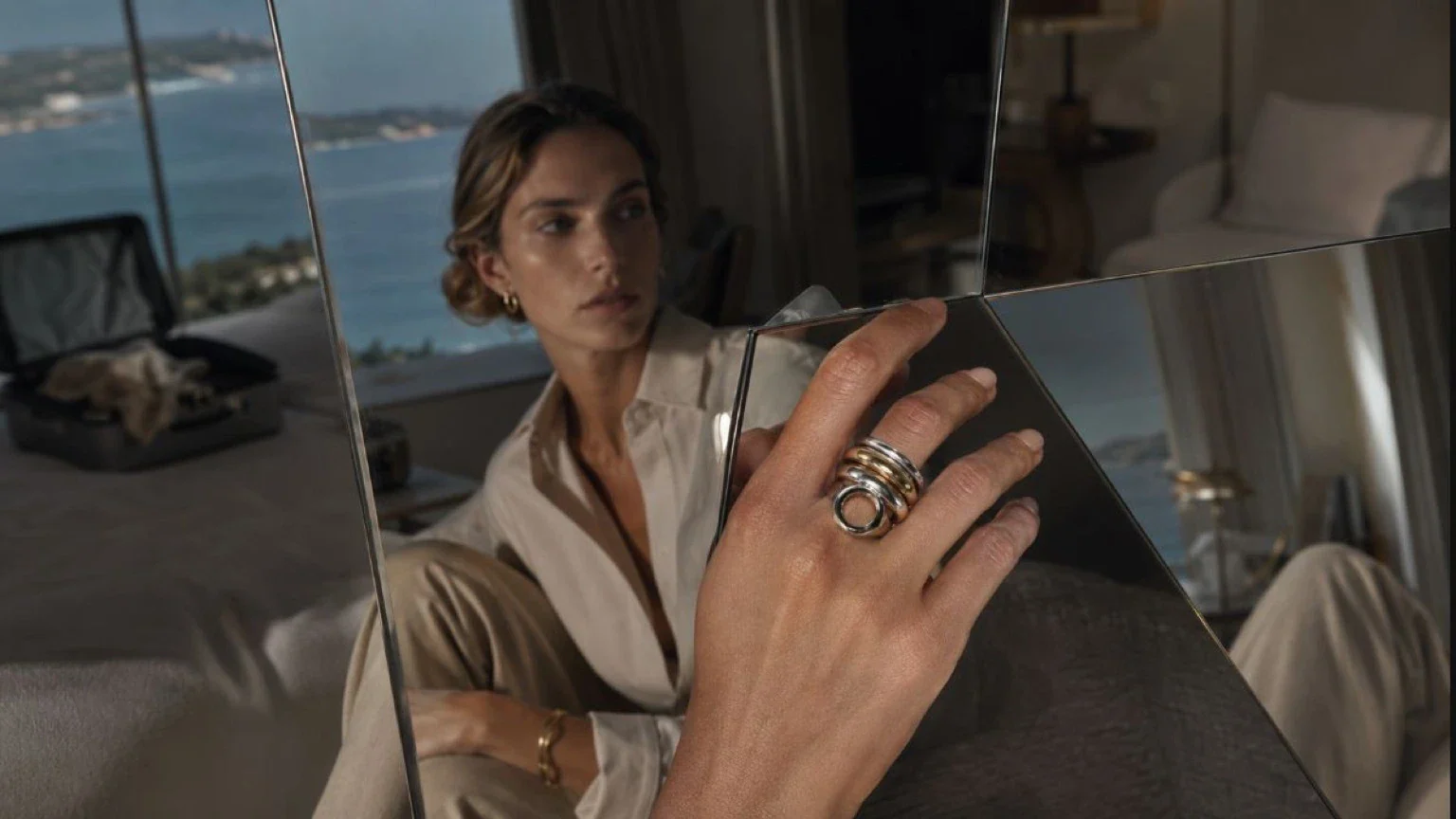
For this version, bring attention to the hand. Place one broad ring below the blouse cuff, leaving the neighboring fingers unadorned. Its width should be visible beside the fabric, but it doesn’t have to cover much of the finger. You’re looking for a clear change from many small openings in the lace to one continuous shape. “Substantial” describes what you see, not how much the piece weighs.
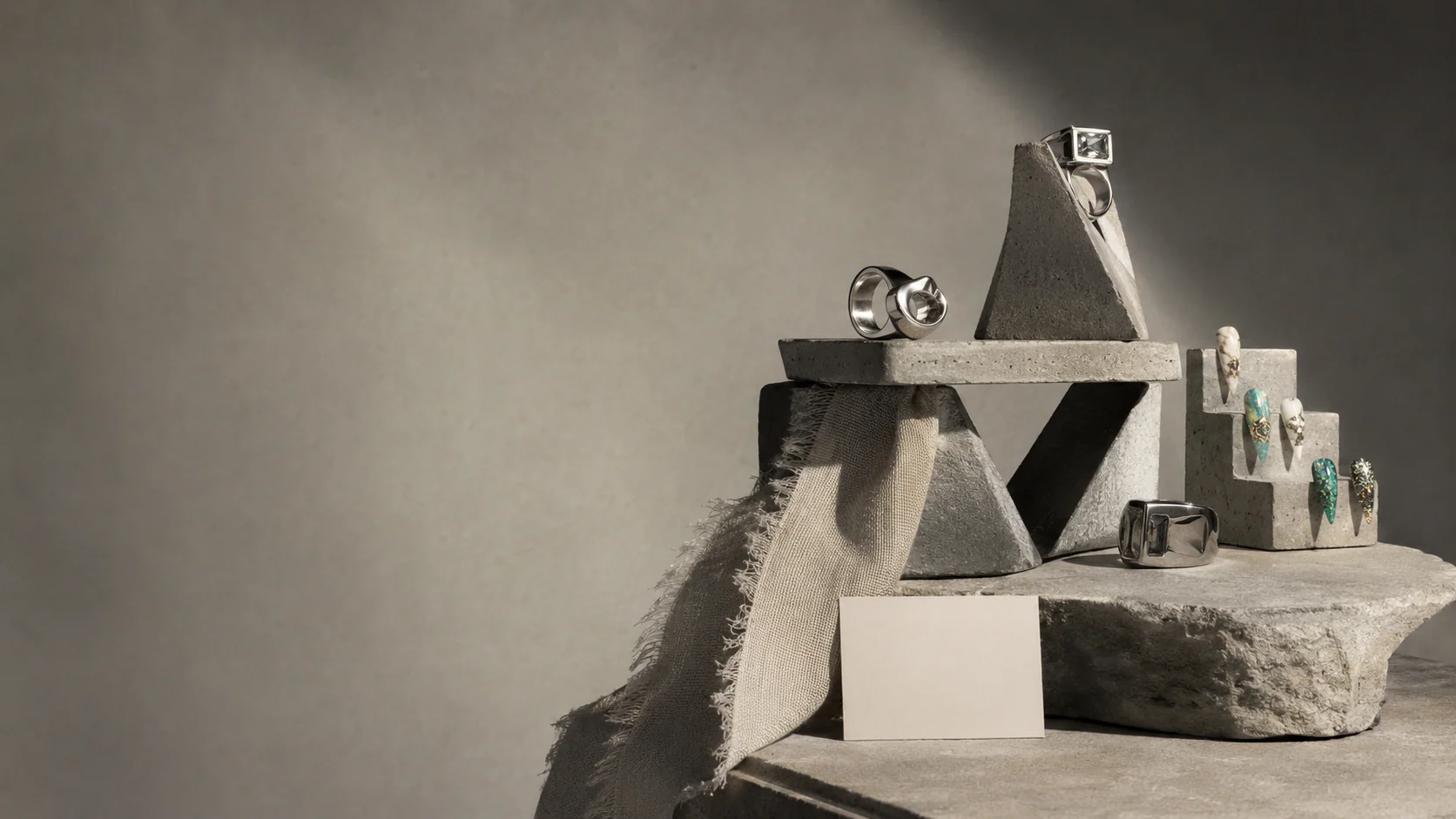
Try short, softly squared nails in one color with a matte finish: a clear outline without another flash beside the ring. Prefer oval nails or the gloss you already have? Keep them; leave out nail decoration and extra rings instead. The ring supplies the interruption, while the manicure gives it visual room. Choose a shade you enjoy rather than trying to disappear into a prescribed neutral.
If the hand looks crowded, remove the bracelet before changing the blouse. If the neckline is already full of lace, put down the pendant. The point is not to make every part equally interesting. A little emptiness around the ring lets its broad shape connect the delicate sleeve to the more substantial shoes.
For an early dinner after work, this can be the blouse and shoes you already planned to wear, with one familiar bold piece brought back out. No broad ring? Try your larger hoops, move the emphasis to your face, and leave the hands simpler. An opaque, loosely draped shirt can take the blouse’s place; transparency is not a condition of looking soft.
Rugged clothes, one fine line
Reverse the arrangement when the strongest surface is a worn denim jacket or a leather overshirt. Here, broad panels, seams, and visible fastenings already provide plenty to look at. Instead of adding more substantial jewelry, give the outfit one fine line. Let a plain, fluid top underneath provide a quieter place for it to sit.
Bring the eye toward the opening at the neck. A slender chain can trace that space without trying to compete with the jacket’s buttons. Choose a length that keeps its visible line within the opening rather than laying a pendant directly over a fastening. Separate the chain from other necklaces so it reads as a line, not another cluster of hardware.
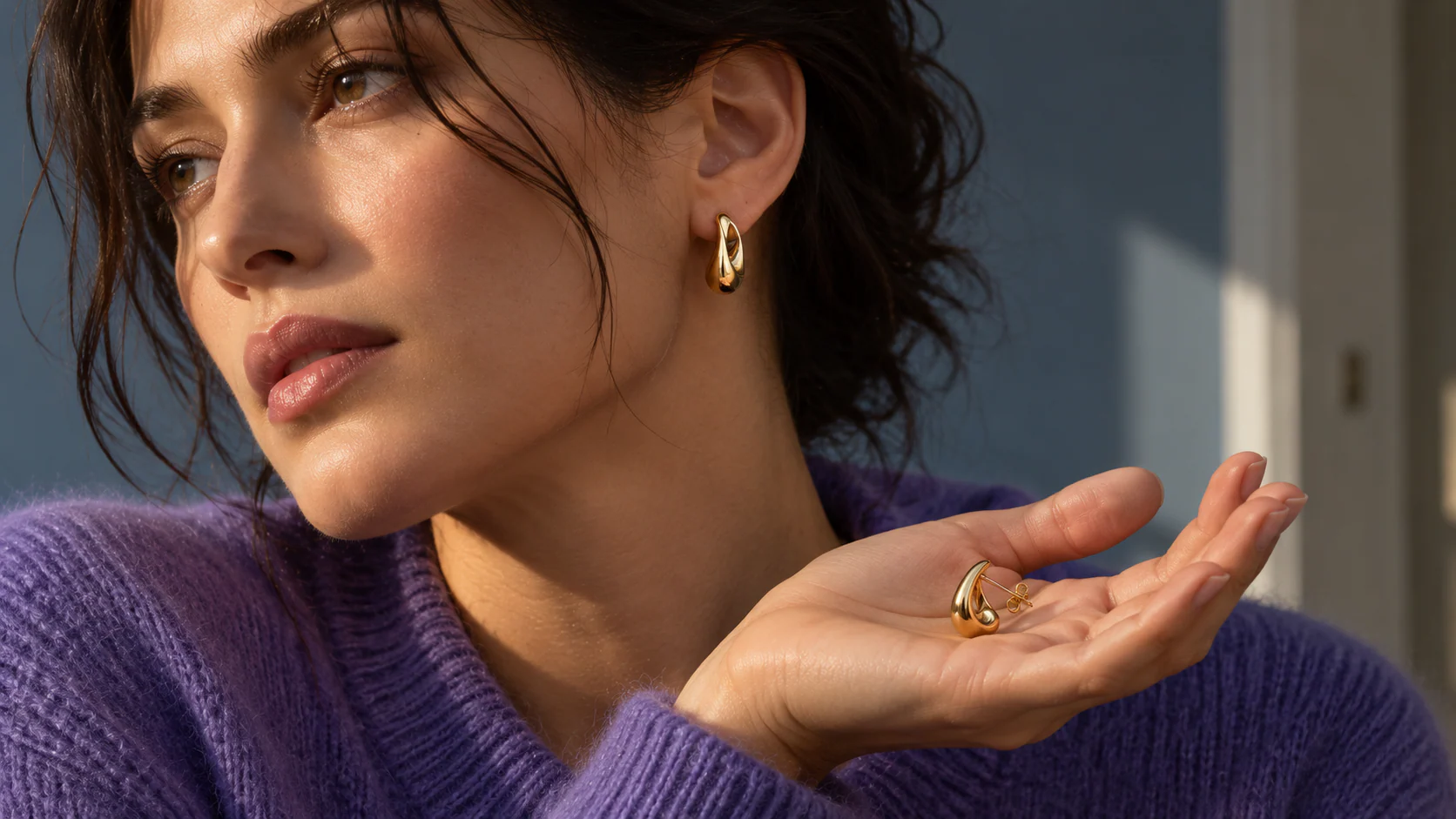
If the chain disappears, change its placement before increasing its size: a different neckline or a less detailed layer beneath it may be enough. A high neckline can work too. Move the fine line to the ears with small, uncomplicated hoops, rather than forcing a necklace into an already crowded collar.
For the nails, consider a short oval with a sheer, glossy finish. Against broad denim seams, that curved outline offers a different kind of detail; the small reflection can pick up the chain’s glint. Already wearing square nails? A single translucent color can do the quieter work without changing their shape. You are changing the contrast, not trying to make the entire outfit delicate.
When this outfit becomes busy, take away the second pendant, chain belt, or extra cluster of rings. You don’t have to remove every fastening or make all the metal colors identical. Keep the garment’s existing detail and edit the additions. For a workday followed by lunch with a friend, an old fine chain or familiar small hoops can be enough. This isn’t about making denim respectable. It is about letting a narrow, precise mark sit beside something broad and worn.
Let the manicure connect the two surfaces
Sometimes neither a bold ring nor a fine chain resolves the disagreement. Imagine a faded blue denim jacket above a fluid, softly shining brown skirt. Both surfaces deserve to stay. Adding a conspicuous necklace introduces a third attraction without necessarily connecting the first two. Here, let the hand do the joining.
First, allow the denim to lead: keep the other upper layers plain, with the skirt supplying movement below. Bring attention to the hand where it passes the jacket hem and rests against the skirt. This is a place where both materials can be seen near the nails, not a requirement to hold a pose all afternoon.
Try a muted blue-gray manicure with a glossy finish. Its color can echo the faded jacket while its reflected light answers the skirt. The nail borrows a different quality from each garment, so the two surfaces don’t have to resemble each other. A short rounded-square shape can keep a fairly straight tip while introducing curved corners beside the jacket’s stronger seams.
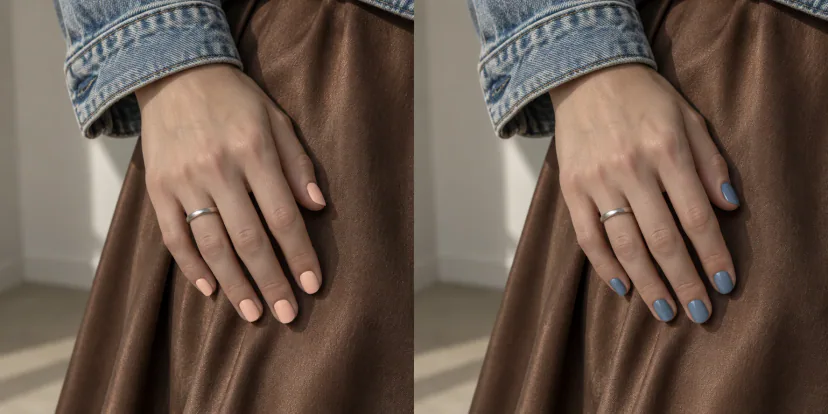
Keep nearby jewelry spare: a slim, smooth-looking band on one finger, with the neighboring finger bare, gives the eye a small pause between cuff and nail. Silver-toned or gold-toned can work; neither has to match the polish. Choose the band whose outline remains clear beside the sleeve. If the metal surface itself becomes the strongest detail, our guide to textured metal jewelry explains how finishes change under light. This time, jewelry accompanies the connection rather than carrying it alone.
If the hand becomes another busy surface, remove stacked rings or extra nail decoration before adding more coordinating accessories. Keep the color-and-sheen connection visible. This doesn’t make elaborate nail art wrong; it gives this particular manicure a different job from being the outfit’s main attraction.
There is no need to buy blue-gray polish for the idea. Already wearing glossy charcoal nails? Try them beside a washed-gray jacket and a softly shining dress you own. Keep the manicure and change which clothes sit around it. For a Saturday spent at a bookshop and then an informal supper, that small connection can let two quite different garments stay themselves.
Stop before the outfit becomes a character
There is nothing wrong with deliberately dressing as a character. But when that isn’t the aim, you don’t need every possible sign of roughness at once. With worn denim and heavy shoes already present, extra chains, another distressed layer, and conspicuous nail decoration may explain a mood more emphatically than you intended.
Before leaving, look once at the whole outfit and once at the place you chose for attention. Can you still see the garment texture that started it? Does the hand or neckline connect two parts, or has it become an unrelated performance? Take away the addition that feels most like an explanation. That might be the necklace; it might be the extra outer layer. It needn’t be the most colorful thing.
Keep one detail that is simply yours: the ring you always wear, your familiar nail shape, the blouse you like regardless of its supposed mood. The clothes can disagree a little. Jewelry and nails only need to help them leave the house together.