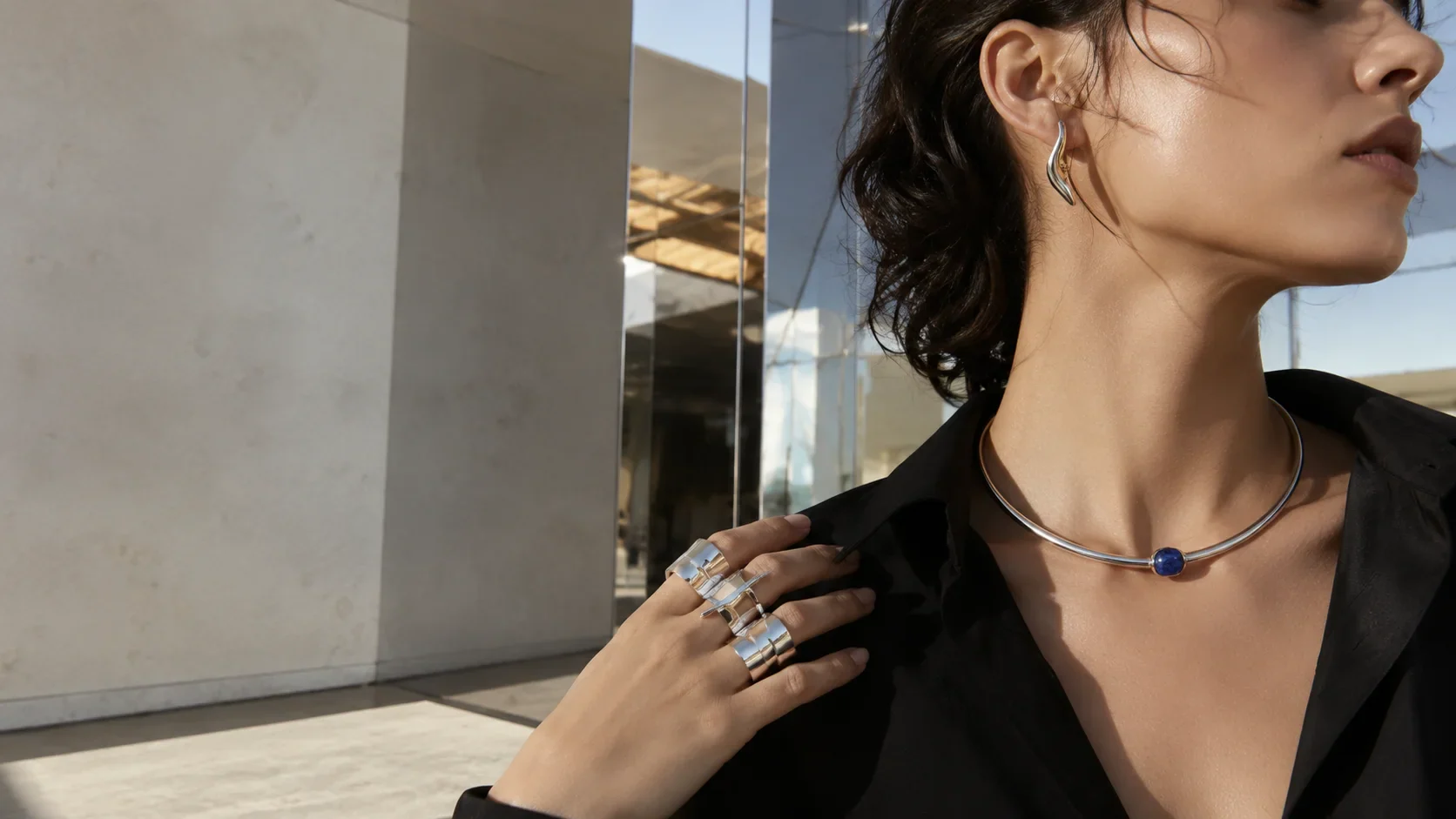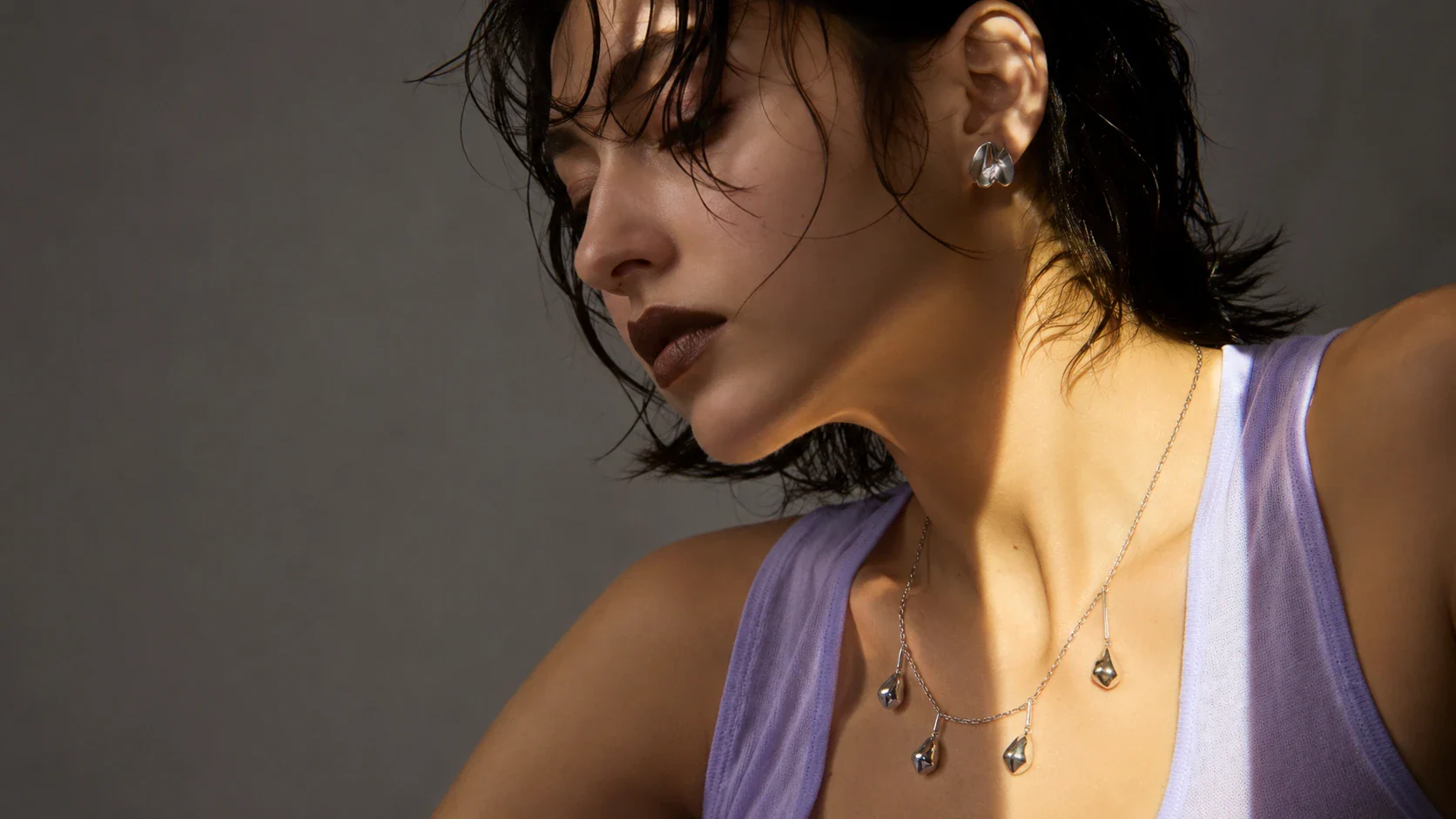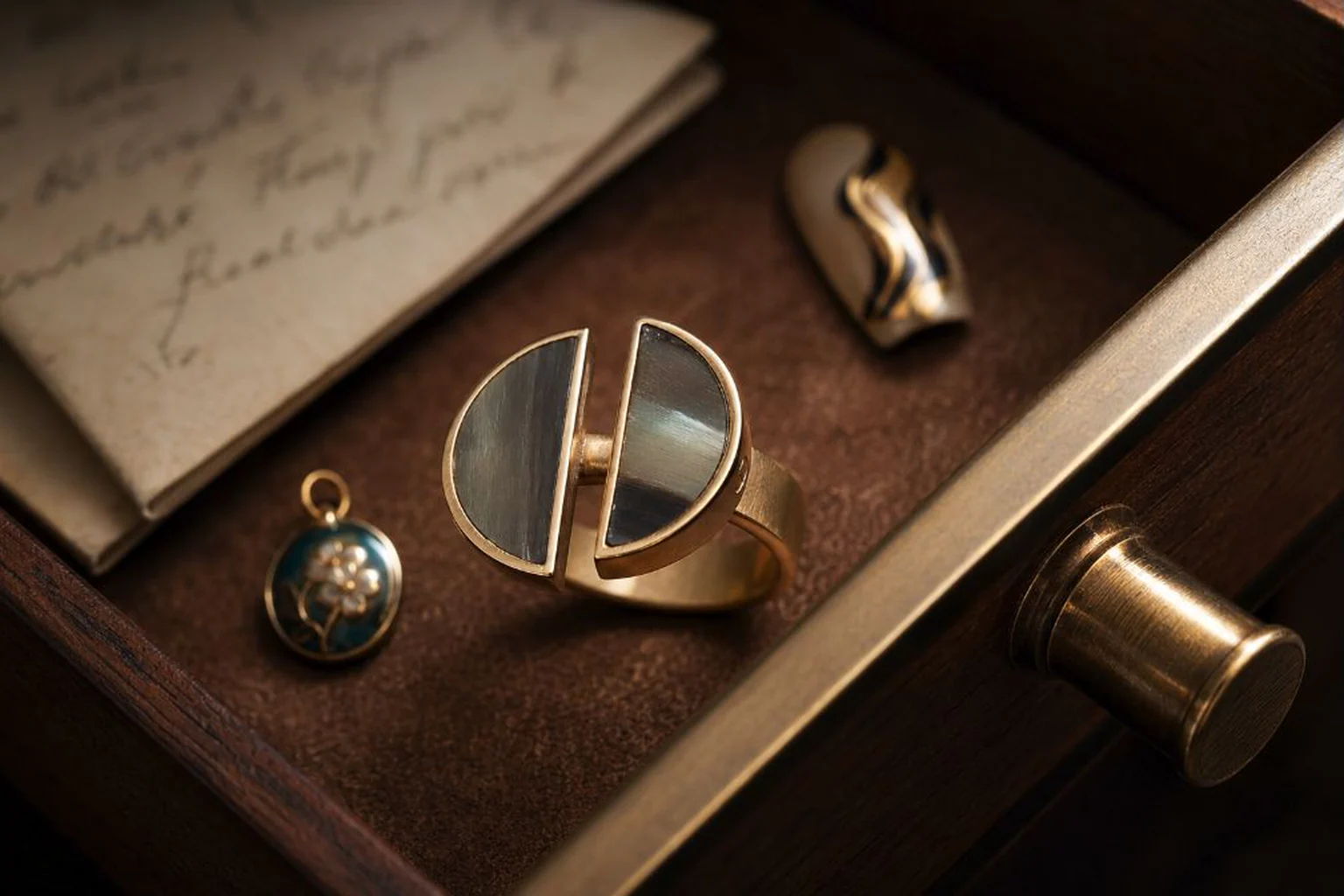
Jewelry for minimalist outfits should not disappear. Against a clean shirt, precise knit or beautifully cut black dress, one intelligent curve can do more than a crowded jewelry box. Minimalism is not silence; it is excellent editing.
Here is the lovely part: minimalist style does not require invisible jewelry. It requires jewelry with discipline. When form, scale, and movement are carefully balanced, a single piece can perform the role of an entire styling choice. The most successful minimalist jewelry does not ask to dominate the wearer; instead, it creates a relationship between the person, the clothing, and the piece itself.
The Role of Jewelry in a Minimalist Wardrobe
A minimalist outfit usually relies on strong foundations: clean lines, controlled proportions, and a limited visual vocabulary. This creates a unique opportunity for jewelry. Instead of competing with prints, layers, and excessive accessories, a carefully selected piece becomes the focal point.
The best jewelry choices for minimalist outfits often have architectural qualities. They create a relationship between the body and the clothing through shape, negative space, and silhouette. A curved earring can echo a neckline. A structured ring can introduce contrast against soft fabric. A dimensional necklace can interrupt an otherwise quiet surface.
This is why minimalist jewelry should not automatically mean tiny jewelry. Scale can be minimal when the design feels intentional. A large but refined piece may create less visual noise than several small pieces competing together. The question is not whether a piece is noticeable, but whether every visual choice feels necessary.
Minimalist styling also changes how people perceive craftsmanship. Without complicated outfits distracting the eye, details become more visible: the precision of a curve, the quality of a surface, the relationship between polished and textured areas, and the way a piece catches movement throughout the day. A simple wardrobe can therefore reveal more about a jewelry piece’s design language.
Minimal Statement Jewelry: The Balance Between Restraint and Expression
Minimal statement jewelry describes a category where simplicity and presence exist together. These pieces avoid unnecessary decoration while maintaining a clear visual identity. The goal is not to attract attention through abundance, but through precision.
For minimalist wardrobes, statement pieces work best when they introduce one strong idea. This could be an unusual curve, an organic silhouette, a geometric structure, or a distinctive surface treatment. The wearer does not need multiple accessories when one piece already communicates a point of view.
The practical rule is to ask whether the jewelry creates a conversation with the outfit rather than simply sitting on top of it. A sculptural earring paired with a simple shirt works because both elements allow the other to exist. The clothing provides the calm background; the jewelry provides the visual event.
When choosing a statement piece for a minimalist wardrobe, consider visual weight. A dramatic silhouette with balanced proportions often feels more refined than a heavily decorated piece. The strongest designs usually have a recognizable shape that can be understood quickly while revealing additional details through closer observation.
Minimalist Sculptural Jewelry as Wearable Form
Minimalist sculptural jewelry sits between fashion accessory and wearable piece. It borrows ideas from sculpture: volume, balance, material presence, and the relationship between solid form and empty space.
For minimalist outfits, sculptural jewelry can introduce emotion into otherwise neutral compositions. A smooth curved piece may create softness. An angular structure may add intellectual sharpness. An irregular silhouette may bring a sense of individuality without requiring bright colors or excessive layering.
The most successful sculptural pieces respect the human body. Earrings should consider the movement of the jaw and neck. Rings should maintain comfort during everyday gestures. Necklaces should sit naturally rather than fighting against clothing. A sculptural approach is not only about visual drama; it is about designing a piece that belongs to the wearer.
Material awareness is especially important with sculptural designs because form often creates the impression of weight. A large-looking piece may feel comfortable when engineered thoughtfully, while a smaller piece may become impractical if poorly balanced. Before regular wear, consider closure security, attachment points, surface durability, and whether the piece remains comfortable after several hours.
Everyday Statement Jewelry: Building a Personal Signature
Everyday statement jewelry focuses on pieces that can become part of a consistent personal language. Unlike occasion-only accessories, these designs are meant to accompany real routines: commuting, working, meeting friends, traveling, and moving through different environments.
The strongest everyday pieces often have recognizable characteristics without becoming restrictive. A distinctive earring shape or carefully designed pendant can become part of someone’s identity because it appears repeatedly over time.
When choosing everyday statement pieces, consider versatility rather than neutrality. A successful design does not need to disappear into every outfit. Instead, it should adapt across different contexts while maintaining its own character.
Repeated wear also changes the relationship between jewelry and memory. A piece worn regularly becomes connected to personal experiences, places, and routines. This emotional dimension is particularly powerful in minimalist wardrobes because fewer pieces are selected, meaning each piece has greater significance.
Jewelry for Business Casual: Moving Between Professional and Personal Style
Minimalist wardrobes frequently overlap with professional dressing because both value clarity and intention. jewelry for business casual requires a balance between expression and practicality. The ideal piece communicates taste without distracting from conversation, movement, or workplace expectations.
For business casual environments, consider proportion first. A sculptural earring or refined metal piece can add personality to a blazer, knitwear, or simple dress, but the design should still allow comfortable movement throughout the day.
Work environments also introduce practical considerations. Jewelry should not interfere with keyboards, headphones, phones, or frequent hand movement. Closures should feel secure, and heavier pieces should be tested before long periods of wear. Beauty and usability need to exist together.
The transition between professional and personal environments is another important consideration. Many people move from meetings to social events without changing their entire outfit. Jewelry that has a strong design identity but controlled proportions can provide this flexibility, allowing a minimalist outfit to evolve throughout the day.
Office Jewelry: Creating Structure Without Losing Individuality
Office jewelry works best when it supports rather than overwhelms a professional image. Minimalist styling benefits from pieces that have a clear silhouette and controlled presence.
A useful approach is to choose one visual anchor. If earrings are the focal point, keep other accessories quieter. If a ring has a strong sculptural profile, allow the hands and clothing around it to remain visually open.
Materials also matter. Different metals, finishes, and surfaces interact differently with clothing and lighting. Before purchasing or wearing a piece frequently, check practical details such as weight, possible sensitivity, clasp construction, and maintenance requirements.
Office environments also require awareness of sound, movement, and repeated contact. Earrings should not create unnecessary distraction during communication, and rings or bracelets should remain functional during daily tasks. Thoughtful office jewelry respects both personal expression and professional space.
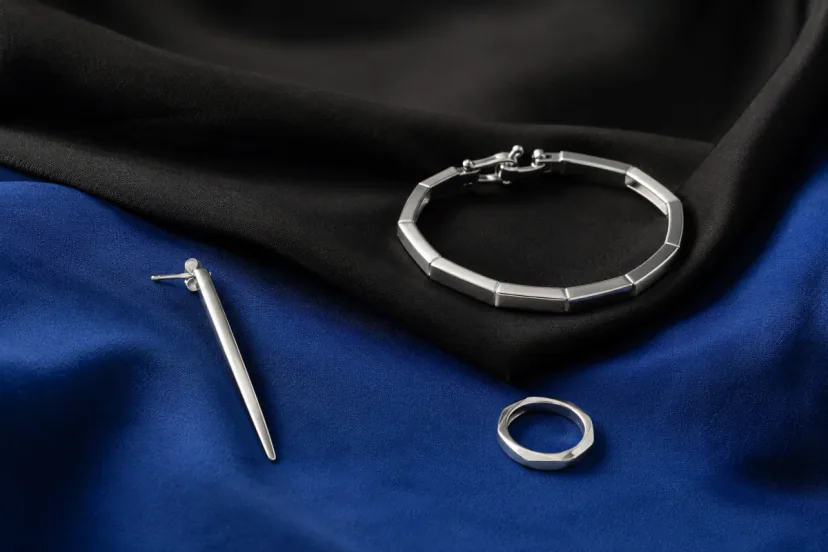
Sculptural Jewelry Styling: Creating Contrast Through Form
Sculptural jewelry styling is about creating relationships between pieces rather than simply matching accessories to clothing. Minimal outfits provide a strong foundation because they allow the jewelry’s form to become visible.
Consider contrast as a styling tool. Soft fabrics can highlight structured jewelry. Oversized clothing can benefit from a concentrated accessory near the face or hands. Simple silhouettes can make unusual forms feel intentional rather than excessive.
The key is editing. Sculptural jewelry becomes powerful when surrounded by enough visual space. The wearer does not need to add multiple competing elements. The piece itself should have room to communicate.
How to Style Sculptural Jewelry Without Looking Overdone
Many people hesitate to wear artistic jewelry because they worry it will feel too dramatic. Understanding how to style sculptural jewelry without looking overdone begins with recognizing that impact comes from balance, not size alone.
A practical guide is the “one anchor, two supports” method:
- Choose one anchor: Select the jewelry piece that carries the strongest visual identity.
- Create two supports: Let clothing texture, hairstyle, or another subtle accessory support the main piece.
- Remove competition: Avoid adding multiple unrelated statement elements at the same time.
This approach allows experimental jewelry to feel sophisticated. A bold form can appear refined when the surrounding styling communicates confidence and restraint.
How to Choose Minimalist Jewelry
When selecting jewelry for a minimalist wardrobe, evaluate four areas:
1. Visual Language
Does the piece match your personal aesthetic? Look beyond trends and consider whether the shape, texture, and proportion feel connected to your existing wardrobe.
2. Body Relationship
Jewelry exists on a moving body. Consider hairstyle, neckline, glasses, hand movement, and daily activities. A beautiful piece should enhance natural movement rather than create inconvenience.
3. Context Flexibility
Think about where the piece will live in your life. A design worn once for an event has different requirements from a piece intended for everyday use.
4. Before you buy
Always check the material information, finishes, closures, and care instructions. Metal appearance alone does not determine durability or comfort. Proper storage and cleaning habits help preserve jewelry over time.

FAQs
Can statement jewelry work with minimalist outfits?
Yes. Statement jewelry works especially well with minimalist outfits because simple clothing creates space for a strong design to become the focal point. The key is choosing one intentional piece rather than layering multiple competing accessories.
How can I wear jewelry for business casual environments?
Jewelry for business casual works best when it balances personality with practicality. Consider scale, comfort, workplace movement, and whether the piece supports your overall appearance rather than distracting from it.
What makes sculptural jewelry suitable for everyday wear?
Sculptural jewelry becomes suitable for everyday wear when it combines artistic form with thoughtful engineering. Weight, closures, comfort, and durability are as important as visual design.
How do I choose office jewelry that feels personal?
Office jewelry does not need to be generic. Choose pieces with distinctive proportions, textures, or silhouettes while ensuring they remain comfortable and appropriate for your daily environment.
The last word
Jewelry for minimalist outfits is ultimately about intentional presence. Minimal dressing does not eliminate personality; it concentrates it. A carefully designed piece of jewelry can transform simplicity into a stronger form of expression by adding shape, emotion, and meaning.
Continue with the linked guides below for sculptural form, statement earrings, metal texture, wardrobe styling, jewelry care, and wearable-art context.
The most memorable minimalist looks are not defined by having less. They are defined by knowing exactly what deserves attention.
Read next
- explore sculptural jewelry
- discover wearable art jewelry
- browse the current jewelry edit
- compare mixed-metal compositions
- open the jewelry care guide
Sources & further reading
A note from the editors: use these ideas as inspiration, then check the current product page for exact materials, dimensions, care and availability.