1. Start with the label
Find the maker, product name and material description. A receipt, product page or care card is more useful than guessing from color alone.
 Jewelry / Jewelry Profile / Field Notes
Free care resource
Identify the complete piece before cleaning: base metal, surface application, finish, stones, treatments, adhesives, joins, and moving parts. Then use the gentlest compatible method and stop at any unexpected change.
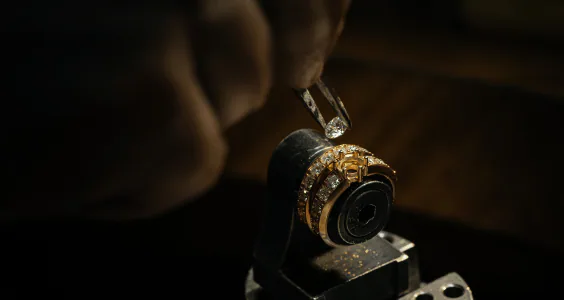
Before you clean
“Silver-colored” is a look, not a care instruction. The metal, plating, finish, stones and repairs all matter, so use the card as a decision path for the piece in your hand rather than giving the whole jewelry box the same bath.
Begin with what you know about the piece, then let its most delicate detail lead. The best method is the gentlest one the maker recommends—not the most dramatic trick on the internet.
If the material is a mystery, a setting moves, moisture can hide inside, or the surface begins to change, stop there. Knowing when not to clean is excellent jewelry care.
Six checks
Move in order. Each check protects the next one from becoming a guess.
Find the maker, product name and material description. A receipt, product page or care card is more useful than guessing from color alone.
Check for plating, coatings, stones, glue, cords, clasps, moving parts and deliberately darkened finishes. The most delicate detail sets the rules.
If a household trick is not recommended for every part of the piece, leave it in the cupboard. Toothpaste, dips, steam and ultrasonic cleaning are not universal answers.
Use the maker’s mildest recommended method, with light pressure and brief contact. More force rarely makes jewelry more glamorous.
Pause at the first unexpected change in color, texture, movement or fit. A loose setting deserves a jeweler, not another round of polishing.
Let every crevice dry, then keep the piece away from pressure, tangles and abrasive neighbors. Good storage is the quiet half of good care.
Stop before damage
Put the cleaning tools down if you are unsure of the material, a setting is loose, a finish may be altered, moisture can become trapped, or the jewelry behaves unexpectedly. This card cannot identify a mystery metal or make one method suitable for every piece.
If the piece needs expert attention, bring the maker’s care instructions and say what happened plainly. A clear description is more helpful than another home remedy.
Care questions
Material, construction and condition always decide what is safe.
No. It helps you keep the maker’s information close at hand; color, photographs and hallmarks do not reveal every coating, treatment or construction detail.
No. Use this card as a decision path, then check the maker’s instructions for the piece in your hand. Similar-looking rings can have very different plating, stones, repairs or finishes.
Write “material unknown” and keep the cleaning minimal. Avoid polish, dips, steam and ultrasonic cleaning until the maker or a qualified professional confirms what is suitable.
Start with the maker or seller information, receipt and any quality mark. A mark can be a useful clue, but appearance and a hallmark alone do not reveal every coating, repair, stone, adhesive or complete construction. Ask a qualified professional when identification changes the care or value decision.
Look for an exact product description, receipt or maker documentation that names the base metal and surface application. Color, wear patterns, weight and photographs are not enough to prove the full construction.
Use the seller or maker description and any documented quality mark as starting evidence. Do not scratch, file or expose the piece to aggressive home chemicals to find out; qualified testing is the safer route when the answer matters.
Check the original listing, receipt, maker information and documented marks. Gold color does not establish solid gold, vermeil, gold-filled or plated construction, and a home appearance check cannot confirm every layer.
Stop. A shift in color or texture, a loose setting, trapped moisture or unexpected movement is a good reason to let a professional take a closer look.
No. Valuable, sentimental, fragile, repaired, plated, stone-set or unidentified jewelry deserves professional advice whenever the material changes what is safe.
Read more
These are the specialist sources behind the card. For a particular piece, the maker’s own care instructions still come first.
Gem treatment, setting, coating, heat, solvents, steam, and ultrasonic use can change what care is compatible.
Identifying metal and preserving original finishes are part of preventive care; storage and contact materials can also affect a piece.
Material and surface-application descriptions should be truthful and specific rather than inferred from color.
Sources reviewed August 10, 2026. This guide cannot identify materials or replace an in-person assessment by a qualified professional.