At the end of summer, jewelry often carries a quiet trace of the season: sunscreen caught behind a stone, salt dried along a hinge, a pearl strand that has absorbed more heat and skin contact than usual. The answer is not to drop everything into one bright blue cleaning bath. This guide explains how to clean jewelry after summer by identifying the metal, surface, stone, setting, and construction first—then using the least aggressive method that will actually remove residue. You will leave with a practical reset for beach-worn rings, plated pieces, pearls, mixed-media pieces, and the jewelry you plan to store until the next shift in weather.
Why summer residue needs a material-first method
Summer creates several kinds of residue at once. Sunscreen and body lotion can leave an oily film that attracts dust and softens the contrast between polished metal, stone, and skin. Sweat can collect around ear posts, chain links, ring interiors, and clasp mechanisms. Seawater can dry into visible salt deposits, while pool exposure introduces chemicals that are particularly risky for some organic gems and treated surfaces. GIA’s travel-care guidance notes that sunscreen, chlorine, cosmetics, and natural skin oils can affect delicate materials such as pearls, turquoise, and coral, while even diamonds can look dull when oil and dirt accumulate on the surface.
The cleaning question begins with construction, not appearance. Two gold-colored rings may require different care if one is solid gold, one is gold vermeil over sterling silver, and one is a thin plated alloy with glued stones. A sculptural earring may combine polished metal, enamel, resin, a pearl, and adhesive in a single piece. The most durable component does not set the cleaning rule; the most vulnerable component does.
Before touching water or cleaner, check the product description, maker’s care instructions, hallmark, and any information about stone treatments. Switchroom’s materials guide and guide to material and craft quality are useful starting points for learning what a piece is actually made from. If the construction is unknown, treat it as delicate: use a soft dry cloth first, then a barely damp cloth if needed, and avoid soaking, steam, chemicals, and machines.
How to clean jewelry after summer: the five-step reset
For jewelry care after beach days, use this gentle triage to decide which pieces can tolerate a careful wash and which should only be wiped or professionally serviced.
- Separate by vulnerability. Make five small groups: plain durable metal; plated or vermeil surfaces; securely set durable stones; pearls or porous gems; and mixed-media or adhesive-set pieces. Do not clean them together.
- Inspect before cleaning. Look for loose stones, lifted plating, cracked enamel, stretched thread, bent posts, weakened jump rings, cloudy adhesive, or a clasp that no longer closes cleanly. Cleaning can worsen an existing weakness.
- Remove loose residue dry. Use a clean, very soft lint-free cloth to lift surface oil, dust, and visible salt. Do not scrape dried deposits with a fingernail or metal tool.
- Use the least aggressive compatible method. For pieces confirmed safe for water, use lukewarm water and a small amount of mild soap, working gently with fingers or a very soft brush. For plated, pearl, resin, enamel, glued, or unknown pieces, a controlled wipe is often safer than immersion.
- Rinse only when appropriate, then dry completely. Soap left in crevices can become another film. Use clean water only on pieces that can safely be rinsed, blot rather than rub, and allow hinges, drill holes, stringing, and stone backs to dry before storage.
Use a dedicated soft jewelry brush rather than an old toothbrush that may hold toothpaste or cleaner residue. Avoid bleach, ammonia, acetone, alcohol, abrasive powders, toothpaste, baking-soda pastes, and improvised acidic soaks unless the maker of that exact piece explicitly recommends them. “Natural” does not mean gentle to plating, pearls, porous stones, adhesives, or intentional patina.
A cleaning map by material and construction
Safe seasonal jewelry care should protect the piece and remain simple enough to repeat. Use the following map as a choice guide, then defer to the maker’s instructions when they are more restrictive.
Plain solid gold, platinum, stainless steel, and uncoated sterling silver
When a piece is plain metal, structurally sound, and free of delicate inserts or coatings, lukewarm water with a small amount of mild soap is a conservative home-cleaning option. Gently work around chain links, ring interiors, posts, and clasps with a soft brush, rinse, and dry thoroughly. Sterling silver may still show tarnish after washing because tarnish is a surface reaction, not simply dirt. Use a silver-specific polishing cloth only on uncoated silver and keep it away from stones, plated areas, oxidized details, and intentional matte finishes.
Do not assume stainless steel makes every attached component equally tolerant. A steel earring with resin, enamel, pearls, or glued crystals should be cleaned according to those more delicate additions.
Gold-plated jewelry, gold vermeil, and gold-filled pieces
These categories may look similar, but their construction differs. Switchroom’s gold vermeil versus gold-filled guide explains why layer, core, and construction matter. After summer wear, begin with a soft dry cloth. If residue remains, use a soft cloth lightly dampened with clean lukewarm water; add a trace of mild soap only when the maker permits it. Wipe again with a clean damp cloth and dry immediately.
Avoid vigorous brushing, extended soaking, abrasive polishing cloths, and repeated rubbing at high-contact edges. These methods may remove residue, but they can also accelerate visible wear on a plated surface. If sunscreen has settled into a detailed recess, patience is safer than pressure: several gentle passes are better than one aggressive scrub.
Diamonds and other securely set, durable transparent stones
Oil and lotion can reduce brilliance by coating the stone and the back of the setting. For an untreated, securely set diamond in a water-safe metal construction, GIA recommends warm soapy water and a soft-bristle brush as a safe approach. Brush lightly beneath the setting where residue gathers, rinse carefully, and dry with a lint-free cloth.
Do not generalize from diamond to every transparent stone. Treatments, fractures, fillings, coatings, heat sensitivity, and setting style can change what is safe. GIA warns that ultrasonic cleaners can damage filled, coated, organic, heat-sensitive, or otherwise vulnerable gems, and vibration can loosen stones. Unless you know the stone, treatment, and setting are compatible, skip the home ultrasonic cleaner.
Pearls, coral, turquoise, and other organic or porous materials
These pieces should be isolated from the “durable stone” group. GIA states that pearls can be damaged by cosmetics, perspiration, heat, and acids; routine care should be a wipe with a very soft clean cloth after wear. Pearls should not go into ultrasonic or steam cleaners. Occasional warm soapy water may be appropriate, but strung pearls must be completely dry before wear, and the maker’s guidance should take priority.
Turquoise can be discolored by chemicals, cosmetics, skin oils, or perspiration. GIA advises warm soapy water for turquoise while excluding steam and ultrasonic methods; treated surfaces may also be damaged by heat or solvents. Coral and other organic materials should similarly be kept away from aggressive chemicals, heat, and abrasion. Store these materials separately so harder metal edges and gemstones do not scratch them.
Enamel, resin, glued stones, foil-backed crystals, and mixed-media wearable sculpture
Mixed-media jewelry deserves the most conservative method because water can enter seams, soften or cloud some adhesives, disturb foil backings, or remain trapped between materials. Wipe the exterior with a soft dry cloth, then spot-clean residue with a barely damp cotton cloth or swab without flooding joins. Do not soak. Do not direct steam into seams. Do not polish resin or enamel with a metal polishing cloth.
If a piece has an intentionally darkened metal finish, painted detail, textile, cord, leather, wood, or an unknown coating, stop before using soap. The piece may need maker-specific care. Switchroom’s central care page should be checked alongside the individual product information.
Drying, inspection, and seasonal jewelry storage
Cleaning is half of the reset. Storing a piece while it is damp, salty, or structurally compromised can worsen the problem.
- Dry in open air before closing the box. Blot with a lint-free cloth and leave the piece in a clean, shaded place until crevices, stringing, and hinges are fully dry. Avoid hair dryers, radiators, and direct intense sunlight.
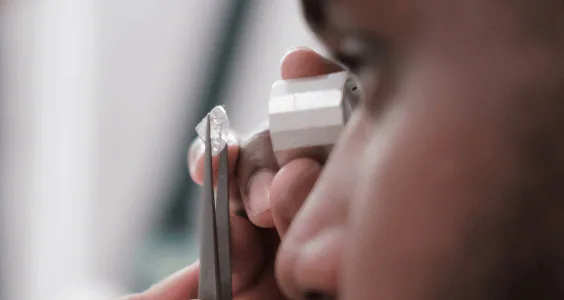
- Inspect under directional light. Rotate the piece slowly. Look for a stone that shifts, a pearl knot that stays dark, a greenish or white deposit around a joint, a peeling edge, or a clasp gap.
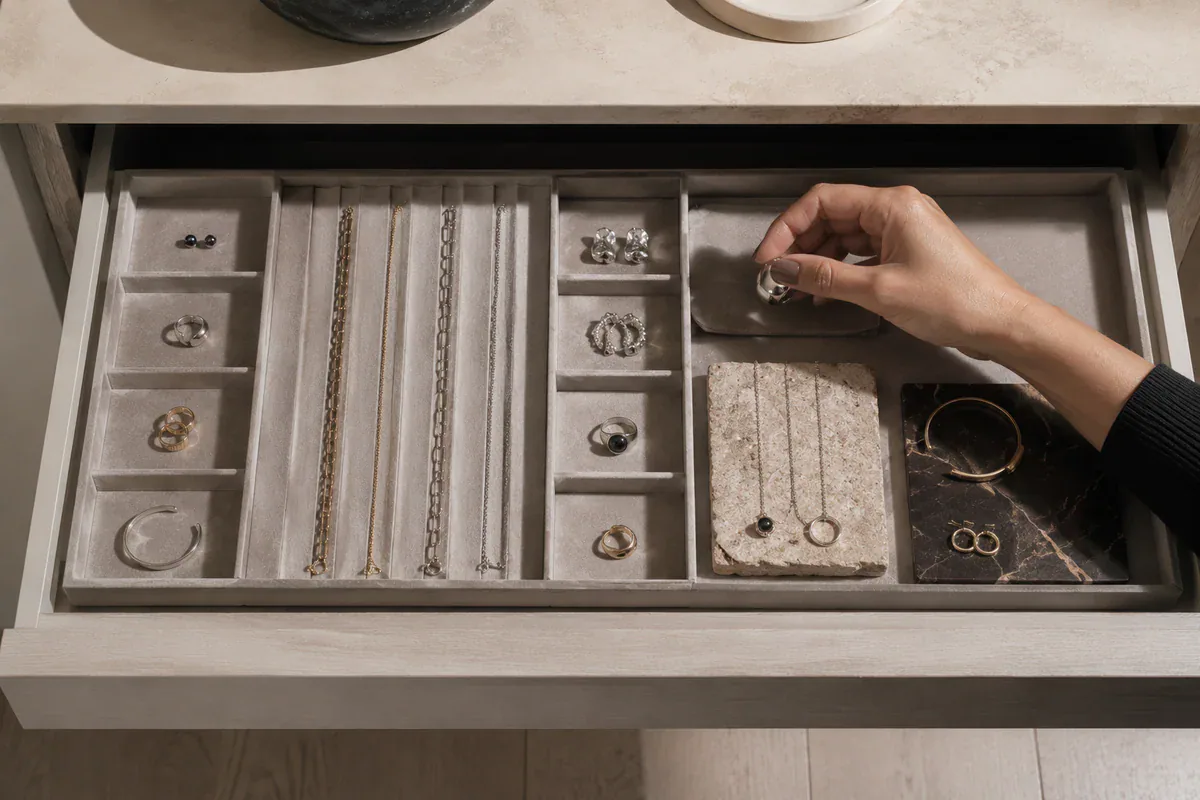
- Separate surfaces. Use individual soft pouches or divided compartments so chains do not knot and harder pieces do not scratch pearls, resin, enamel, or polished plating.
- Store clean and dry, not sealed with summer residue. Do not leave jewelry in a beach pouch beside damp swimwear, sunscreen, perfume, or toiletries.
- Send uncertain damage to a professional. Loose settings, stretched pearl string, damaged plating, cracked enamel, cloudy adhesive, and mechanical clasp problems are repair questions, not cleaning challenges.
Seasonal storage is also a useful buying test. A piece is easier to care for when its material, surface treatment, stone identity, and construction are clearly disclosed. Before adding another piece to your rotation, ask: Can I identify the metal and finish? Are the stones treated or glued? Is there a care method for the complete piece, not only its strongest material?
That transparency is part of how jewelry earns a longer life. Explore the Switchroom jewelry collection with construction and care in mind, then keep the pieces that carry summer forward as pieces—not proof of neglect.
How to clean jewelry after a beach trip
Begin dry and material-first. Remove loose sand with a soft air bulb or a very soft, clean brush only when the confirmed surface and setting can tolerate it; do not grind particles across polished metal, plating, pearls, resin or soft stones. Check the maker’s care instructions before adding water, soap, a polishing cloth or a machine.
Salt, sunscreen and sweat do not justify one universal soak. Separate pieces by confirmed material and construction, inspect closures and settings, then use the gentlest approved method for each piece. If the material is unknown, a stone is loose or glued, or residue sits inside a delicate setting, stop and ask a qualified jeweler rather than escalating the cleaning method.
Frequently asked questions
Can I soak all my jewelry together after a beach trip?
No. Separate plain durable metals from plated surfaces, pearls, porous stones, treated gems, and adhesive-set or mixed-media pieces. The safest method for the strongest item may damage the most vulnerable one.
How do I clean jewelry after sunscreen?
First lift the oily film with a soft dry cloth. If the piece is confirmed water-safe, follow with lukewarm water and mild soap; for plated, pearl, resin, enamel, glued, or unknown pieces, use a lightly damp cloth and avoid soaking.
Can I use an ultrasonic cleaner after summer?
Only when the exact stones, treatments, settings, and finishes are known to be compatible. Ultrasonic vibration and heat can damage or loosen vulnerable, filled, coated, organic, or heat-sensitive materials, so professional assessment is safer when you are unsure.
When should I take jewelry to a professional?
Seek professional help for loose stones, stretched pearl string, lifted plating, cracked enamel, cloudy adhesive, damaged clasps, deep tarnish near delicate stones, or any piece whose material or treatment you cannot identify.
For ongoing care, wipe jewelry after high-heat wear, keep it away from fresh sunscreen and perfume where practical, and never escalate to a stronger cleaner simply because a gentle method takes longer.