Jewelry for High Neck Dress: Let the Collar Frame the Drama
A high neckline does not leave jewelry with less to do; it gives jewelry a sharper brief. The collar already frames the face, defines the upper body, and creates a deliberate frame, so the most successful styling choices rarely compete with it. Instead, they redirect attention with intention. An expressive earring, a sculptural cuff, or a memorable ring can become the visual destination while the dress provides the architectural backdrop. This guide to jewelry for high neck dress begins with one editorial principle: do not decorate every available area. Select one focal point, let negative space remain visible, and allow the relationship between clothing and jewelry to feel considered rather than crowded.
The central idea is simple. A high-neck silhouette works best when jewelry creates one clear conversation with the garment instead of trying to overpower it. That focal zone may be above the collar through earrings, below the neckline through bracelets and rings, or across the body through balanced visual rhythm. The most memorable styling comes from proportion, contrast, and restraint rather than quantity.
Understand the Collar Before Choosing Jewelry
Every high neckline performs a slightly different visual function. A close crew neck creates a clean geometric frame. A mock neck elongates the neck while introducing gentle verticality. A funnel neck adds volume, and a softly draped collar creates movement before jewelry enters the picture. Rather than asking which necklace belongs with every version, begin by asking whether the neckline already feels visually complete.
Many high-neck dresses already establish a strong upper-body composition. Adding another dominant element at the same height can reduce clarity instead of increasing interest. In those situations, earrings often become the natural place for emphasis because they sit above the collar and frame facial expression rather than competing with fabric. If a full statement pair feels too dominant, Switchroom’s guide to how to wear ear cuffs offers a more compact face-framing route.
When the dress includes visible texture, embroidery, pleating, or sculptural construction, jewelry benefits from either echoing that visual language or deliberately contrasting it. The goal is dialogue instead of duplication. Quiet clothing can support dramatic jewelry, while expressive garments often benefit from jewelry with cleaner outlines.
Choose a Single Focal Zone
Editorial styling frequently succeeds because it accepts that not every accessory needs equal attention. Instead of layering statement earrings, oversized necklaces, multiple cuffs, and several rings together, decide where you want the eye to arrive first.
- Face first: Prioritize earrings when the neckline already provides enough structure.
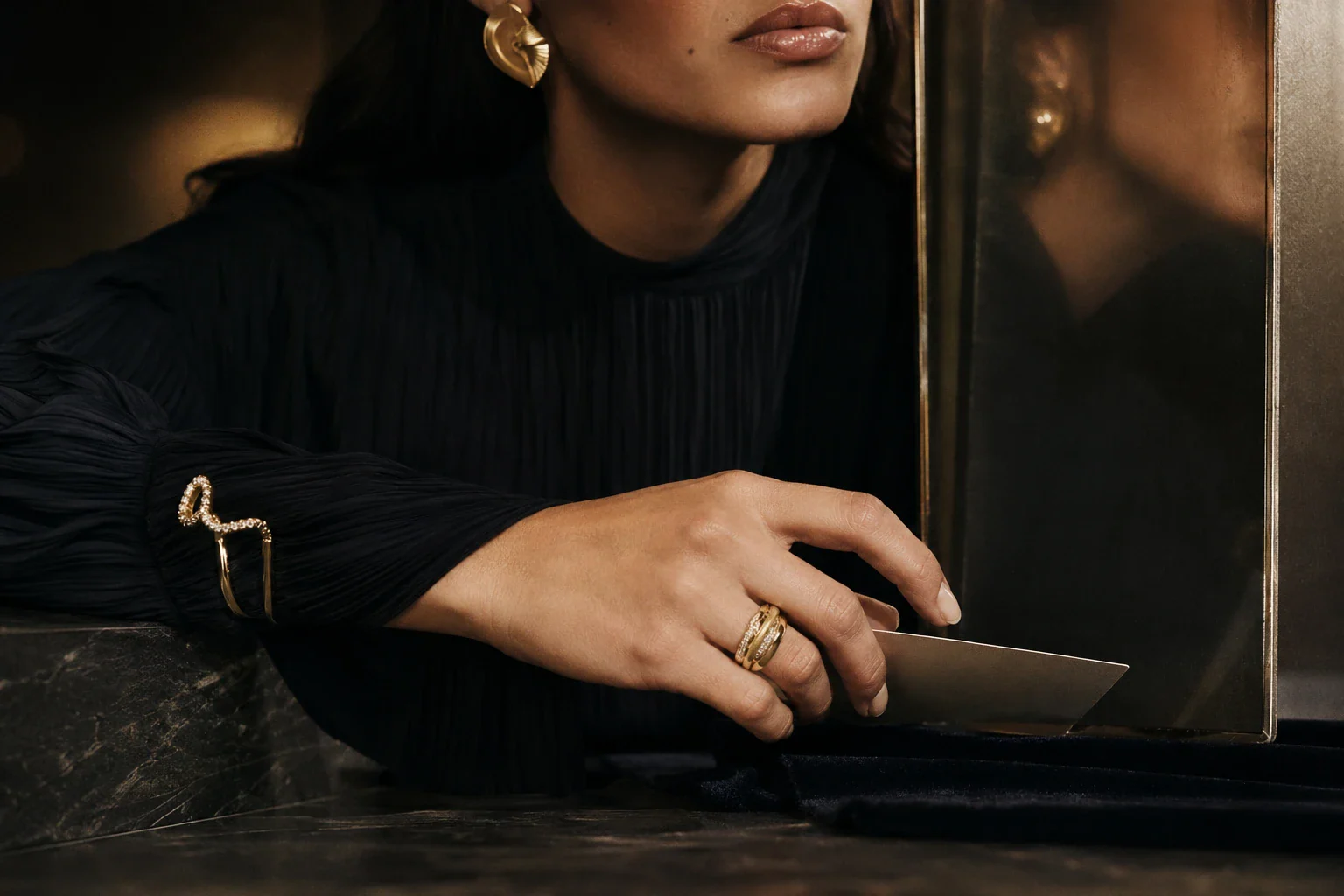
- Hands first: Shift attention downward with bracelets or rings when the upper body already feels visually rich.
- Balance first: Use smaller jewelry throughout only when each piece supports the overall silhouette instead of competing for attention.
This approach also adapts well across occasions. A gallery opening, creative workplace, dinner, or formal event may all involve the same dress, while the jewelry changes according to the desired emphasis rather than following a fixed formula.
Frame the Face with Intention
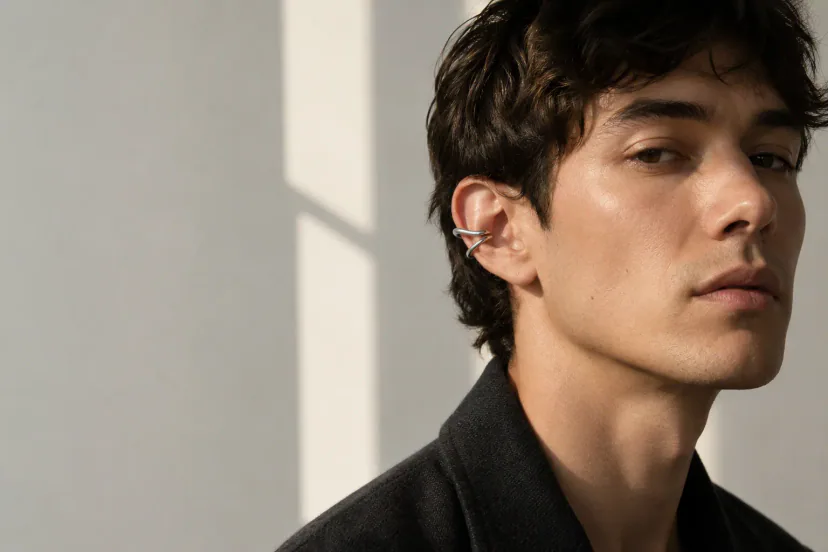
Statement earrings for short hair
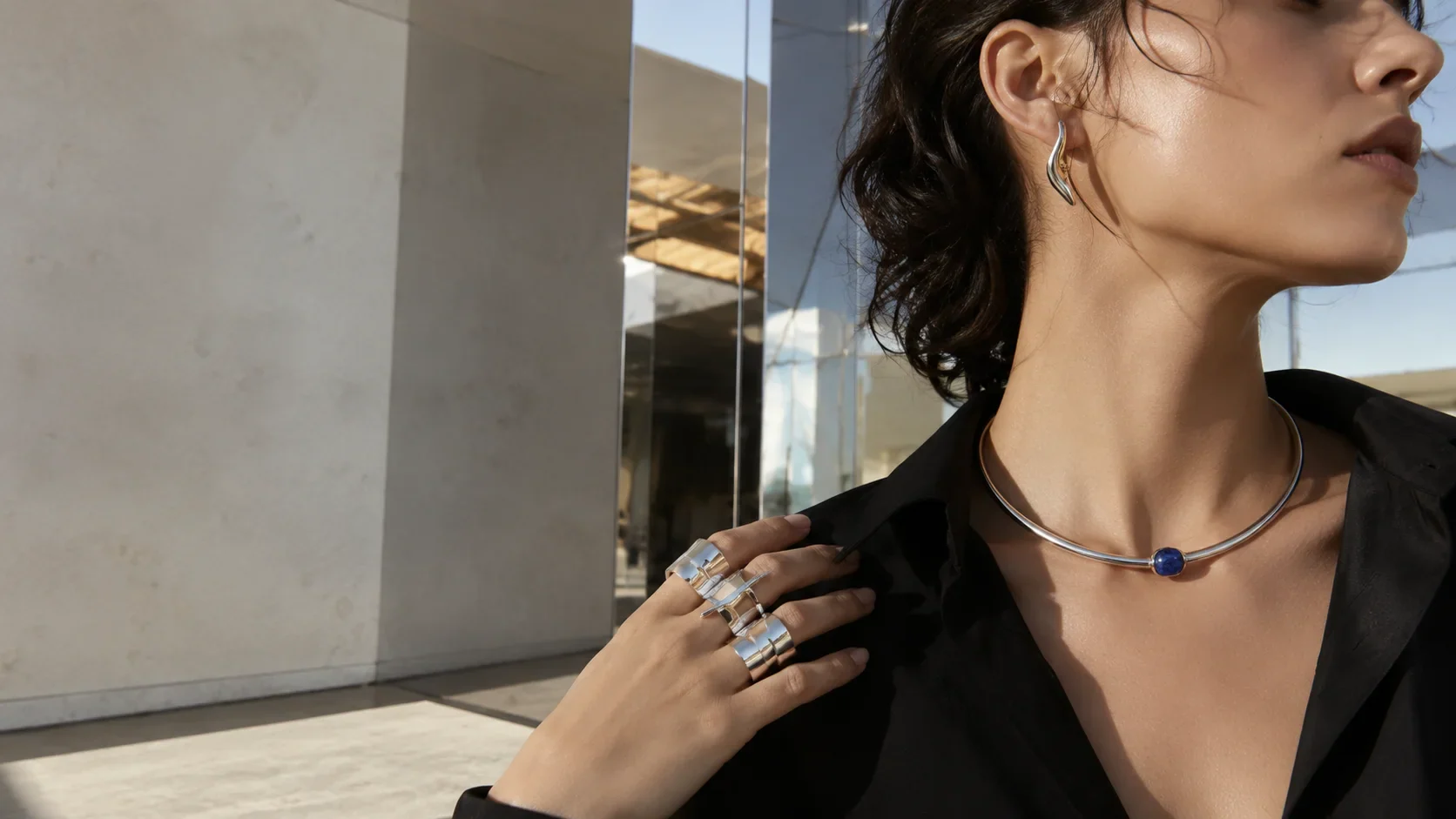
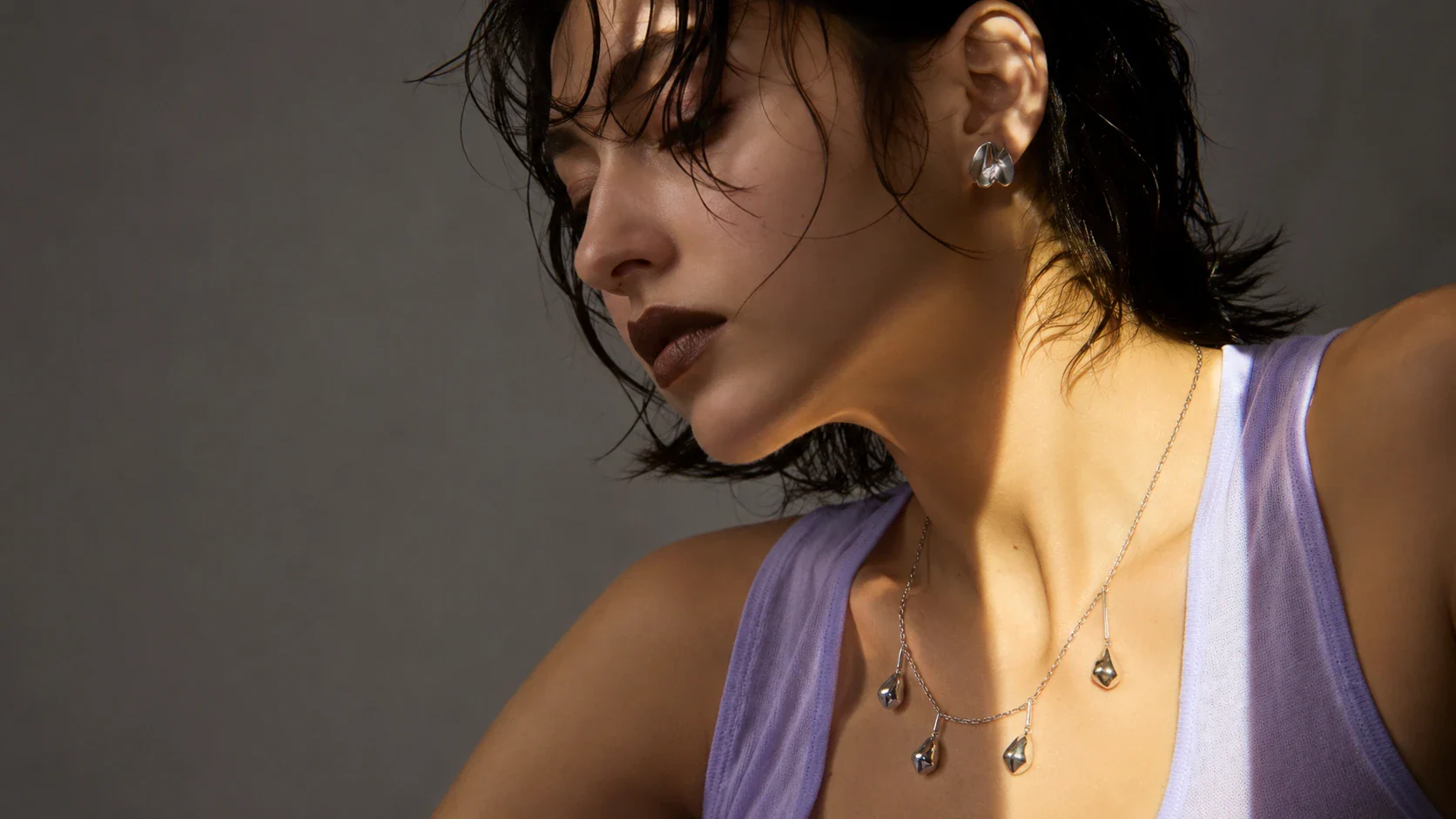
Short hair naturally exposes the ears, jawline, and neck, making earrings one of the strongest styling tools available. statement earrings for short hair often succeed because they occupy visual space that longer hairstyles might otherwise soften or conceal. With a high-neck dress, they create a vertical conversation between face and shoulder instead of drawing attention toward the covered neckline.
Scale matters more than absolute size. Earrings that extend slightly beyond the jawline create presence without overwhelming the face. Curved forms can soften sharply tailored clothing, while more angular silhouettes reinforce architectural garments. The strongest result usually comes from choosing one expressive pair rather than layering several competing accessories elsewhere.
Earrings for glasses wearers
For earrings for glasses wearers, remember that eyewear already contributes shape, line, and proportion around the face. Frames effectively become another designed piece within the composition, so earrings should acknowledge rather than ignore them.
If frames feature bold geometry, earrings with clean silhouettes often produce visual clarity. If frames are understated, earrings can introduce more expressive volume. Consider how the outer edge of the frame, the earring, and the shoulder relate when viewed together. The goal is not perfect matching but balanced spacing between these elements.
Hair also changes the equation. Pulled-back styles expose earrings fully, while loose hair reveals them only through movement. Both approaches can work beautifully with a high neckline as long as the jewelry remains intentionally placed within the overall composition. A vertical pair such as Switchroom’s sculptural vermeil climber earrings demonstrates how a compact silhouette can still direct the eye upward.
Surface, Shape, and Visual Texture
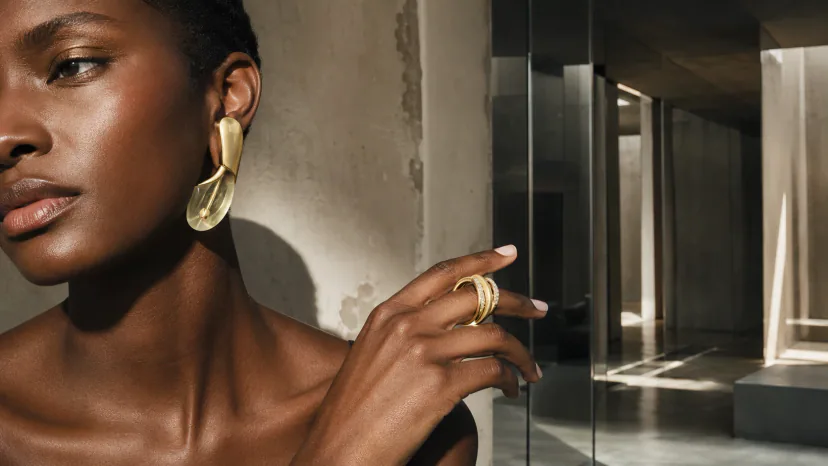
Once proportion feels resolved, surface becomes increasingly important. Jewelry catches light differently depending on its finish, edges, and relief. That visual behavior can either reinforce the garment’s character or introduce productive contrast.
Textured metal jewelry brings depth through changing reflections rather than relying only on scale. Hammered, brushed, carved, or irregular surfaces create subtle variation as the wearer moves. Against a smooth high-neck dress, texture often becomes more noticeable because the surrounding fabric provides visual calm. Against richly textured fabric, smoother jewelry may offer welcome contrast.
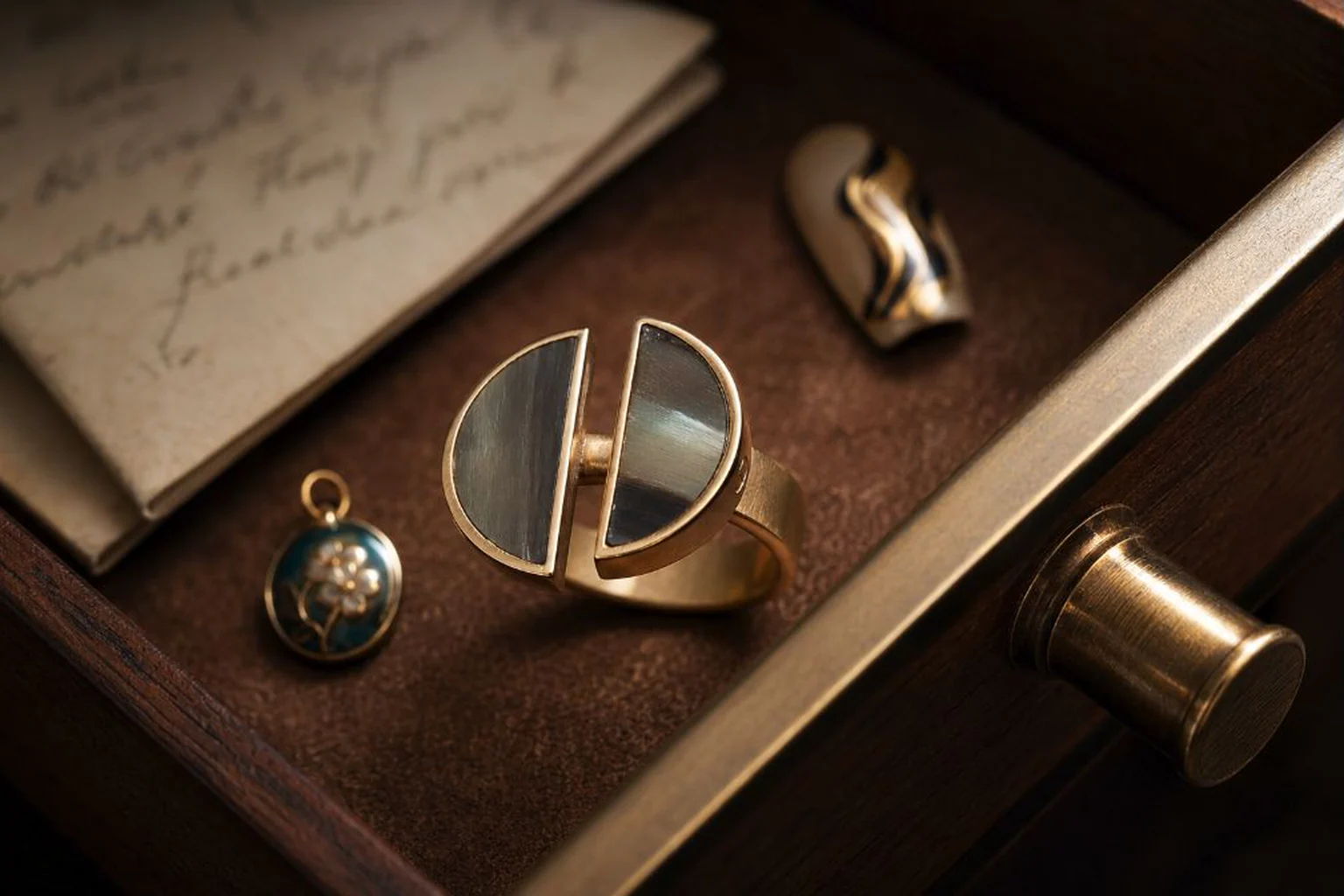
The same thinking applies to form. sculptural jewelry styling treats jewelry as three-dimensional design rather than simple decoration. Instead of asking whether a piece merely “matches” a dress, consider how its volume occupies space. Does it project outward? Does it curve toward the face? Does it introduce asymmetry into an otherwise symmetrical silhouette? These spatial relationships often determine whether a look feels editorial instead of conventional. The V&A’s jewellery design archive is useful context for seeing how sketches, presentation drawings, materials, and finished pieces participate in the same design process.
Avoid assuming that appearance alone reveals practical characteristics. Photographs cannot reliably communicate weight, closure type, flexibility, or wearing experience. Those details depend on the individual piece and should always be confirmed from accurate product information rather than inferred from styling images.
A practical guide for styling choices
If you ever wonder how to style statement jewelry with a high-neck dress, work through this simple way to choose before adding accessories.
- Start with the collar. Decide whether the neckline already functions as the visual anchor.
- Select one destination for the eye. Choose ears, wrists, or hands before selecting individual pieces.
- Compare proportions. Larger collars often benefit from stronger geometric jewelry, while cleaner necklines may support more delicate interventions.
- Evaluate movement. Walk, turn, and raise your hands. Jewelry should contribute rhythm instead of creating visual clutter.
- Edit once. Remove one accessory before leaving. The final subtraction often strengthens the entire look.
This approach works because it prioritizes relationships instead of isolated pieces. Each choice responds to the garment already being worn, producing styling that feels deliberate rather than accumulated. Browse Switchroom’s sculptural jewelry edit by silhouette first, then compare the chosen shape with the neckline rather than shopping by metal color alone.
Minimalism, Asymmetry, and Modern Balance
Jewelry for minimalist outfits
A restrained wardrobe does not require invisible jewelry. In fact, jewelry for minimalist outfits often carries greater visual responsibility because fewer competing elements exist. One thoughtfully chosen piece can define the character of an otherwise quiet silhouette.
With a high-neck dress, minimal styling frequently succeeds through precision instead of abundance. A single expressive earring, one sculptural open cuff, or a carefully proportioned ring may create enough contrast to transform the entire composition. The absence of unnecessary layering allows every chosen piece to remain legible.
Asymmetrical earrings styling
Asymmetrical earrings styling introduces controlled tension into highly structured clothing. Because many high-neck dresses emphasize symmetry through their neckline, asymmetrical earrings can interrupt that balance in an engaging way without making the overall look feel chaotic.
The key is maintaining an underlying relationship between both earrings, even when they differ. Shared proportion, material family, visual weight, or formal language helps them read as intentional companions rather than unrelated pieces. Asymmetry becomes most convincing when it appears designed instead of accidental. The Museum of Arts and Design’s Jewelry Stories provides wider art-jewelry context for the experimental and sculptural practices that made wearable form a serious design language.
Frequently Asked Questions
Can statement earrings for short hair work with every high-neck dress?
They can work across many high-neck silhouettes because they move visual attention above the collar. The best choice depends on the dress volume, facial proportions, hairstyle, and the overall balance of the outfit rather than on one universal size or shape.
What should earrings for glasses wearers prioritize?
Think about the relationship between the glasses frame and the earring instead of evaluating each independently. Together they create the face-framing composition, so spacing, proportion, and silhouette usually matter more than exact stylistic matching.
How do I approach how to style statement jewelry without overwhelming a high neckline?
Begin by identifying a single focal area. If the earrings become the visual statement, keep bracelets and rings supportive rather than equally dominant. If the hands carry the emphasis, allow the face-framing jewelry to become quieter. Clear hierarchy usually creates stronger styling than equal emphasis everywhere. For a second way to build that hierarchy, read Switchroom’s guide to identity-switch accessories.
Does textured metal jewelry always suit high-neck clothing?
Not automatically. Texture is most effective when considered alongside the dress fabric and silhouette. Smooth clothing often highlights textured jewelry, while richly textured garments may benefit from simpler surfaces that create contrast instead of visual competition.
Closing Thoughts
The strongest approach to jewelry for high neck dress is rarely about adding more. It is about identifying where attention should naturally settle, then allowing jewelry to reinforce that choice with clarity. Whether the answer is a sculptural earring, a refined cuff, an expressive ring, or a carefully balanced asymmetrical composition, the most memorable styling comes from thoughtful relationships between garment, body, movement, and piece. When every piece has a clear purpose, the overall look feels confident, contemporary, and quietly architectural.