Do wedding bands have to match? If you are deciding how they should look, no. Matching is an aesthetic choice; identical appearance is not a measure of commitment. You might want a strong resemblance, one detail in common, or two completely different designs.
A pair of rings can repeat a broad, sweeping curve without sharing every contour. Two different silhouettes can echo the same small sequence of edges. An existing ring can also remain exactly as it is, without requiring a visual counterpart. The question is how much resemblance you actually want.
The Knot’s discussion of matching wedding rings presents matching and different designs as personal choices. To make that choice more precise, separate what each person wants to wear from what you want the rings to share.
Begin with two individual preferences
Before comparing rings together, each person can make three short notes: what you want to see on your own hand, what you do not want to change, and what remains open. Start with rings you already wear, if any, and the details you actually enjoy.
Be specific. “Simple” might mean an uninterrupted curve to one person and a broad, flat surface to another. “Unusual” could mean an uneven outline, a folded-looking ridge, or a small interruption in an otherwise regular edge. Those descriptions give you something visible to discuss.
- What is fixed? Perhaps you want to keep an existing ring unchanged, or you already know you dislike a broad shape on your hand.
- What do you enjoy? Name the curve, outline, amount of ornament, or surface appearance that attracts you.
- What could vary? You might be open to a different outline while wanting to keep a quiet surface, or enjoy several widths but only one kind of edge.
Each person decides which preferences are nonnegotiable for their own ring. An open preference is simply something to explore. It does not make that person responsible for absorbing every difference between the two designs.
Decide what the resemblance would mean to you
Now ask a separate question: would you enjoy a visible connection between the rings? Some possible answers are quite precise: “I would like them to look related at a glance,” or “I would enjoy a detail we recognize when we look closely.” Another answer is that the shared meaning needs no visible resemblance.
This distinction matters because you can otherwise spend an afternoon comparing objects before agreeing on what you are looking for. One person may be imagining a nearly identical silhouette; the other may already consider a small repeated curve enough.
You can choose how noticeable that connection should be. Imagine the rings together, then imagine them on separate hands across a table. A detail that is enjoyable up close does not have to announce itself from across the room.
Compare one visual variable at a time
Choose one feature to investigate first. Looking for similarity in shape, color, width, finish, and decoration simultaneously can obscure which resemblance you actually like. The following are exercises in looking at design, not predictions about fit or feel.
Curvature: where does the line turn?
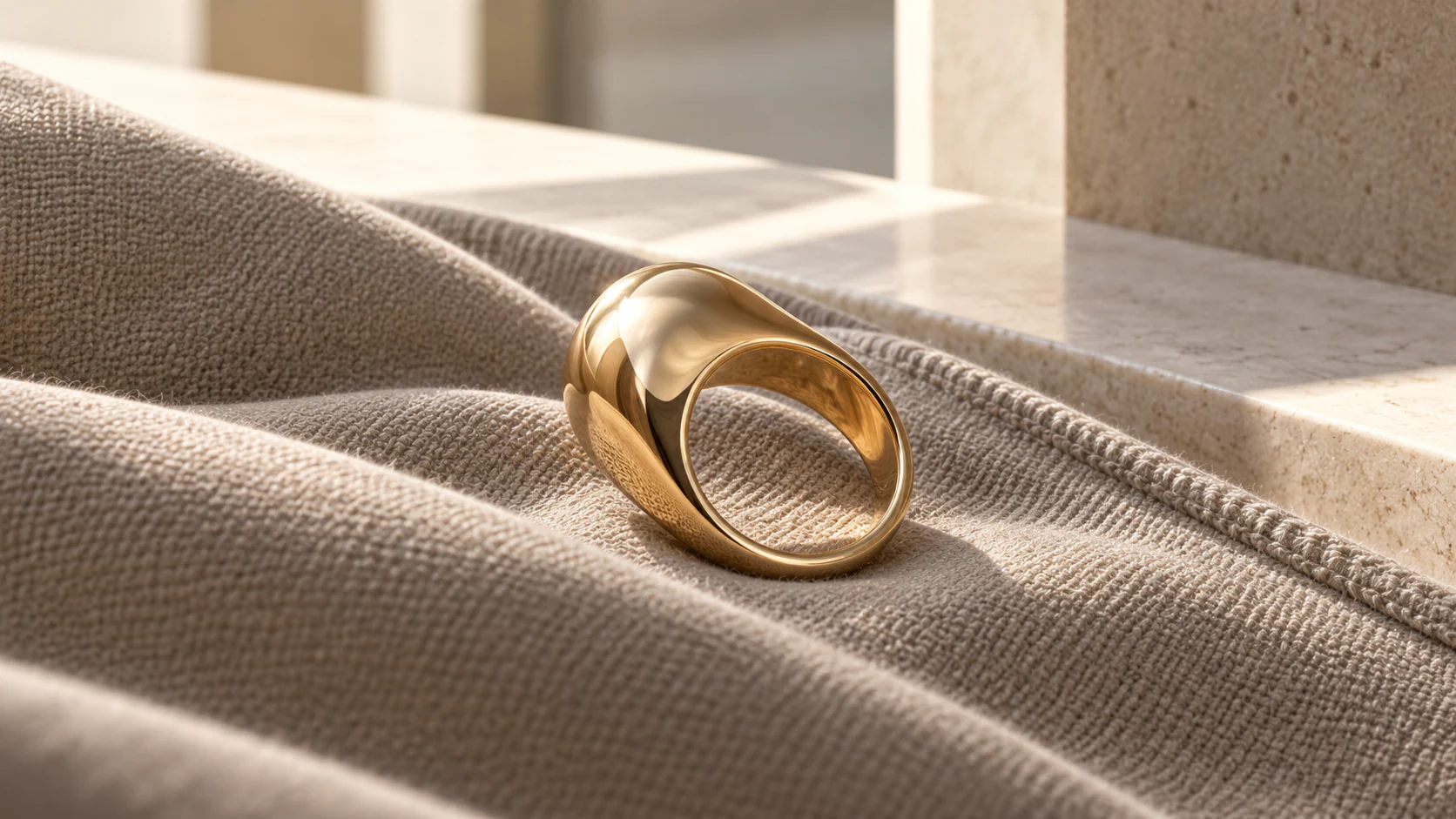
Trace the visible outline with your eyes. Does it make one long sweep, flatten briefly, or change direction several times? Two rings can share a long, shallow curve while differing elsewhere. Ask whether it is that particular turn you like, or merely the fact that both designs are rounded. The more precisely you name the curve, the easier it becomes to compare.
Edge rhythm: what repeats, and where?
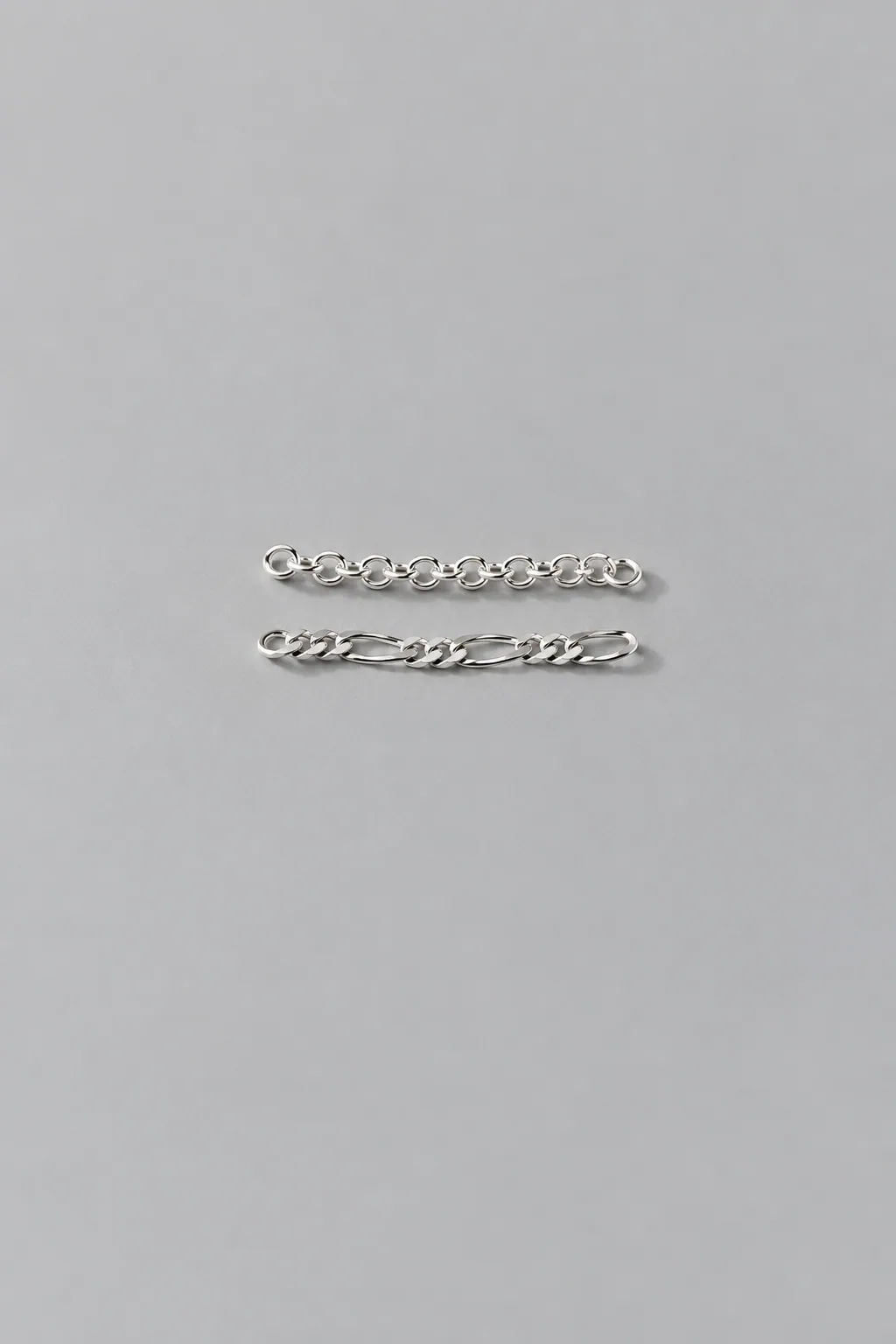
Look at the sequence around an edge: one continuous rim, two close parallel lines, or small interruptions separated by longer quiet stretches. Consider the difference between repeating a detail and repeating its spacing. A narrow ring and a broader one could echo a paired-line rhythm without having the same outline. Describe the visible sequence before deciding whether it feels connected.
Finish: what kind of surface draws you in?
Set shape aside briefly and compare the surface appearance you are drawn to: a clear reflection, a diffuse sheen, or visible texture. Ask whether this resemblance would still interest you if the outlines differed. Keep color and material identity separate; a photograph’s color does not establish what a ring is made from. Here, you are naming a visual preference.
Proportion: which parts carry the design?
Compare relationships within each ring: a thin rim against a broad face, or a small flat section beside a generous curve. You might like the same balance of narrow and broad elements in two different silhouettes. Proportion gives you something more precise to discuss than “one should be the smaller version.” Actual dimensions remain a separate question for the real piece.
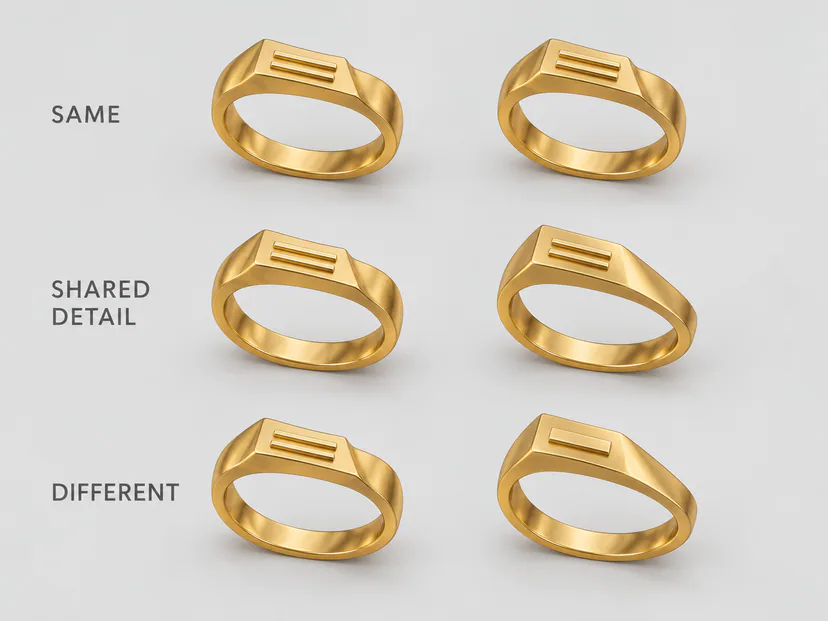
A conversation in five moves
You can do this with your existing rings, your own rough sketches, or images you are considering. Keep the exercise small enough that you can still explain the decision afterward.
- Describe your own choice first. Each person finishes: “On my hand, I want…” Add one visible detail. Give each description space before trying to turn the two into a pair.
- Name anything already settled. “I am keeping this ring unchanged” is a complete starting point. So is a preference about visual width or ornament that you do not want to revisit.
- Agree on the amount of resemblance to explore. Would you enjoy a close match, a detail noticed only nearby, or no planned visual connection? You can compare possibilities without committing to one immediately.
- Pick one variable and point to it. Try “these two curves turn in a similar way” instead of “these go together.” If you cannot identify the resemblance you are discussing, sharpen the description before adding more options.
- Look at each ring separately. Cover the other image or put the other ring aside. Each person asks: “Do I still want this appearance on my own hand?” Keep that answer alongside your response to the pair.
A useful decision can be written in one sentence: “We want the same long curve, while keeping our different preferences for width.” It can also be: “We are keeping both rings and choosing no additional resemblance.” Neither sentence requires a shopping list.
Three hypothetical decisions, in close-up
These imagined situations show how the comparison might work. The rings described are fictional design examples.
Both people like the same distinctive shape
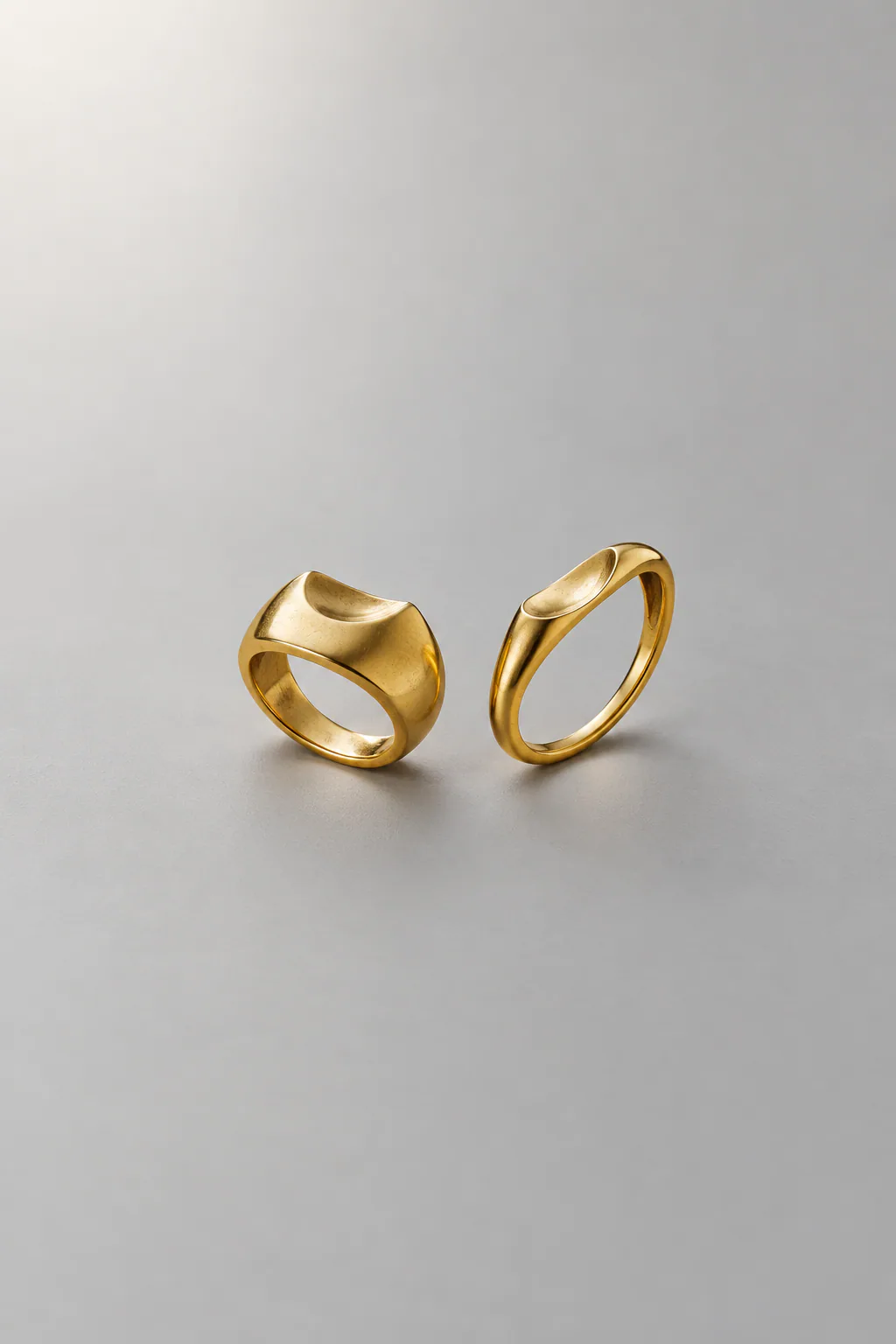
Imagine two people who independently prefer a broad sweep interrupted by a short flat plane. They compare that feature first, then look at each whole design separately. Both still prefer the same overall appearance. A close visual match makes sense for this imagined pair because it preserves both preferences. The appeal lies in choosing the same sculptural turn deliberately, then enjoying it on two separate hands.
A shared edge, two different silhouettes
Imagine one person drawn to a narrow, elongated-looking top and another to a wider, off-center face. Neither wants the other outline. On paper, they compare a small paired-line edge in both designs. That repeat interests them even when the silhouettes remain different. They leave width and asymmetry open to individual preference, keeping only that small repeated sequence in common.
An existing ring stays exactly as it is
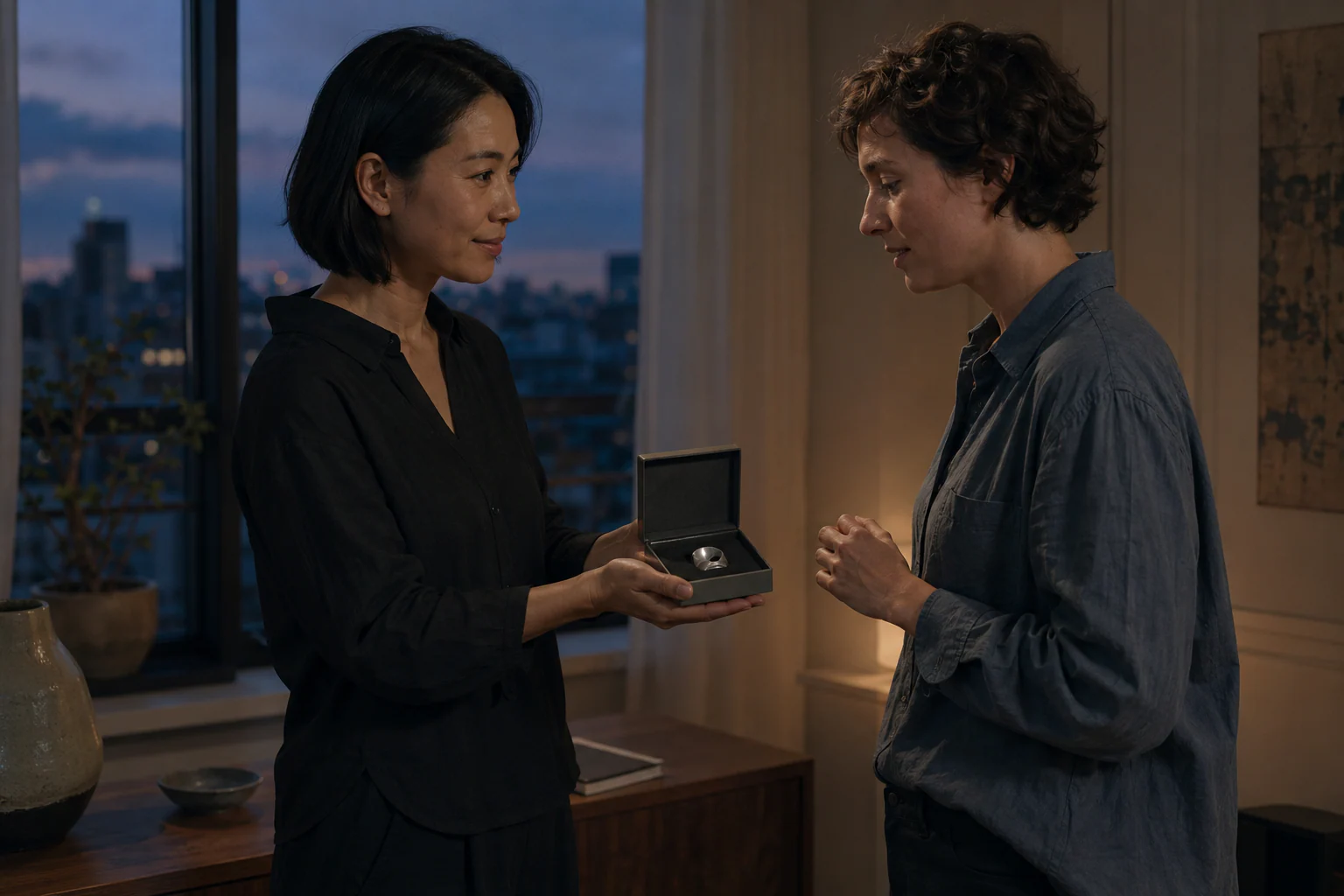
Imagine one person keeping a meaningful ring with an irregular outline. The other prefers a restrained, geometric shape. They consider a shared curve and find that it adds nothing either particularly wants. They keep the different appearances. The existing ring needs no modification, and the second choice need not imitate it. Their decision can include objects already owned; difference creates no automatic reason to replace anything.
Let each ring stand on its own
After deciding how the rings relate, return to the individual view. What attracts you when the other ring is absent? A sweeping outline? A tiny break in the edge? The visual weight of a broad surface? Name the feature you would miss if it disappeared.
If one design appeals to you only beside its counterpart, that is useful information. You can revisit that particular choice without making every detail negotiable again. Equally, there is no need to keep adjusting two rings once each person likes their own and the amount of resemblance feels right to both.
For any real piece, consult the actual maker’s specifications for dimensions, material, sizing information, and care. The visual comparisons here cannot establish those details.
A few questions before you decide
Can rings in different colors still look connected?
Yes. As a design exercise, look for a similar curve, a repeated edge sequence, or a comparable balance of broad and narrow elements. Choose whichever resemblance you both enjoy. Different surface colors can remain part of the composition; they do not need to be corrected, and color alone does not identify a material.
Do we need to change an existing ring to make this a shared choice?
No change is required for the decision described here. You can keep an existing meaningful ring exactly as it is and decide together how much resemblance, if any, you want between the two. That discussion can end with both rings unchanged. It does not require a purchase, replacement, or added detail.
Is matching a partner’s ring the same as coordinating a ring stack?
They are different visual questions. Partner matching concerns rings worn independently by two people. Stacking concerns the arrangement of several rings on one person’s hand. If that second question also interests you, explore ring stacking separately. You can resolve the composition on your own hand without making it resemble your partner’s.