You get to decide whether retirement needs an object. Retirement jewelry is a piece someone chooses, or agrees to receive, to mark the end of a career or one chapter of working life. It can be a private marker, a visible change or something worn on an ordinary day. Choosing no jewelry and buying nothing is a complete decision.
A ring can carry a meaning you give it. It cannot tell you how to feel, rewrite the way a career ended or prove what the years were worth. Pride, relief and mixed feelings can stay exactly as they are.
Before looking at pieces, work through five questions:
- Who is choosing, and does the wearer want a marker?
- What, if anything, should it mark?
- Should it be private, visible, worn regularly, brought out occasionally or absent?
- What fits the person’s taste, body, daily habits, care preferences and budget now?
- Would something already owned, a different kind of gift or no purchase fit better?
Decide who has the final say
When you are choosing for yourself
Self-choice lets you decide what the object marks, when to choose it and whether anyone else needs to know. You might select a piece you have wanted for years, give a familiar ring a new association or leave the decision open. Nothing has to be ready for the date you leave.
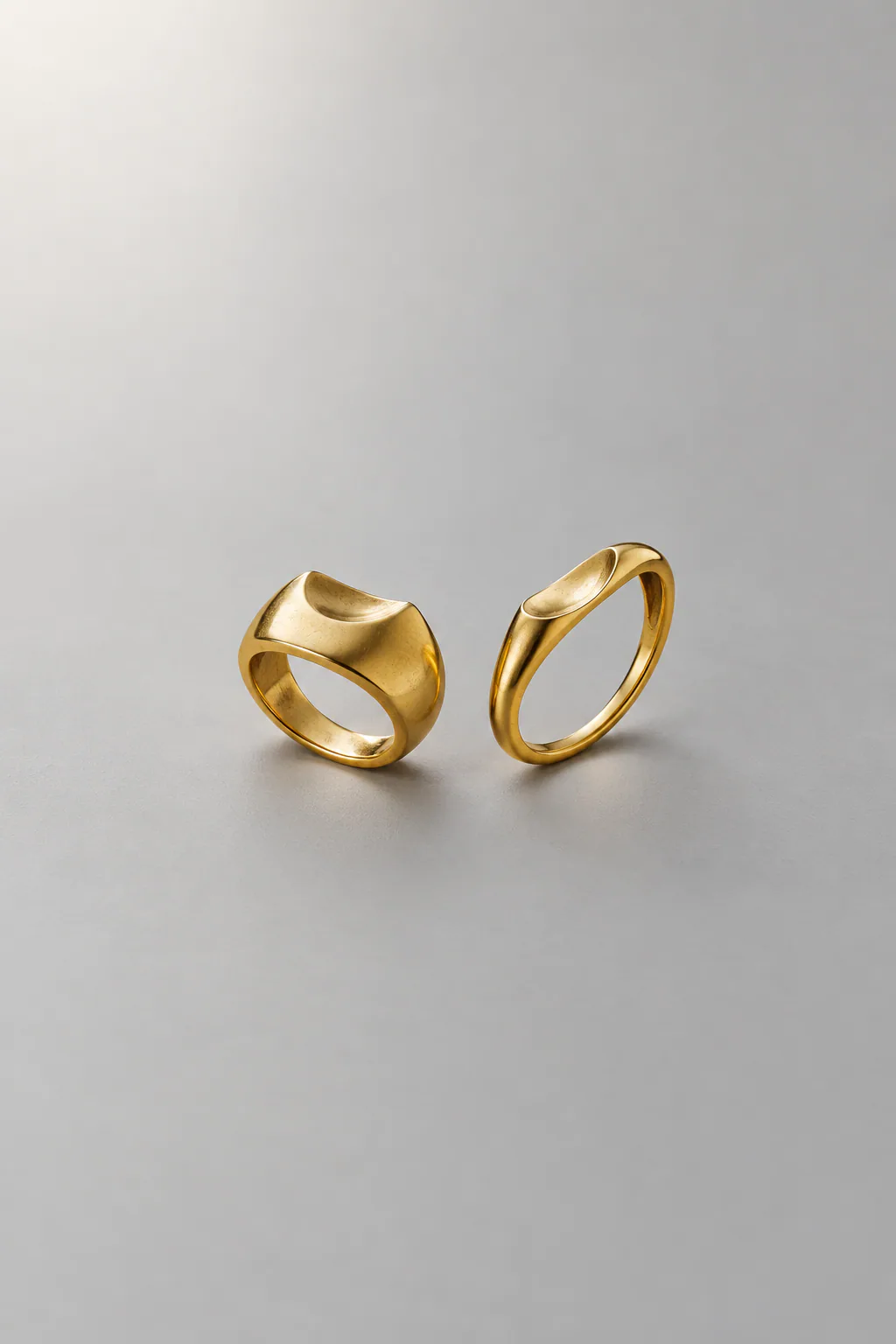
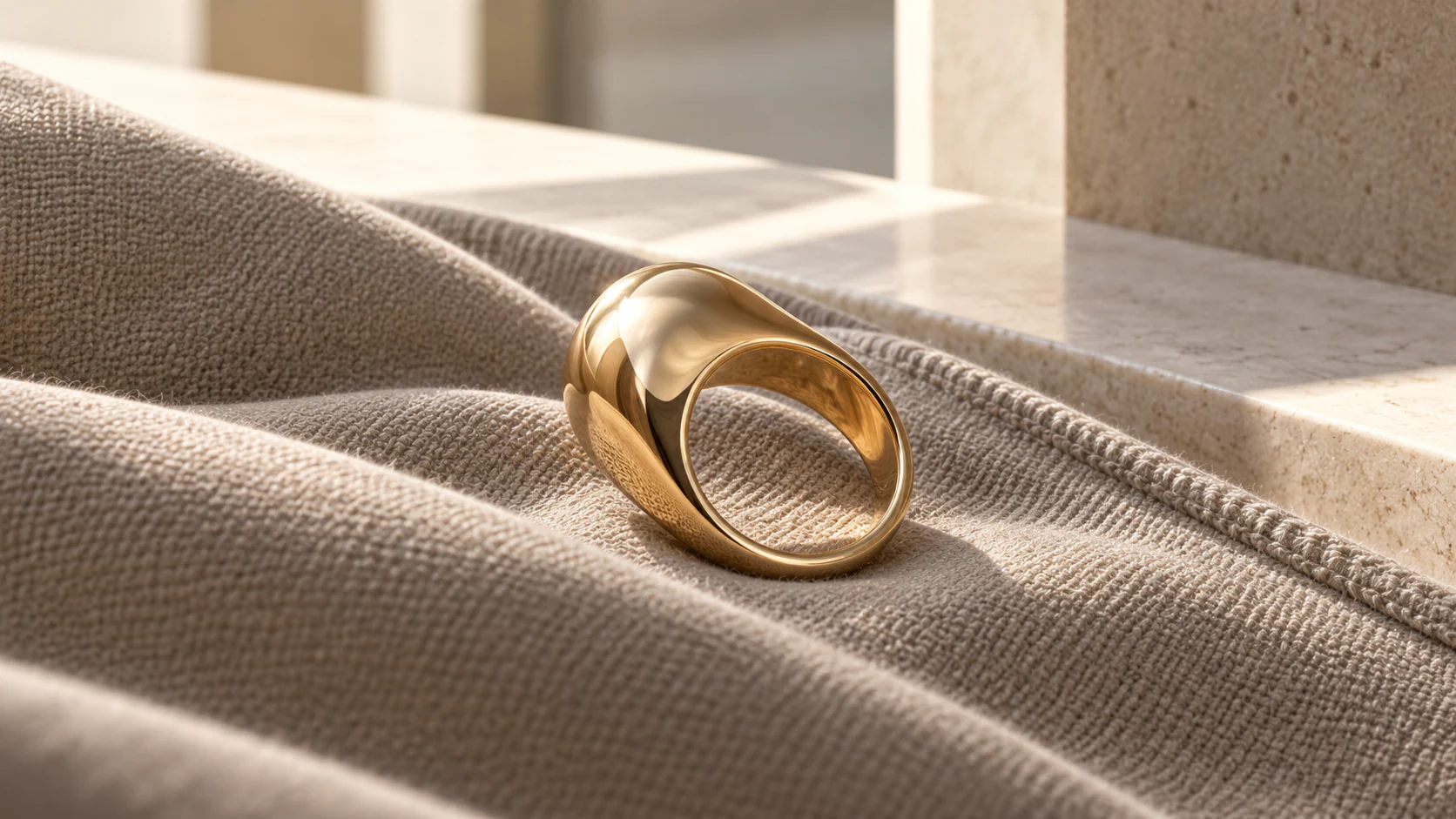
Begin with the jewelry you actually reach for. Perhaps you want another clean line at the neck because that is already your language. Perhaps you want a broad, irregular shape across a finger because you have been looking at one for a while. Familiarity and deliberate difference are both available; a change in working life does not require a new look.
Ask whether you want a reminder of the work, a marker of leaving, or simply something you like at this particular moment. You are allowed to choose the curve before finding words for it.
When you are giving
Retirement jewelry gifts begin with a different question: does this person want jewelry to mark the occasion, and how much of the choice would they like to make? Ask privately, before a purchase turns the question into an obligation.
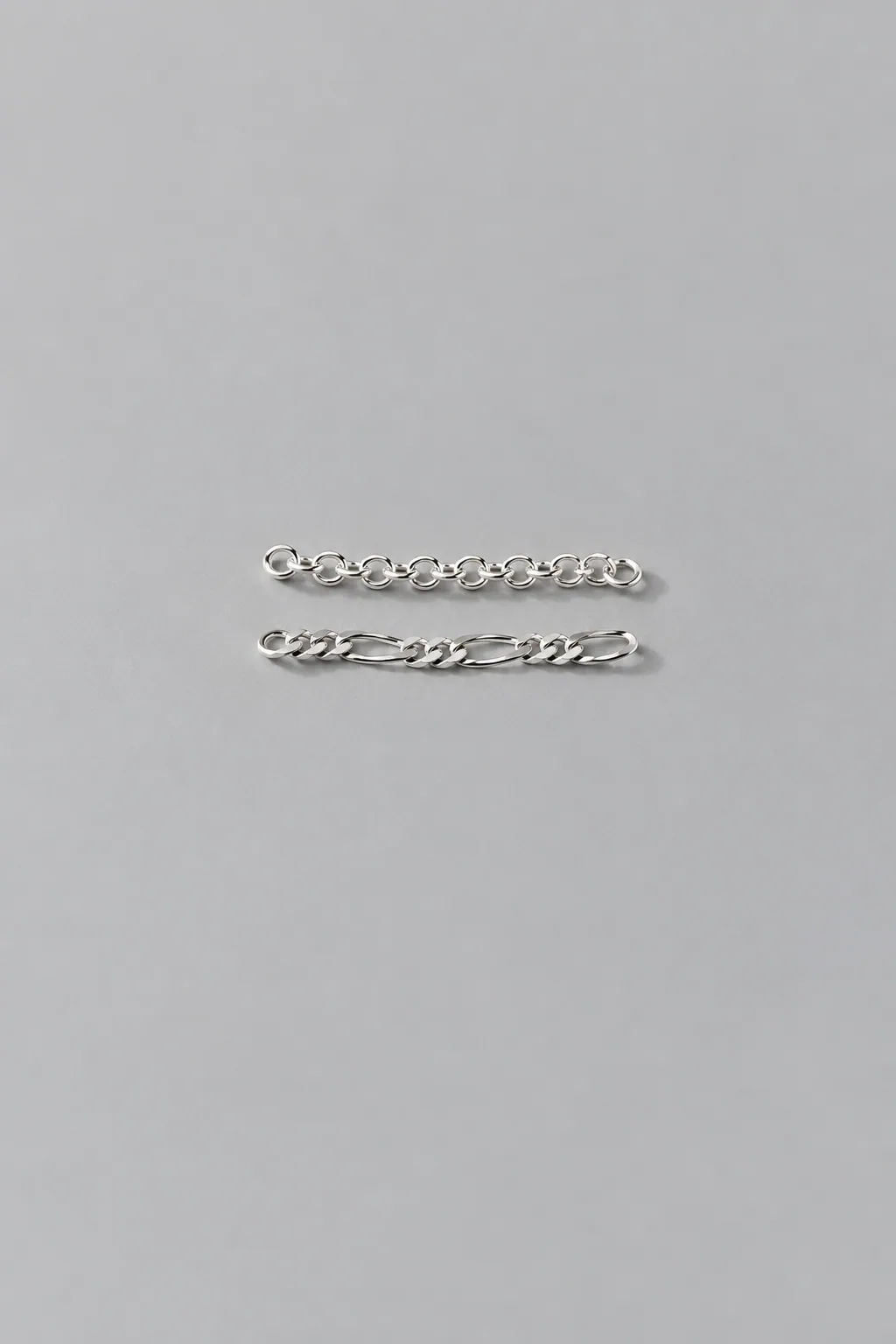
A partner’s familiar short chain, a colleague’s bare wrists or a friend’s preference for small earrings can start a conversation. None gives you their measurements, knowledge of material sensitivities or permission to decide what this ending means. Leave room for an answer that changes the plan completely.
Agree that the person can decline, choose something else or consider an exchange without having to manage your disappointment. If an exchange matters, check the actual seller’s conditions before buying. A gift should not come with an obligation to wear it for the giver or explain it to other people.
For the broader selection questions, our guide to choosing jewelry around someone’s taste and daily life offers a useful next step once the wearer wants an object.
Let the ending keep its actual shape
Ask what is being marked before choosing a symbol. It might be a welcome change, relief from a role, recognition of work that mattered, an ending that hurt, or several of these at once. The person may also be moving into other work. You do not need to make the story tidier for the jewelry.
If the ending was unhappy or involuntary, let the wearer decide whether to acknowledge it at all. They may want to recognize the work while leaving the departure uncelebrated. They may want distance from the whole subject. An inscription about a wonderful new chapter is an assumption unless they have chosen those words.
Continuity can be as deliberate as change. A piece worn throughout a career might remain exactly as it is. A new piece might have no professional reference whatsoever. A profession emblem, date, initial or gemstone belongs only if the wearer wants it; none comes with a meaning they have to accept.
Try one useful check: would this person still like the piece if nobody knew why it had been chosen? Some will want the association to be central. Others will prefer a shape whose significance stays entirely their own.
Choose how visible the marker should be
Separate the size of the jewelry from the amount of story you want to share. A conspicuous ring can have a private meaning. A small pendant can carry an openly shared one. Neither scale requires an explanation.
For a quiet presence, look at the outlines and proportions the person already enjoys: a narrow band, a compact shape at the ear, a short line at the neck. For a more visible change, consider whether they actually want greater width, length, contrast or movement. These are visual choices to try, not instructions attached to the occasion.
Decide separately how often you want to wear it: on ordinary days, on selected occasions or perhaps not at all. A piece kept privately can still be a chosen marker. A piece saved for selected evenings does not owe anyone more appearances.
Closeness to the body and ease of removal deserve separate thought. A necklace might sit against skin or over clothing, depending on the exact piece and how it is worn. A ring or bracelet might be something the wearer wants to take off repeatedly. Ask how much contact they want and how they prefer to put jewelry on and remove it.
If the wearer wants no visible marker, there is no need to find a discreet purchase to rescue the idea. No object remains an answer.
Put the piece into an ordinary day
Picture the clothes and activities the person expects to enjoy now, including any work they may continue. Use a real shirt, a familiar jacket and an ordinary day as the setting.
For a necklace, consider the actual length, where the pendant would sit, and whether the wearer wants it visible above a neckline or resting beneath it. Compare the proposed dimensions with a piece they already know. A photograph alone does not settle how that relationship will feel on their body.
If you are considering a bracelet as a retirement gift, first ask whether the person wants anything at the wrist. Then check the exact fit, closure and how the piece sits during their usual movements. For a ring, check the relevant finger measurement, width and profile. For earrings, ask about the preferred drop, fastening and weight of the particular pair.
Keep visual scale separate from physical comfort. A piece with a delicate outline still needs its weight and construction checked; a larger outline needs the same individual assessment. If trying it on is possible, let the wearer move in it and operate its fastening. Treat missing dimensions or material details as questions to resolve, rather than filling the gaps with reassuring adjectives.
Read the exact material and finish description, including relevant contact components, and ask the wearer what they already know about their own preferences or sensitivities. Ask for piece-specific care instructions and any known maintenance needs. Decide whether that routine is something the person wants. Appearance, price and a metal name cannot establish personal suitability.
Give an existing piece a fair hearing
Open the jewelry box before opening another shopping tab. A ring already worn through important years may be the piece you want to keep wearing. A necklace that has been out of rotation might be welcome again. Choosing one deliberately can mark the occasion without changing the object or adding anything to it.
Restyling can be as modest as wearing a familiar piece with different clothes or choosing it for a different occasion. There is no requirement to engrave it, add a symbol or physically alter it so that the decision counts.
If a broken fastening or an unwanted fit is keeping a valued piece unworn, ask an appropriate independent jeweler whether the repair or alteration you want is feasible, what it would change and what it would cost. Decide only after that assessment. When giving, get the wearer’s agreement before arranging any alteration; the existing form may be precisely what they want to preserve.
Another kind of object, a photograph, a private note or time spent doing something the person chooses may fit better. Choose these around the person too. An experience can become an unwanted appointment, and a photograph should not be shared without asking. Find out what would be welcome, including whether they would prefer no gift.
A new piece belongs alongside these options. It earns its place by being wanted.
Set a budget that does not need defending
Choose a limit before comparing pieces, and let it remain a limit. You do not need to translate years of work into an amount of money. A smaller object, an existing piece or no object can fit the person more accurately than an expensive generic gift.
Equally, someone who wants and can comfortably accommodate a more expensive piece does not have to apologize for that choice. Price simply cannot make the decision personal on its own. Ask whether you would still choose the object without knowing what it cost.
For a gift, keep the giver’s budget separate from the wearer’s obligations. Avoid a plan that requires the recipient to contribute extra money, arrange an unrequested alteration or take on care they do not want. If the available choices do not fit both the person and the budget, change the kind of gift or make no purchase.
When a group or employer is paying
A shared budget can make it tempting to choose something larger or more obviously symbolic. As more people join the decision, a generic idea of retirement can begin to stand in for the person who will wear the piece.
Ask one informed person to help open a private conversation with the wearer. Their role is to make that conversation easier. The wearer still decides whether jewelry is wanted, which details matter and how much they wish to participate in choosing.
Offer meaningful choices before money is committed: selecting an exact piece within an agreed limit, looking together, choosing another form of acknowledgment or declining a gift. A shortlist is useful only if the person can reject the whole shortlist. Our guide to recipient-led jewelry curation expands on making a selection around one person’s preferences.
Keep any public presentation, photograph or explanation separate from the choice of object. Ask whether each is welcome. The person can want the jewelry and decline the announcement.
A pooled amount does not have to be fully spent to make the gesture count. Agree with contributors in advance how any unused money will be handled, so the wearer is not pushed toward a bigger purchase to simplify the arrangements.
Choose for the life that is actually here
Before deciding, name who has the final say, what the object would mark, where and when it would be worn, and whether its practical demands and cost are welcome. If those answers are unclear, waiting is available. If the answer is an existing piece, another gesture or nothing at all, the decision is already complete.
If you still want jewelry, choose the piece that fits your present life: its clean edge, odd curve, familiar weight or wanted flash of color. It can mean something precise to you while looking like simply a good ring to everyone else.
If a new object is still wanted after making that decision, you can explore current jewelry. Begin with what the wearer wants to live with now.