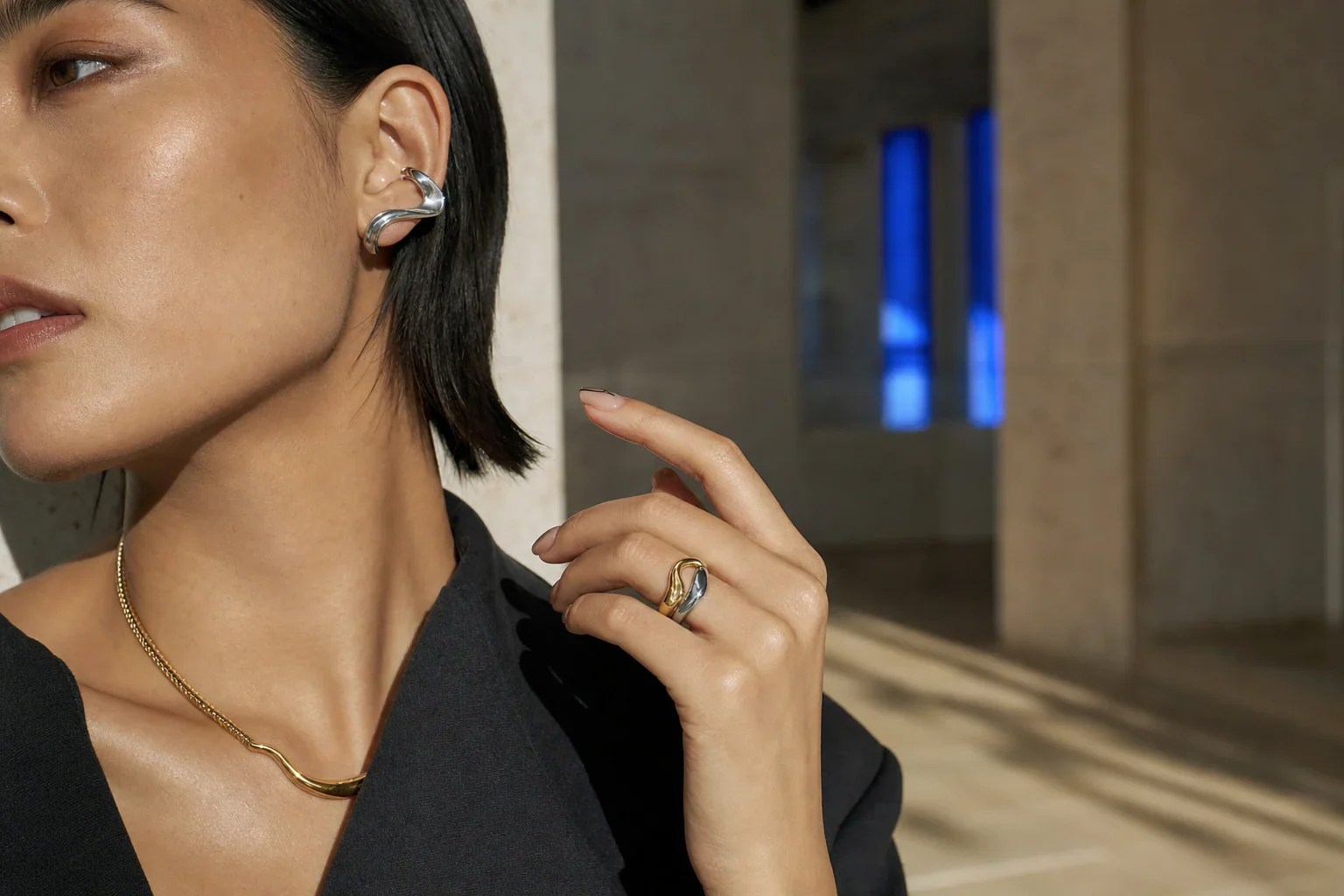
Adult model showing a gold ear piece, silver necklace, and mixed-tone ring across ear, neck, and hand

Mixed-metal body placement

How to Mix Metals Across Earrings, Necklaces, and Rings

Mixed metals become easier when the body is treated as a sequence rather than a display tray. Choose whether the ear, neck, or hand leads, then use the other zones to repeat, bridge, and pause.

Open the mixed-metal topic

Ear leads / neck pauses / hand repeats

01

Start by choosing the lead zone

The ear, neck, and hand have different relationships to the face, clothing, movement, and gesture. Choose the zone that matters most for the current look before distributing the metals.

The lead zone receives the strongest scale, contrast, or movement. A supporting zone repeats one cue. The third zone can remain quiet enough to make the sequence readable.

02

Ear-led: frame the face first

Use the ear when a cuff, hoop, or sculptural earring changes the jawline or works with hair and neckline. Let that piece carry the strongest mixed-metal contrast.

At the neck, choose one restrained chain in the quieter tone. At the hand, use a ring that repeats the ear piece’s curve, line, or secondary metal. The result reads from face to gesture without becoming a matching set.
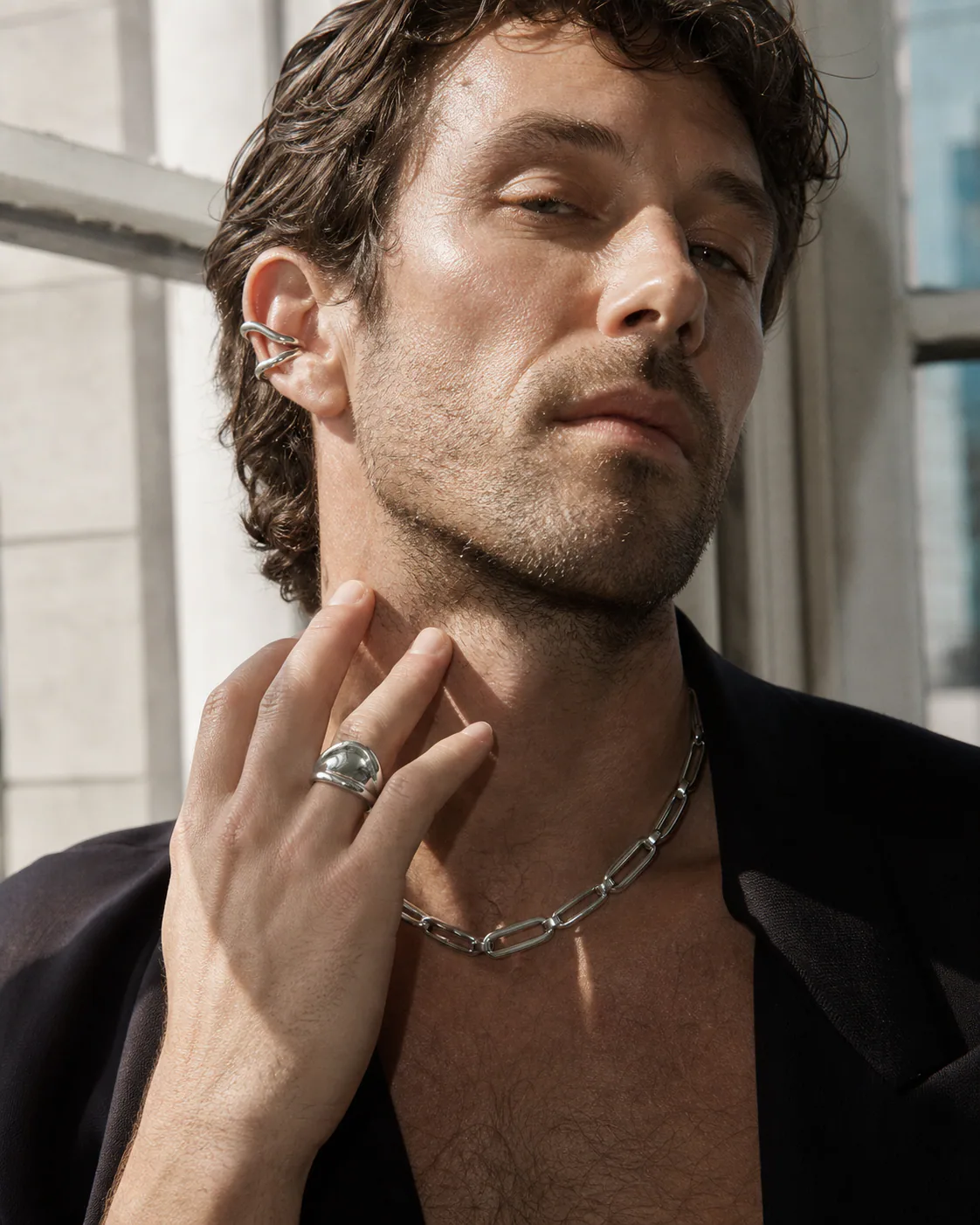
Adult model wearing an ear cuff in daylight with the face and jaw as the lead body zone
Ear leads

When the ear changes the face silhouette, the neck and hand only need one quieter echo.

03

Neck-led: build around one central line

Use the neck when a chain, pendant, collar, or layered necklace defines the clothing silhouette. Keep the strongest scale and contrast near the collarbone.

Choose quieter earrings that repeat one metal and one small ring in the other. Avoid placing equally broad contrast at the ear and hand unless the clothing leaves enough visual space between them.

04

Hand-led: let gesture carry the composition

Use the hand when rings, cuffs, or a moving piece are central to the look. Begin with one anchor ring, then add the second metal through a narrower band or a mixed-tone bridge.

The ear can echo the anchor’s dominant metal while the neck stays almost empty. Because hands move through the visual field, they often need less supporting jewelry than a static display suggests.

05

Use clothing as negative space

A dark lapel, bare collarbone, sleeve, or glove changes how the metals register. Treat fabric and skin as part of the spacing system.

Visible zips, buttons, eyewear, and bag hardware can join the metal path, but they are supporting details. Do not add jewelry only to make every piece of hardware match.

Lead zoneSupport zoneQuiet zone
Ear: mixed cuff or sculptural earringHand: one ring repeats curve or secondary metalNeck: one fine chain or no necklace
Neck: collar, pendant, or layered chainEar: smaller piece repeats dominant toneHand: one restrained ring
Hand: anchor ring or cuffEar: one small echo of the lead metalNeck: open collarbone or quiet chain
Bridge piece already contains both tonesRepeat only one tone outside itKeep the remaining zone visually still
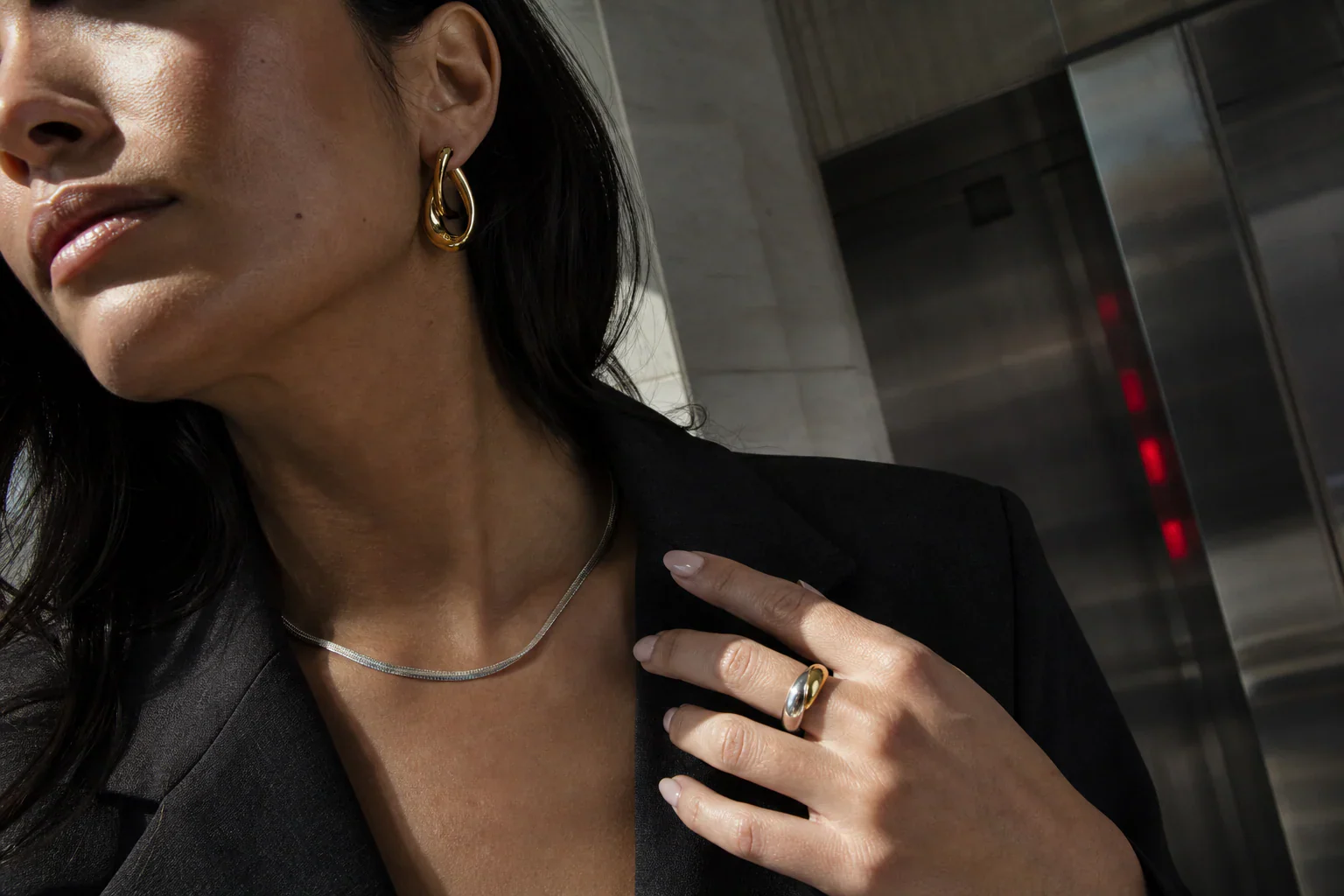
Adult model in an editorial look with visible clothing space between ear, neck, and hand
Clothing as space

Fabric, skin, and the distance between body zones are part of the composition—not empty background.

06

Check the path in motion

Turn the head, move the hand, sit, stand, and check how clothing shifts around the necklace. Jewelry changes as the body moves; a composition that works in a still mirror may become crowded in gesture.

Keep product-specific fit, closure, movement, and piercing requirements in charge. Styling should never override how an object is actually constructed or safely worn.

Useful paths from here

S

Sources

Visual edit

3 images selected for this story: one cover and 2 supporting visuals.

FAQ

Short answers.

Quick placement decisions for distributing two metal tones across the body.

How do I mix metals across earrings, necklaces, and rings?

Choose one body zone to lead, echo the quieter metal once in a supporting zone, and keep the third zone restrained.

Which body zone should lead a mixed-metal look?

Choose the zone containing the piece with the strongest silhouette, movement, or importance to the outfit.

Do earrings need to match a necklace?

No. They can connect through one shared metal, curve, surface, scale, direction, or spacing relationship.

Should rings match necklace metal?

Not necessarily. A mixed-tone ring or repeated shape can connect the hand to the neck without using the same metal everywhere.

Can clothing hardware count as part of a mixed-metal look?

Yes. Visible hardware can support the composition, but it does not require every piece of jewelry to match it.

Related

Build the cluster.

Each story owns a different search intent and returns to the same topic or product system.

Adult model wearing a silver ear cuff, gold necklace, and mixed-tone bridge ring in a sunlit gallery corridor
Mixed-metal jewelry guide

How to Mix Gold and Silver Jewelry

Gold and silver do not need to match. They need a visible reason to belong together. This guide turns anchor pieces, bridge objects, proportion, repetition, and body placement into a practical styling sequence.

Five mixed-metal jewelry groupings arranged across cobalt acrylic, red textile, stone, and brushed steel
Mixed-metal styling ideas

5 Mixed-Metal Jewelry Styling Formulas

A formula is not a uniform. It is a repeatable relationship you can rebuild with different objects. These five systems make gold- and silver-toned jewelry easier to compose without flattening personal style.

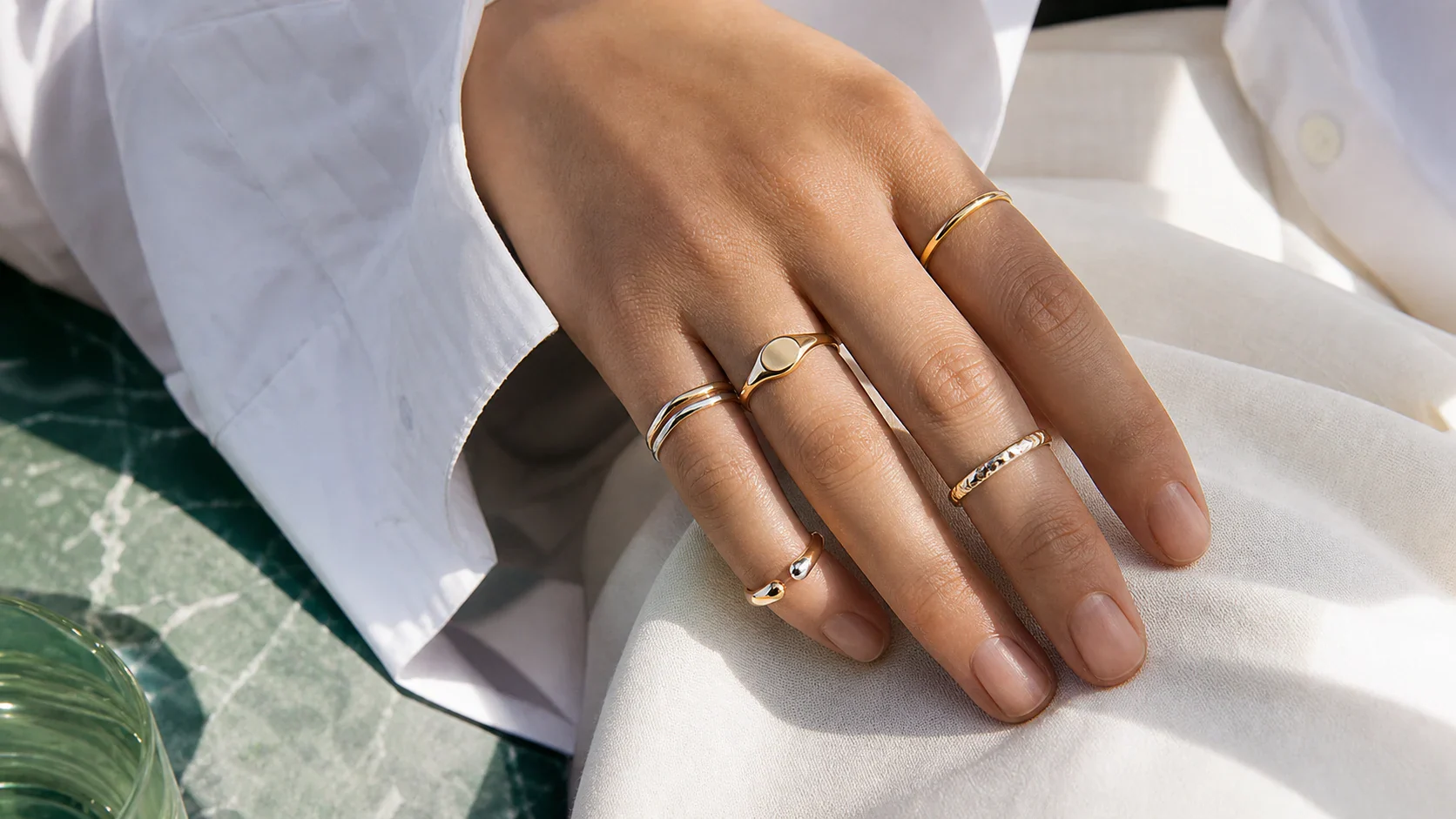
Adult hand wearing slim rings, a small signet, a contour pair, a textured band, and one compact open ring across several fingers
Ring stacking / ideas

8 Ring Stack Ideas, From Quiet Bands to One Bold Accent

Ring stacks do not need to be uniformly delicate or uniformly sculptural. These eight compositions move from small everyday bands to one optional statement accent, with practical ways to vary scale, texture, metal, and finger placement.

Room transmissions

The list is between transmissions.

Email signup is temporarily unavailable. The Journal and Jewelry Guides remain open while the next transmission is prepared.