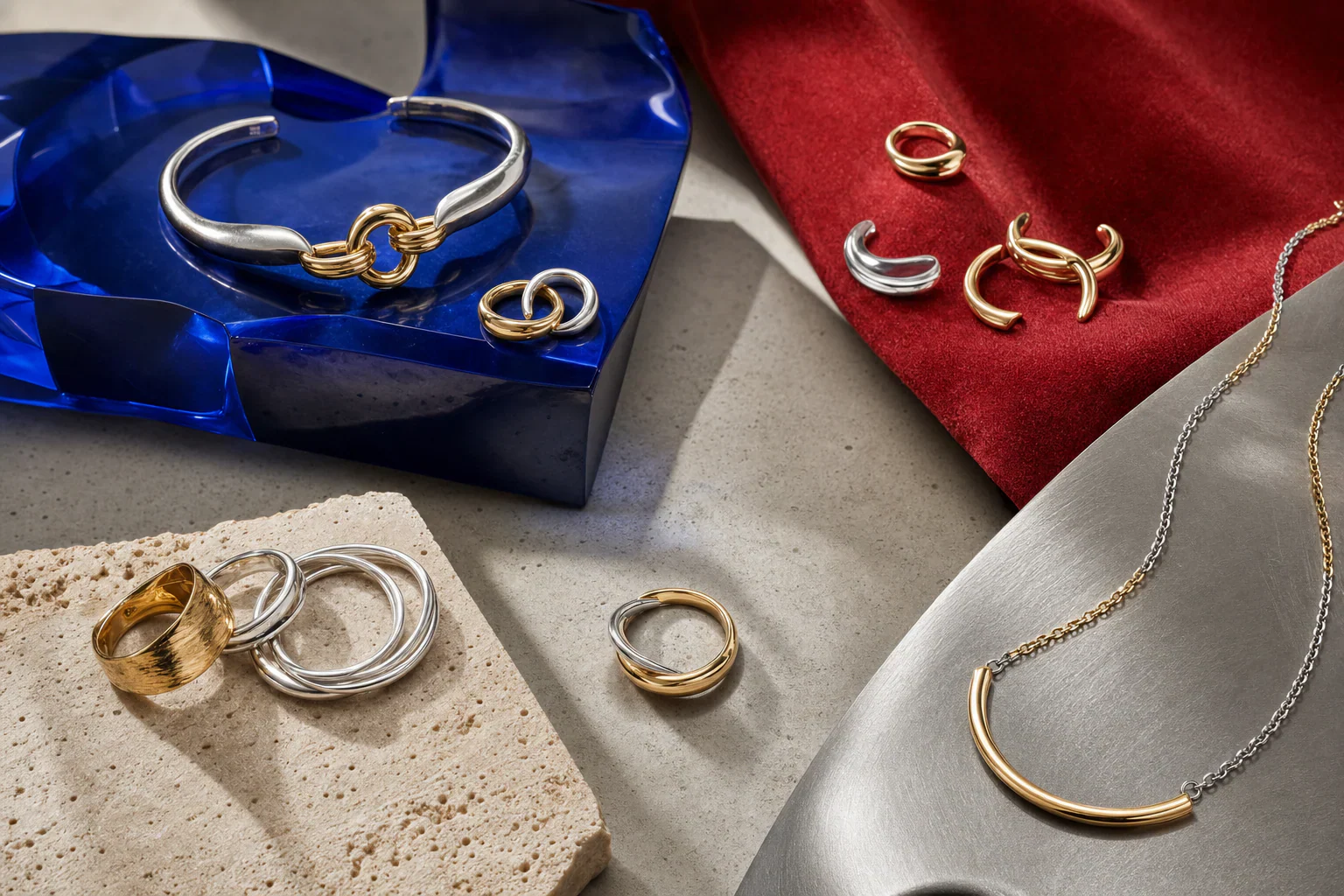
Five mixed-metal jewelry groupings arranged across cobalt acrylic, red textile, stone, and brushed steel

Journal / August 12, 2026

5 Mixed-Metal Jewelry Styling Formulas

A formula is not a uniform. These five ways to mix gold and silver keep the contrast effortless without flattening personal style.

Five formulas / bridge / ratio / curve / surface / pause

Formula 1: the two-tone link

Start with one piece that already contains both tones, then keep the rest mostly quiet. A two-tone ring can connect a silver necklace to a gold earring without adding another mixed piece.

This is the fastest formula when the jewelry comes from different collections or periods. The bridge supplies the shared language.

Formula 2: the 70 / 30 balance

Let one metal occupy most of the visual field and use the second as punctuation. The numbers are not literal measurements; they are a reminder that hierarchy is more useful than perfect equality.

Three narrow gold-toned rings may still read as less than one broad silver cuff. Adjust for scale, shine, and placement until one tone clearly leads.
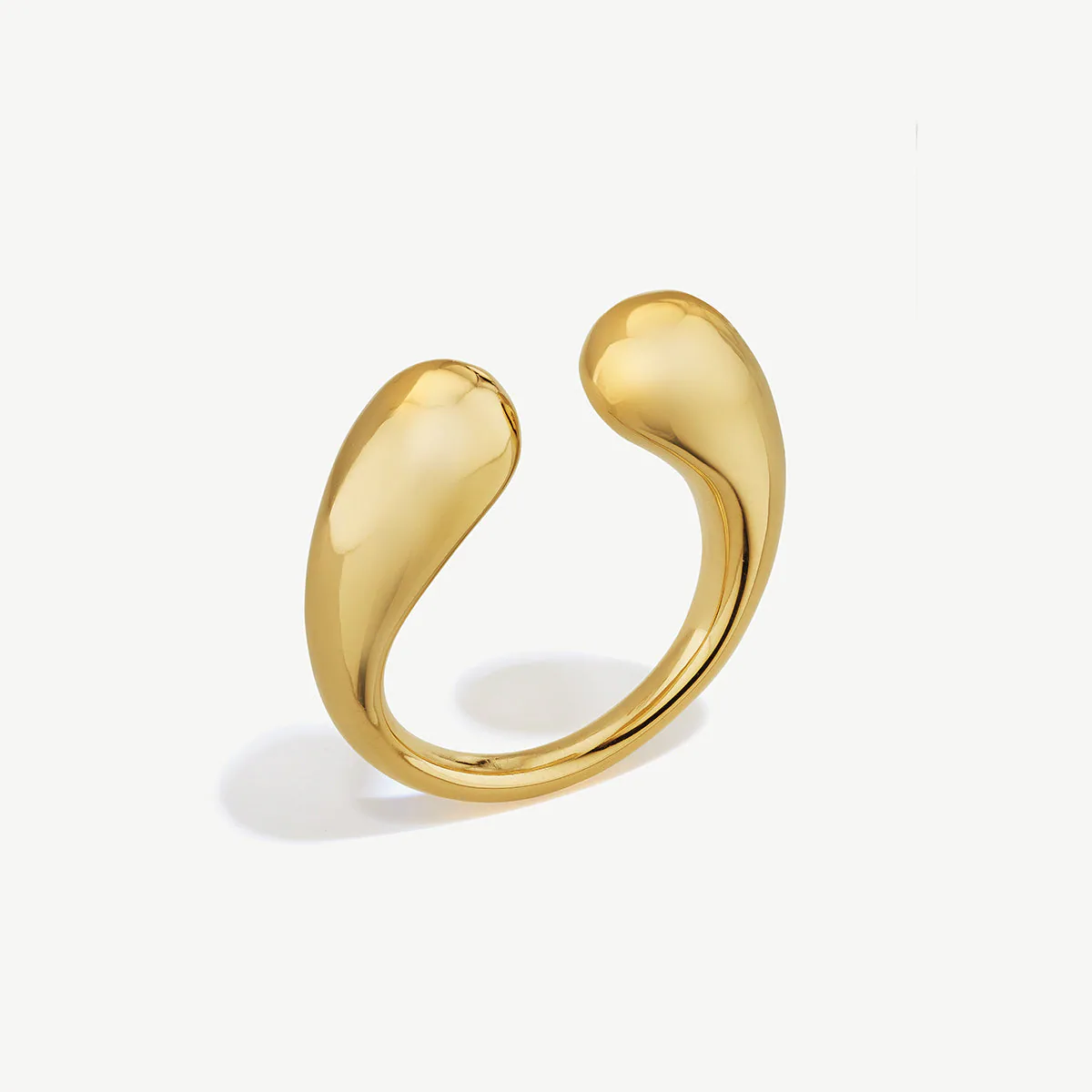
Linear sculptural ring photographed as a study in direction and dominant proportion
Ratio / direction

Count visual weight rather than pieces. One broad linear piece can lead several quieter elements.

Formula 3: repeat the curve

Ignore color for one minute and look only at line. Pair a rounded silver ear cuff with a warm-gold ring that repeats the same arc, or connect a squared chain link to a hard-edged ring.

Shape repetition is especially useful when the metals have very different finishes. The eye recognizes the shared geometry before it registers the surface contrast.

Formula 4: echo the surface

Pair polished with polished, brushed with brushed, or visibly worked texture with another tactile surface. The pieces do not need identical finishes, but their way of handling light should feel related.

If one piece is mirror-bright and another heavily oxidized, add a transition only when the contrast feels accidental. Sometimes the tension itself is the point; the formula exists to make that choice visible.
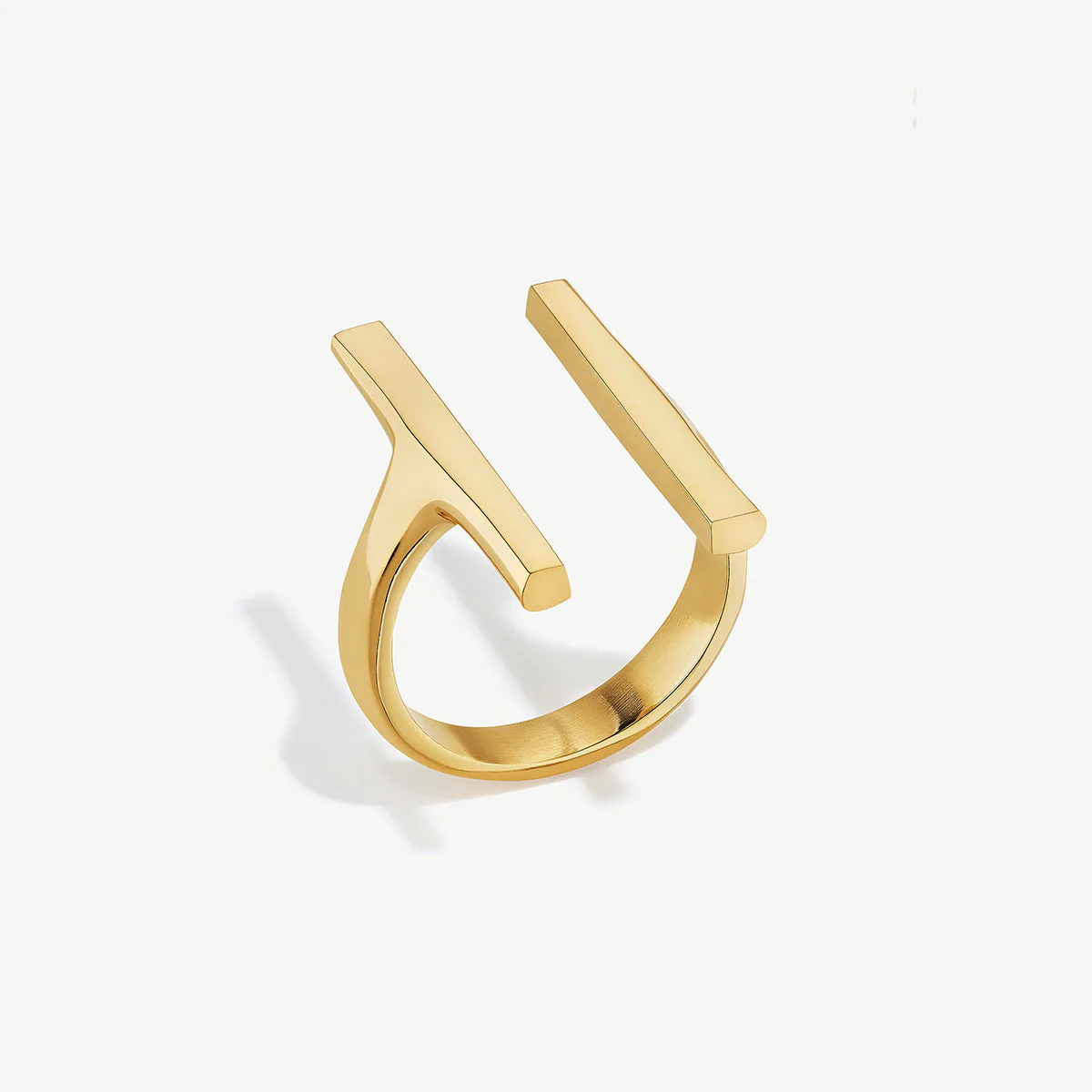
Double-bar sculptural ring demonstrating repeated line and visible spacing
Curve / spacing

When metals differ, a shared line or gap can make the relationship legible before color is considered.

Formula 5: lead one body zone

Choose the ear, neck, or hand as the main exhibition zone. Put the strongest mixed-metal event there, then echo one tone once outside it and leave the third zone restrained.

This formula works when you enjoy several pieces but the full look becomes crowded. It creates a path rather than a collection of simultaneous statements.

FormulaBest starting pointEdit when
Two-tone linkOne two-tone or shape-linking pieceThe connection no longer reads clearly
70 / 30 balanceA collection dominated by one metalThe supporting tone becomes a second lead
Repeat the curvePieces from different setsToo many shapes interrupt the rhythm
Echo the surfacePolished, brushed, or textured piecesThe finishes begin to feel unrelated
Lead one zoneJewelry across ear, neck, and handEvery zone demands equal attention

How to choose today’s formula

Choose the formula that solves the current problem. Use a bridge when the tones feel disconnected, a dominant ratio when the look feels undecided, a repeated curve when the pieces come from different worlds, a surface echo when finish is the main contrast, and a leading zone when the body feels crowded.

Once the look works, stop naming the formula. It should feel effortless on the body.

Sources

FAQ

Short answers.

Quick ways to choose a formula and adapt it to the jewelry already in front of you.

What is the easiest mixed-metal jewelry formula?

Start with a bridge piece that contains both tones, then keep the rest of the look mostly in one dominant metal.

Do mixed metals need to be evenly balanced?

No. An uneven ratio often creates a clearer hierarchy than an equal split.

How do I mix jewelry from different collections?

Repeat one relationship—shape, surface, scale, direction, or spacing—rather than trying to make every piece match.

Can I use more than one formula?

Yes, but begin with one. Add a second only if it clarifies the look instead of making the system harder to read.

Which formula works for ring stacking?

The dominant-ratio and repeated-curve formulas are useful for ring stacks because they control visual weight and spacing.

Related

More from the Journal.

A few more stories for the mood, the material, or the next styling question.

Adult model wearing a silver ear cuff, gold necklace, and mixed-tone bridge ring in a sunlit gallery corridor
Mixed-metal jewelry guide

How to Mix Gold and Silver Jewelry

Gold and silver do not need to match. They simply need an introduction: one lead piece, one repeated detail, and enough space for both to shine.

Read story
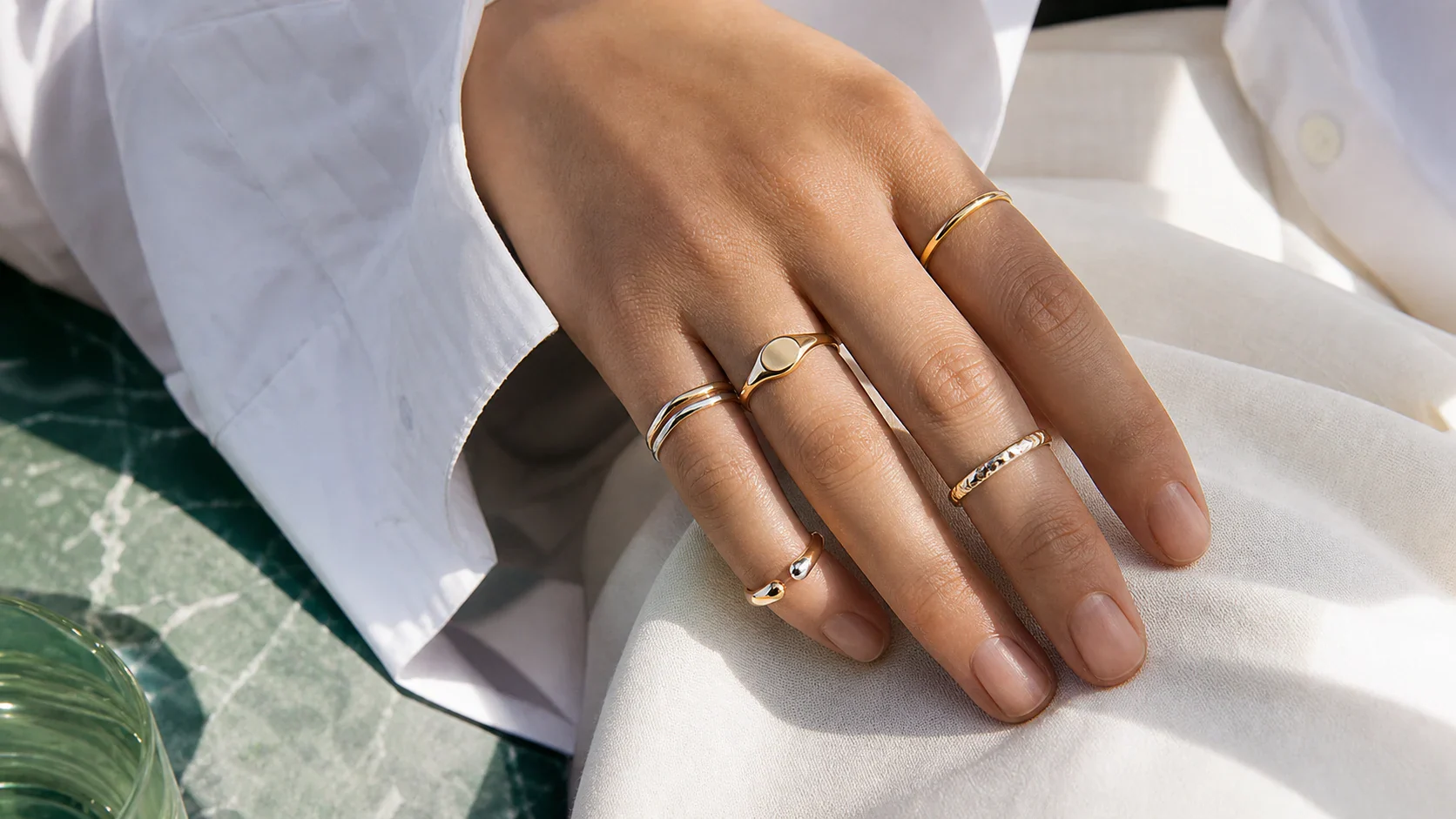
Adult hand wearing slim rings, a small signet, a contour pair, a textured band, and one compact open ring across several fingers
Ring stacking / ideas

8 Ring Stack Ideas, From Quiet Bands to One Bold Accent

Ring stacks do not need to be uniformly delicate or uniformly sculptural. These eight compositions move from small everyday bands to one optional statement accent, with practical ways to vary scale, texture, metal, and finger placement.

Read story
Jeweler inspecting a ring setting under magnification before choosing a care method
Jewelry care

How to Clean Silver Jewelry: A Material-First Care Guide

Silver jewelry cannot all be cleaned the same way. First check whether the piece is solid silver, plated, coated, or set with stones. Start with the gentlest method suited to its construction and dry it completely before storage.

Read story

Room transmissions

Get the next chapter before it opens.