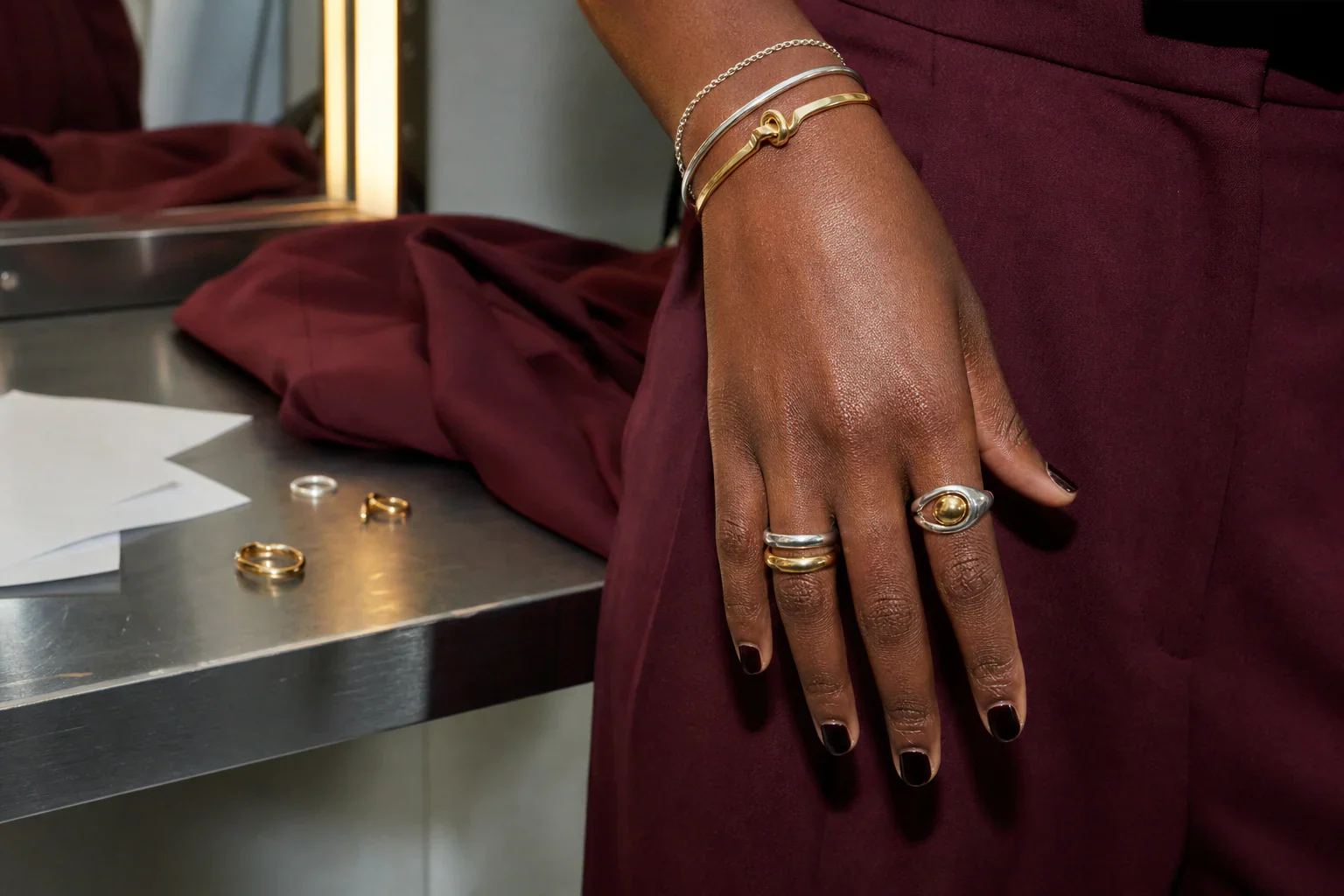
Adult model editing a resolved mixed-metal ring and bracelet composition in a daylight styling area

Journal / August 11, 2026

Mixed-Metal Jewelry Mistakes to Avoid

Most mixed-metal problems are not caused by using two colors. They come from unclear hierarchy, repeated visual noise, missing negative space, or styling language that outruns the product facts.

Edit the hierarchy / preserve space / let one piece lead

Mistake 1: treating color as the only connection

Adding one gold piece and one silver piece is not yet a composition. If they disagree in shape, scale, finish, direction, and placement, color becomes one more argument rather than the detail that connects them.

Fix it by repeating one non-color relationship: the same curve, a similar link scale, a shared brushed finish, or a similar amount of negative space around each piece.

Mistake 2: giving everything equal weight

Two statement earrings, three broad necklaces, and a heavy ring stack can compete even when each piece is individually strong. Equal volume across every zone leaves the eye without a place to begin.

Choose one anchor. Reduce width, shine, the number of pieces, or contrast elsewhere until the anchor becomes clear again.

Mistake 3: making every body zone shout

The ear, neck, wrist, and hand do not all need a mixed-metal event. A strong ear composition can be supported by one restrained necklace and a quiet hand.

Leave at least one zone almost empty. That pause is not missing styling; it is the space that lets the other choices register.
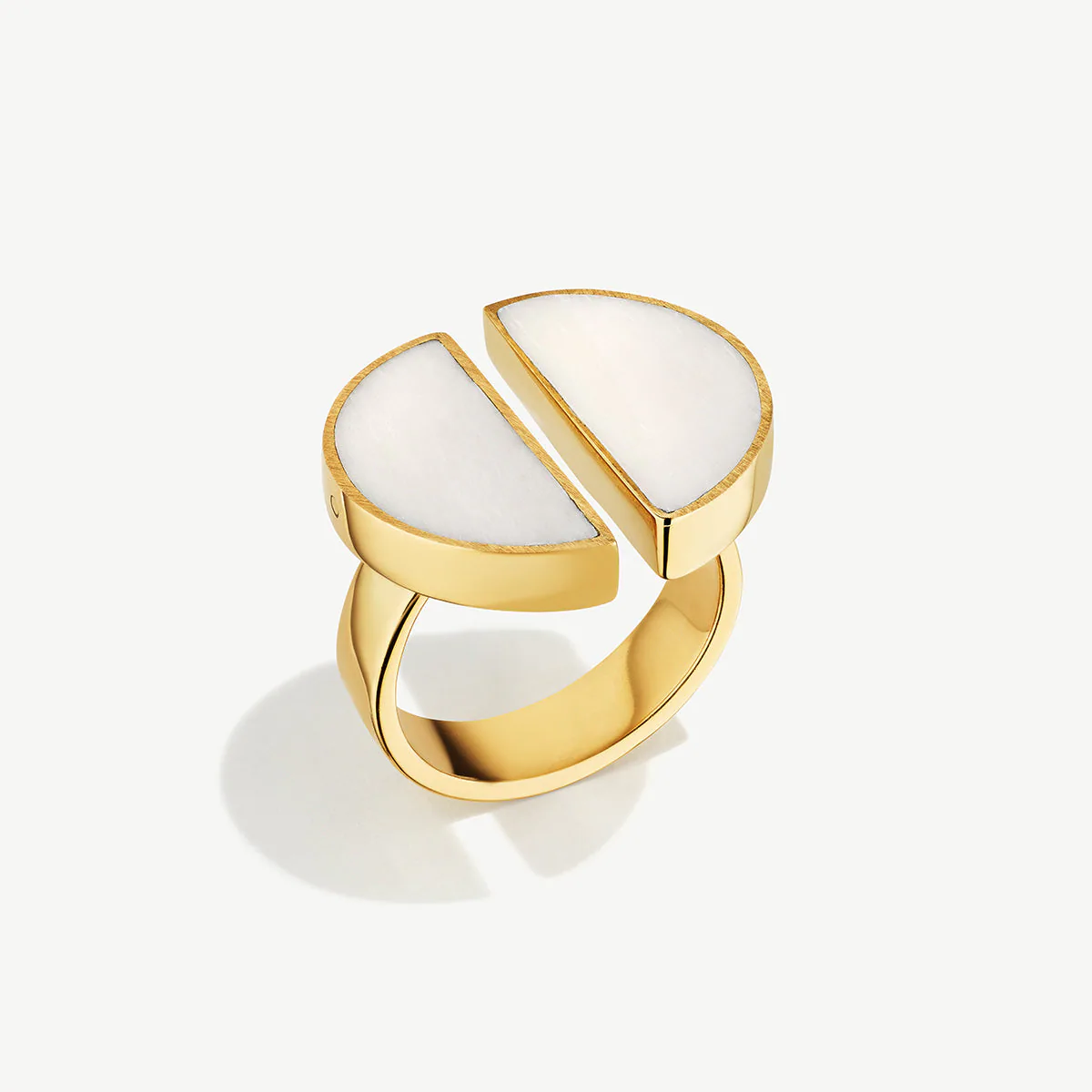
Split moon sculptural ring with a strong open void and clean hand silhouette
The pause

A visible gap is an active styling choice. It restores the outline of both the jewelry and the hand.

Mistake 4: confusing color with material

Gold-colored does not automatically mean solid gold, and silver-colored does not identify a complete metal composition. Styling copy should not replace product-specific information about alloy, plating, finish, construction, and care.

Use color language for the visual plan and the product page for material facts. If the information is incomplete, do not invent a durability, sensitivity, precious-metal, or care claim.

Mistake 5: ignoring movement and function

A ring that spins, a cuff that needs an opening, or a chain that catches on a neighboring pendant needs physical room. A beautiful stack still fails if the pieces cannot move or sit as intended.

Check product-specific fit and wear instructions. Remove any piece that presses, catches, blocks a moving component, or makes the body compensate.
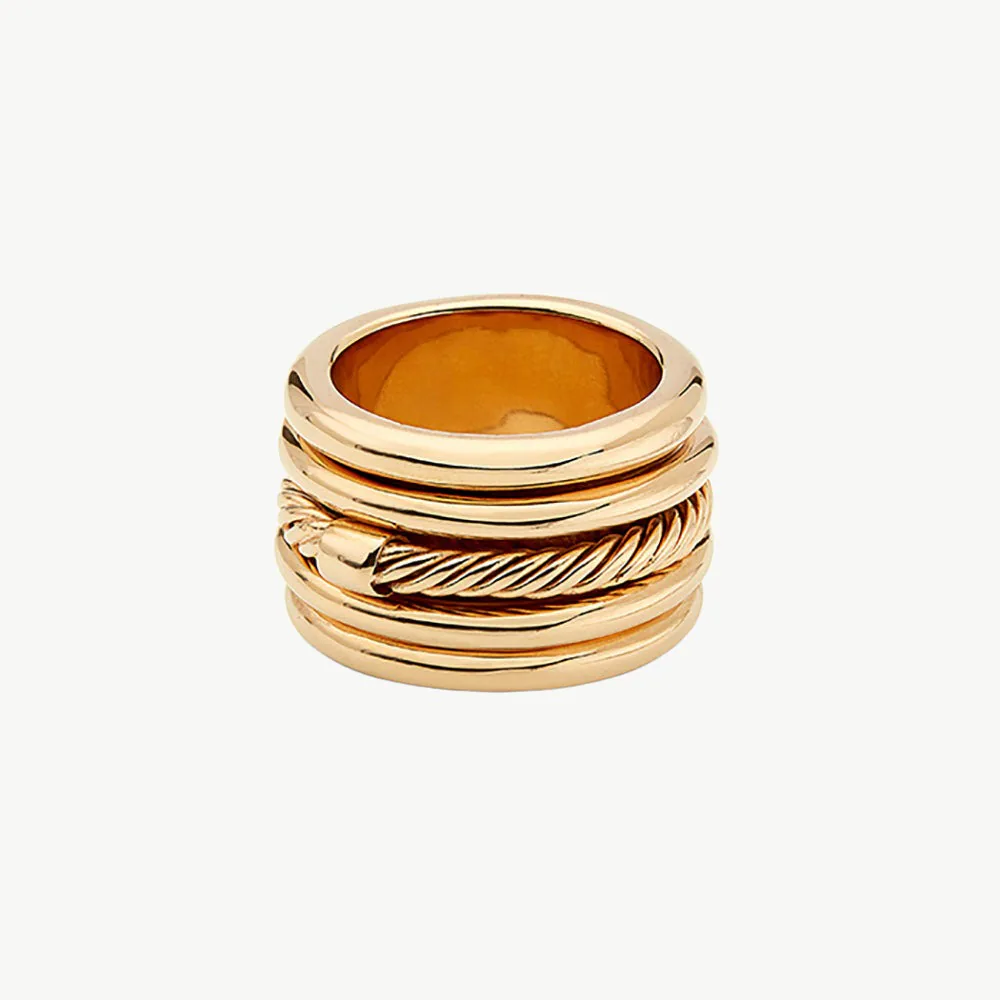
Gold-toned spinner ring with layered moving bands shown as one anchor piece
Movement

A moving ring already contains layers. Give it physical room instead of surrounding it with equal-weight pieces.

A five-minute edit

  • Name the anchor in one sentence.
  • Remove the loudest competing piece.
  • Repeat one shape, surface, or spacing relationship in the second metal.
  • Leave one body zone restrained.
  • Check product-specific material and fit information.
  • Step back and confirm that the eye knows where to begin.
SymptomLikely causeFast edit
The look feels randomNo repeated relationshipRepeat one curve, link, surface, or gap
The look feels crowdedToo many equal-weight piecesRemove one statement and restore negative space
One metal disappearsHierarchy is too extremeEcho the quieter metal once in a visible zone
The look works only close upNo body-level pathChoose ear, neck, or hand as the lead zone
The copy sounds more certain than the product pageMaterial language is unverifiedReturn to color-only styling language until facts are confirmed

Sources

FAQ

Short answers.

Short diagnoses for the moments when gold and silver feel accidental rather than deliberate.

What is the most common mixed-metal jewelry mistake?

The most common problem is unclear hierarchy: several pieces compete with equal weight and nothing leads the composition.

How do I make mixed metals look intentional?

Choose one anchor, repeat one visible feature in the second metal, and preserve enough negative space for both tones to read.

Do all visible metal details need to match?

No. Clothing and bag hardware can join the composition without forcing every zip, button, or clasp to use the same tone.

Can I wear several statement pieces together?

You can, but decide which piece leads and reduce visual weight elsewhere through scale, shine, placement, or spacing.

Does gold-colored jewelry mean solid gold?

No. Color does not establish composition. Check the verified product description for metal, alloy, plating, finish, and care details.

Related

More from the Journal.

A few more stories for the mood, the material, or the next styling question.

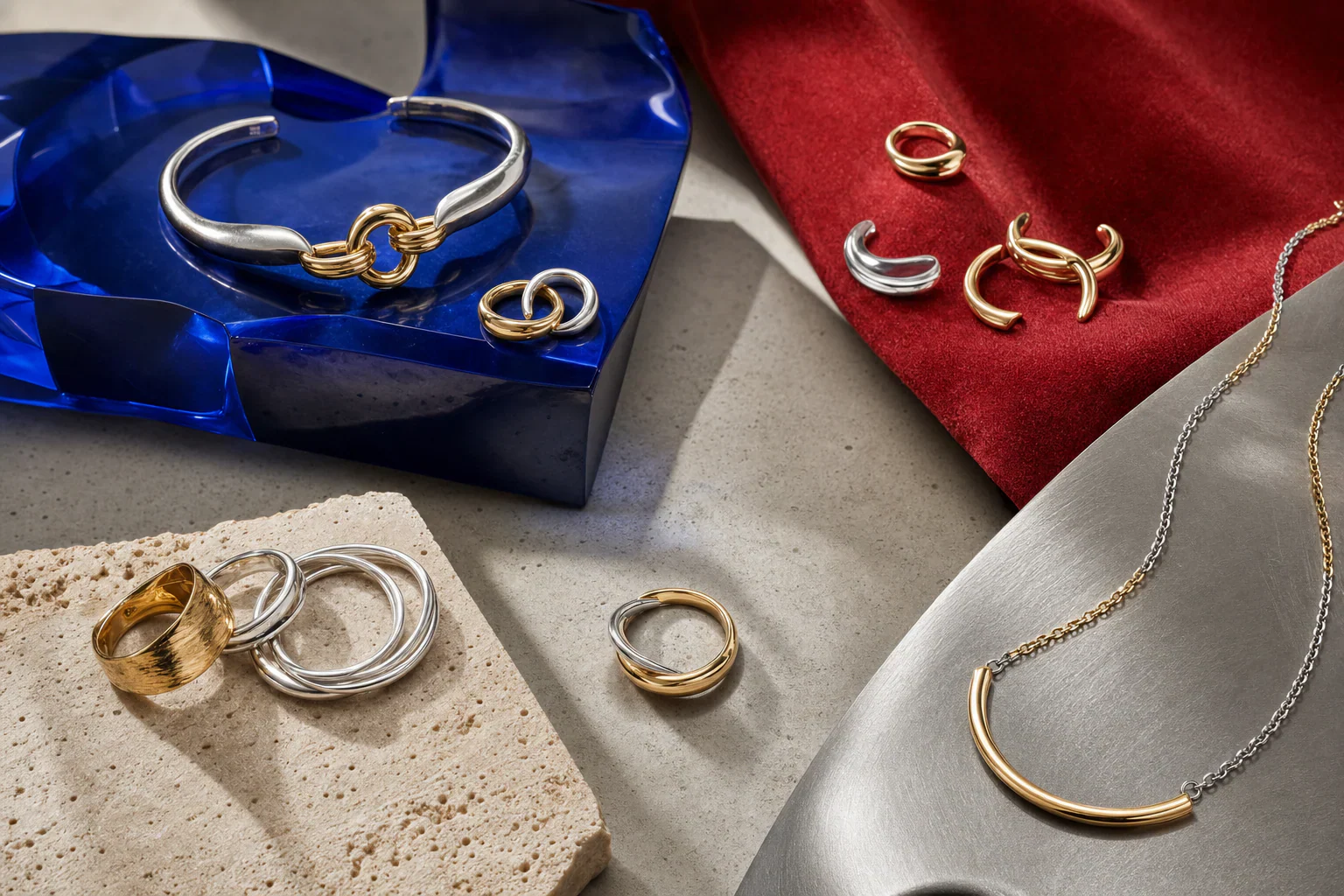
Five mixed-metal jewelry groupings arranged across cobalt acrylic, red textile, stone, and brushed steel
Mixed-metal styling ideas

5 Mixed-Metal Jewelry Styling Formulas

A formula is not a uniform. These five ways to mix gold and silver keep the contrast effortless without flattening personal style.

Read story
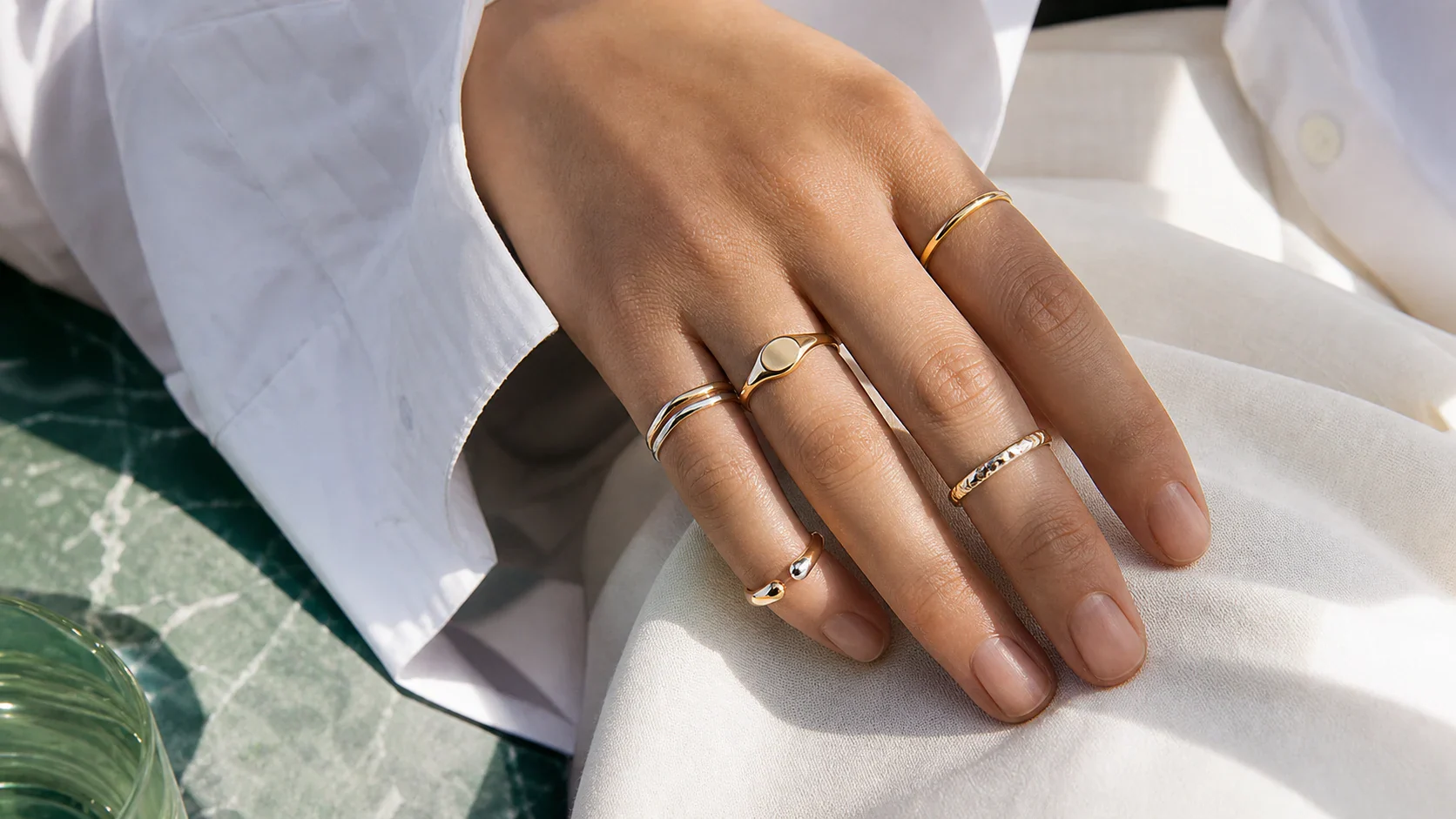
Adult hand wearing slim rings, a small signet, a contour pair, a textured band, and one compact open ring across several fingers
Ring stacking / ideas

8 Ring Stack Ideas, From Quiet Bands to One Bold Accent

Ring stacks do not need to be uniformly delicate or uniformly sculptural. These eight compositions move from small everyday bands to one optional statement accent, with practical ways to vary scale, texture, metal, and finger placement.

Read story
Jeweler inspecting a ring setting under magnification before choosing a care method
Jewelry care

How to Clean Silver Jewelry: A Material-First Care Guide

Silver jewelry cannot all be cleaned the same way. First check whether the piece is solid silver, plated, coated, or set with stones. Start with the gentlest method suited to its construction and dry it completely before storage.

Read story

Room transmissions

Get the next chapter before it opens.