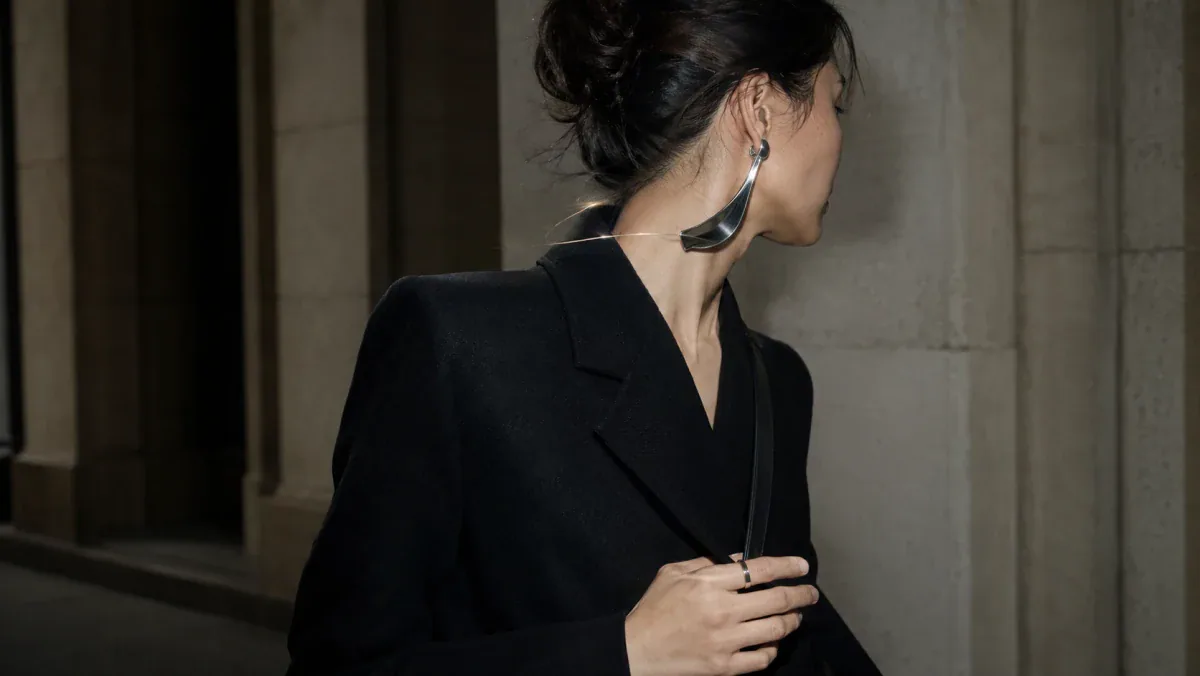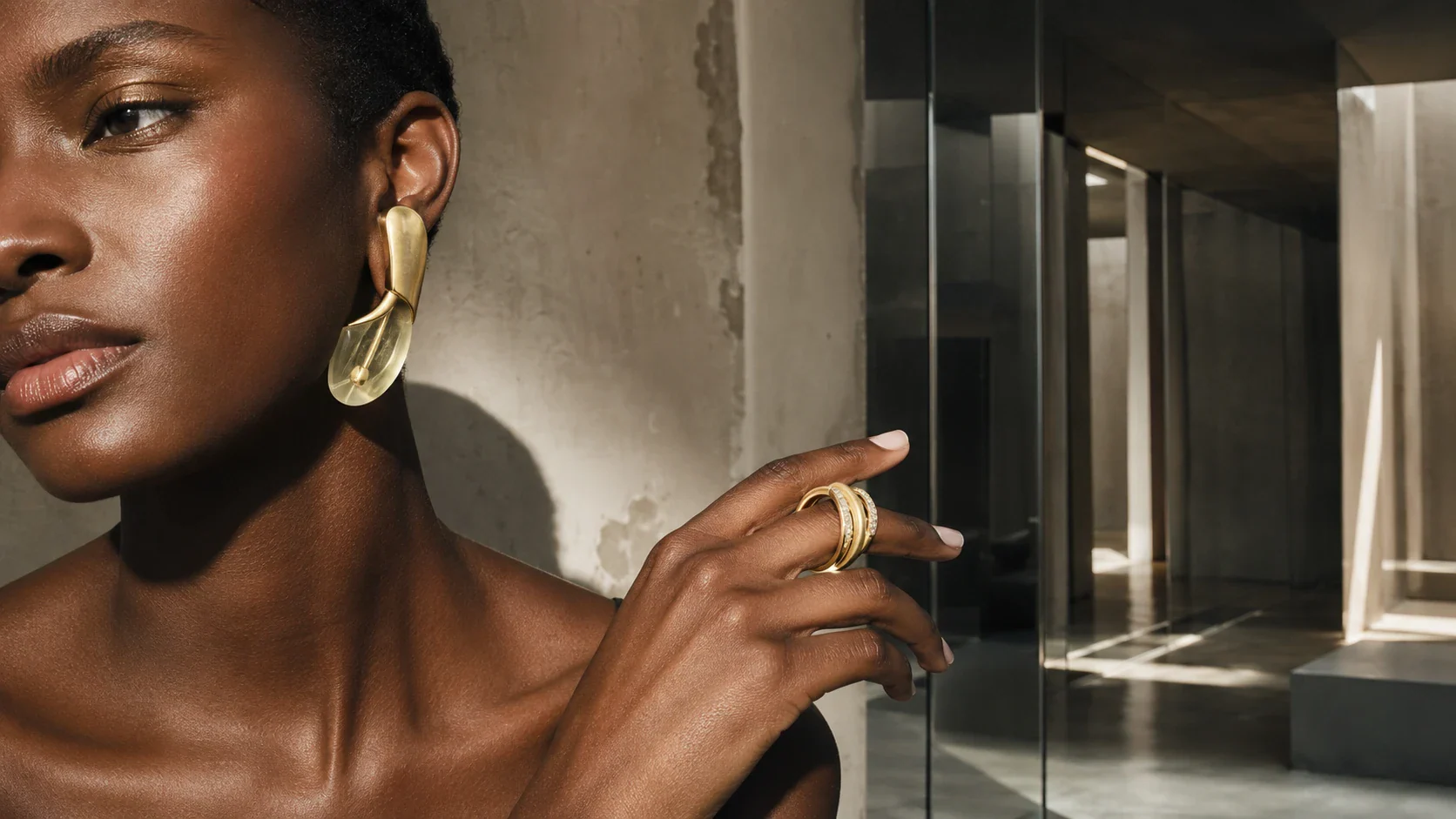
At the end of a couture presentation, the most revealing view is not always the full silhouette. It may be a hand crossing a waist, an earring briefly exposed by a turning head, or a polished edge catching light for half a second. Those couture jewelry details change how the entire body is read. After Paris Haute Couture Week, this is the useful lesson to keep: couture scale does not require a ballroom, a gown, or limitless ornament. It can begin with one carefully engineered piece, fitted to one gesture zone, and given enough visual space to become unforgettable.
What Couture Jewelry Details Mean at Hand Scale
The Fédération de la Haute Couture et de la Mode’s official schedule confirms that Haute Couture Fall/Winter 2026–2027 took place in Paris from July 6 to July 9, 2026. This article is not a look-by-look runway report, and it does not assign unverified accessories or trends to individual collections. Instead, it considers what couture’s working principles can teach us once the shows have ended and the images begin circulating at the scale of screens, crops, hands, faces, and details.
The distinction matters because haute couture is more than a synonym for expensive or elaborate clothing. The FHCM explains that accredited houses meet criteria connected to craftsmanship expertise, personalisation, collection schedules, and atelier know-how. In other words, couture begins with process, adjustment, and control—not simply visible excess.
Applied to jewelry, that shifts the question. Instead of asking whether a piece looks sufficiently dramatic, ask whether its form has been resolved. Does the curve continue cleanly around the finger? Does an earring frame the jaw or fight with it? Is a reflective surface placed where movement will activate it? Does the closure feel like part of the piece rather than an afterthought?
This is a narrower angle than treating fashion as art across the entire dressed body. Here, the focus is micro-architecture: how a few centimeters of metal, resin, enamel, pearl, or stone can reorganize the relationship between hand, face, clothing, and space.
Scale Is Not Size: It Is Control
A large piece can disappear when it has no clear relationship to the body. A smaller piece can control an image when its line, placement, and contrast are precise. This is why effective haute couture jewelry styling is less about adding more and more about deciding where attention should stop.
Begin by selecting one gesture zone:
- The hand: statement rings, articulated finger forms, cuffs, and pieces activated by holding, writing, or resting the hand near the face.
- The ear and jaw: ear cuffs, long earrings, asymmetric forms, and structures that alter the negative space beside the neck.
- The collar and shoulder: sculptural necklaces, brooches, pins, and wearable forms that blur the line between garment and body.
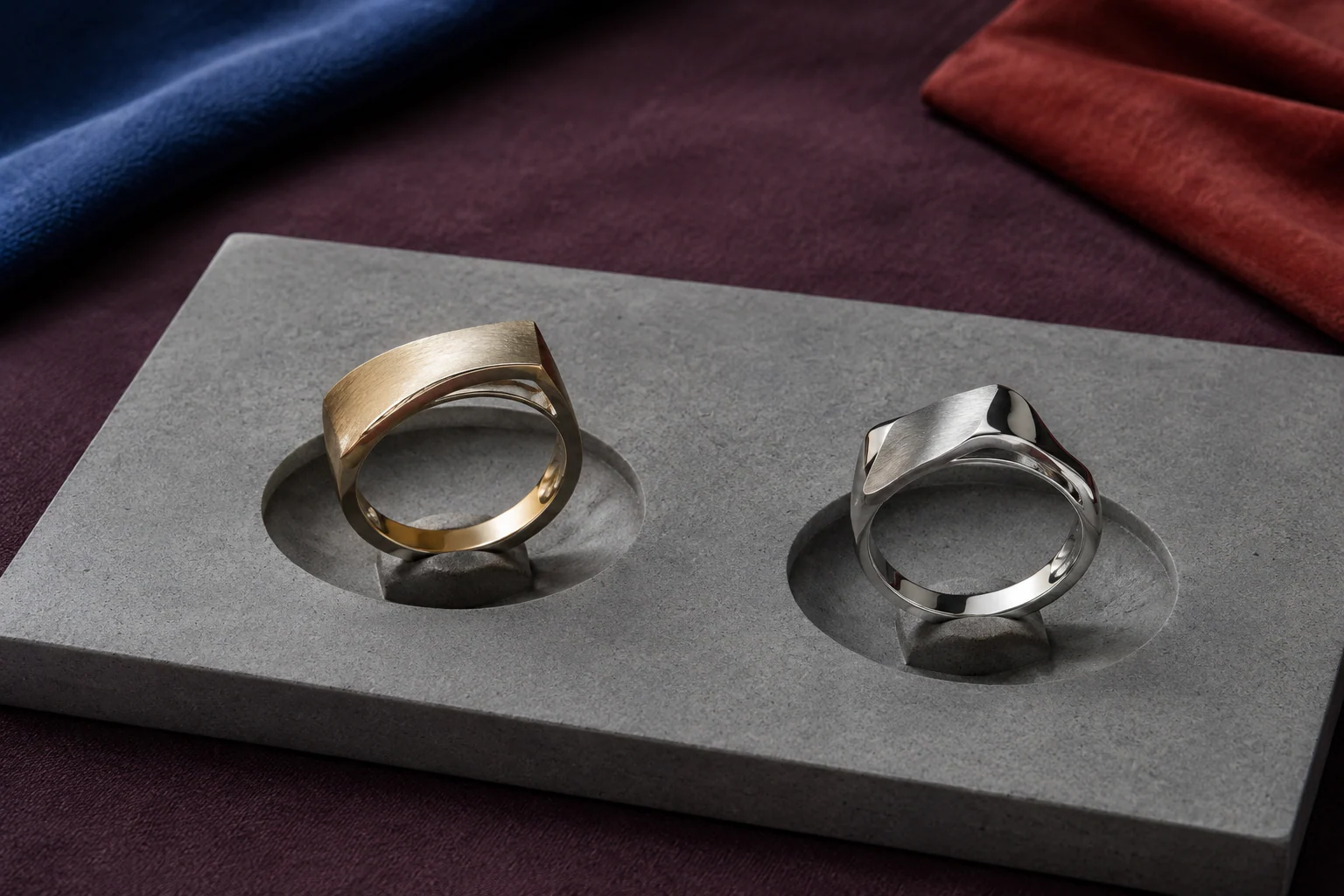
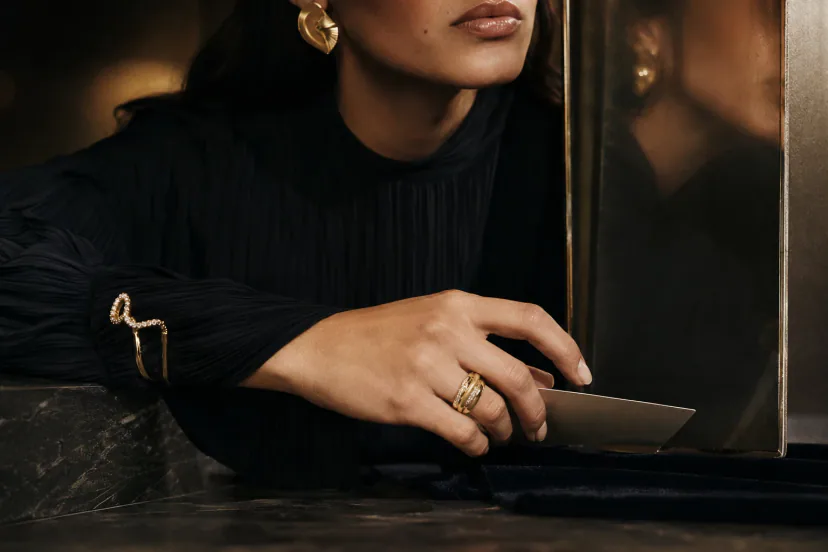
Once the zone is chosen, allow it to lead. A monumental ring does not automatically need a matching bracelet, necklace, and pair of earrings. It may need a clean sleeve, an exposed knuckle, and one smaller counterpoint elsewhere. Explore sculptural and statement rings by looking first at silhouette: open versus closed, vertical versus horizontal, compact versus finger-spanning.
The same principle applies around the face. One earring can create a sharper composition than a symmetrical pair when the hairstyle, neckline, and camera angle support the asymmetry. When considering earrings as spatial pieces, study what happens between the jewelry and the skin. The empty area is part of the design.
This is where couture changes everyday styling. The goal is not to imitate the scale of a runway. It is to borrow couture’s discipline: every addition must alter the composition, or it should be removed.
Wearable Sculpture Jewelry Needs Construction, Not Noise
The most convincing wearable sculpture jewelry shows how it was made. Those details may appear in a hinge, an intentional seam, a controlled irregularity, a balanced hollow form, or a transition between two materials. Decorative complexity alone is not enough. A piece should remain legible when photographed, viewed from the side, or partially concealed by clothing.
The Metropolitan Museum of Art’s Manus × Machina exhibition described handwork and machine production not as simple opposites but as mutually useful ways of solving design problems. This offers a productive lens for jewelry. Precision casting, digital modeling, hand finishing, stone setting, polishing, enameling, and assembly can coexist. What matters is whether each technique serves the form.
When evaluating a sculptural piece, look for four signs of resolution:
- A readable silhouette: the piece should remain distinctive without relying on surface decoration.
- Structural logic: joins, openings, hinges, posts, and closures should support how the piece sits and moves.
- Intentional finish: high polish, satin texture, visible tooling, translucency, or irregularity should feel chosen rather than accidental.
- A relationship to anatomy: the piece should frame, extend, interrupt, or echo the body instead of merely occupying it.
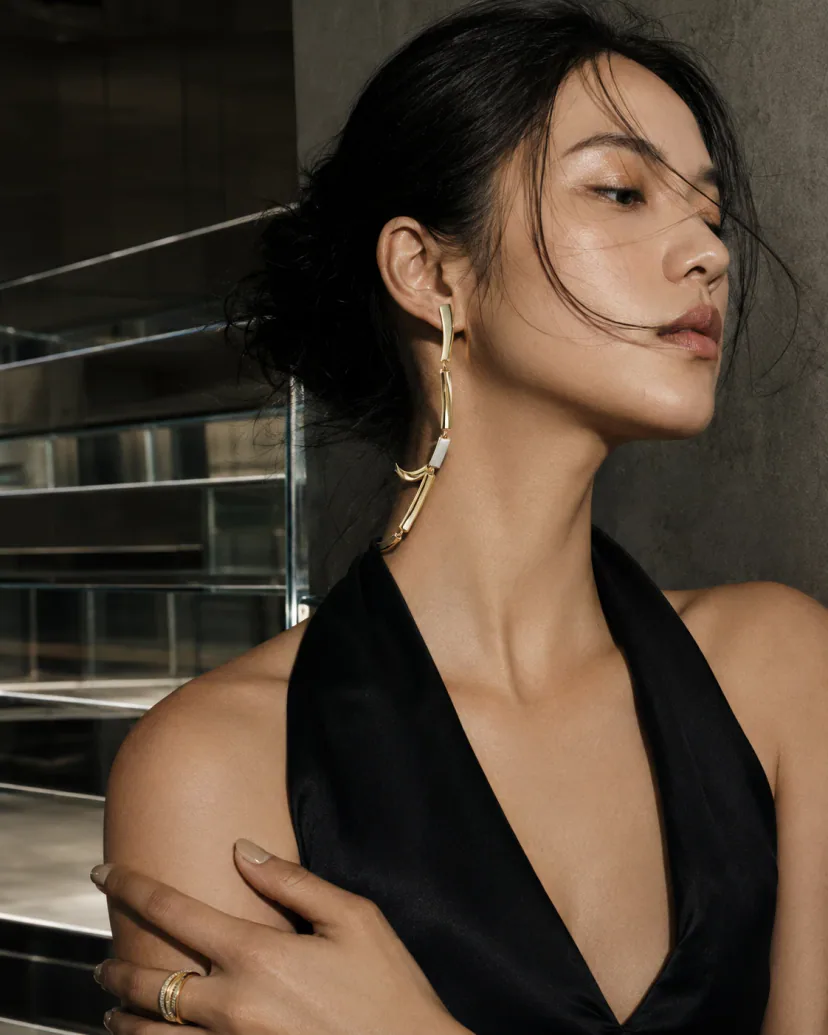
This does not mean everything must be severe or minimal. Enamel, pearl-like forms, translucent resin, color, and ornament can be exuberant. The discipline lies in assigning each element a job. Color may mark an edge. A pearl may interrupt a hard metal line. A translucent volume may soften an otherwise mechanical structure.
An FHCM discussion published during the July 2026 couture week emphasized craftsmanship, technical mastery, artistic freedom, and the continuing importance of human intuition within technological change. The editorial translation is straightforward: do not judge detail by how much labor it appears to advertise. Judge it by whether craft, technology, and material have produced a coherent piece.
A Five-Pass Couture-at-Hand Styling Test
Use this test before an event, a portrait, a gallery visit, or an ordinary day when one piece needs to carry more visual force. It works for statement rings, ear jewelry, brooches, cuffs, and small wearable sculptures.
-
Choose the focal gesture.
Decide what the body will naturally be doing: holding a glass, carrying a bag, turning a page, touching the collar, or pushing hair behind the ear. Place the strongest jewelry where that movement will reveal it. -
Check the piece from three distances.
From across a room, the silhouette should register. At conversational distance, construction and proportion should become clear. In a close crop, the finish should remain convincing. -
Add one counterline.
Pair a curved ring with a straight cuff, a long earring with a compact collar, or a polished surface with a softer material. The counterline should create tension without competing for leadership. -
Remove one unnecessary signal.
This may be a second necklace, a busy cuff, a loud manicure, or a neckline that cuts through the jewelry. Editing creates the negative space that lets a sculptural piece appear larger. -
Perform a motion test.
Sit, walk, raise your hand, turn your head, use your phone, and put on a coat. Watch for spinning rings, catching edges, unstable earrings, restricted movement, or pieces that collide with clothing.
The final pass is contextual. Jewelry that works in a controlled photograph may behave differently in a crowded opening, a dinner, or a commute. For cultural settings, the principles in this guide can be paired with a more situational approach to jewelry and dress for an art gallery: consider light, proximity, coat layers, conversation, and how often the body will be seen in motion.
Fit, Materials, and Care Are Part of the Design
Couture logic becomes most useful when it moves beyond appearance. A beautiful piece that constantly twists, pinches, catches, or needs correction has not been fully integrated into the wearer’s life.
Fit
For rings, consider both the resting fit and the path over the knuckle. Wide bands and multi-finger structures may feel tighter than narrow rings in the same nominal size. Check whether an asymmetrical top rotates and whether neighboring fingers can close naturally.
For earrings, assess weight distribution, closure security, edge placement, and movement against the neck. An oversized form does not need to be weightless, but its balance should feel deliberate. Brooches and garment-mounted pieces should also be tested on the actual fabric; a successful position depends on garment structure as much as pin design.
Materials
Read material descriptions before purchasing. Identify the base metal, surface finish, plating or vermeil construction where applicable, stone or resin attachment, and any care limitations. Switchroom’s materials guide provides a starting point for understanding why pieces with similar colors may require different handling.
Material contrast should also have a visual purpose. Polished metal reflects the surrounding room. Satin metal absorbs more light and can make volume easier to read. Translucent resin introduces depth without the visual weight of an opaque block. Enamel creates a clean edge of color. Pearls and irregular organic forms can interrupt strict geometry without dissolving it.
Care
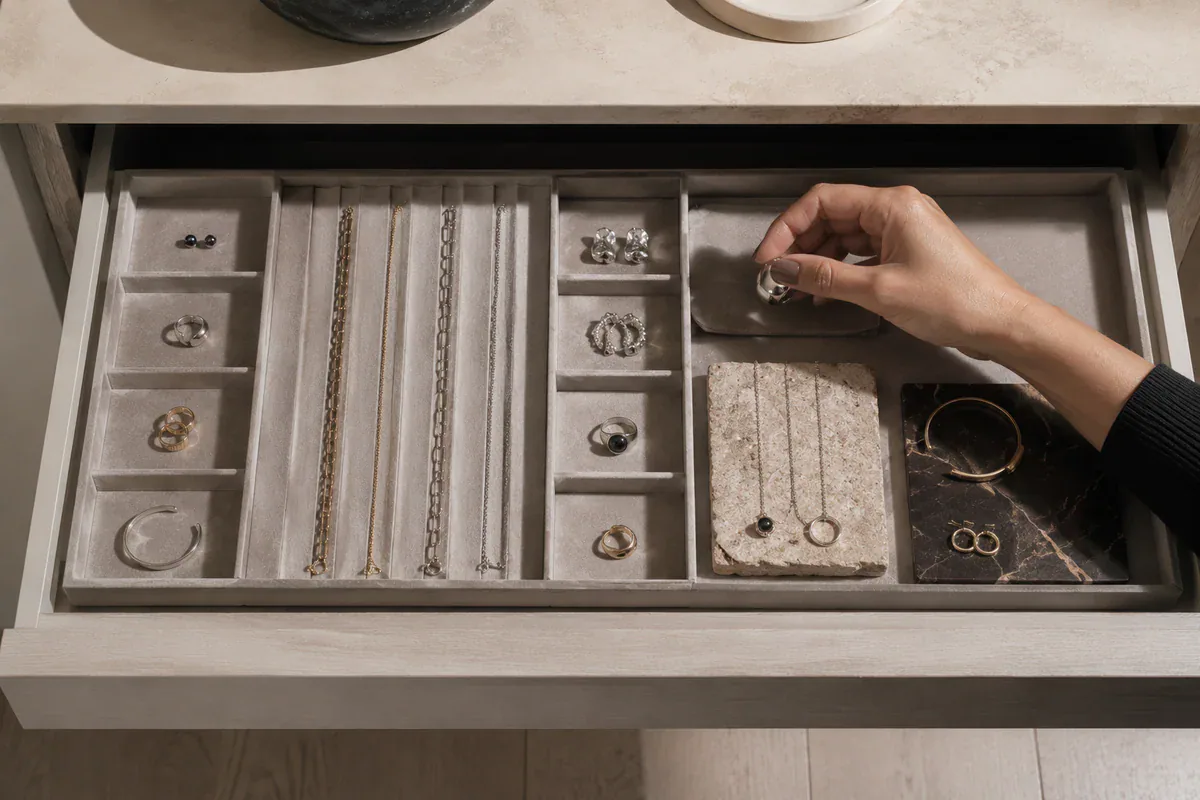
Follow the maker’s instructions rather than assuming all jewelry tolerates water, fragrance, sweat, impact, or cleaning products in the same way. As a conservative routine, put jewelry on after cosmetics and fragrance, remove it before swimming or strenuous activity, wipe it after wear, and store pieces separately so projecting forms do not scratch or crush one another.
Press-on nails can support the composition when hands are visible, but they should behave as a surface rather than a competing collection. Repeat one quality from the jewelry—a curved line, translucent edge, metallic temperature, or controlled interruption—then stop. The hand should look art-directed without turning the jewelry story into a manicure advertisement.
Frequently Asked Questions
What are couture jewelry details?
Couture jewelry details are small-scale choices in proportion, construction, finish, fit, and movement that make a piece feel intentional from both a distance and close range.
Can statement rings work with simple clothes?
Yes. A simple sleeve, clean neckline, or restrained color field gives a statement ring enough negative space to read as the outfit’s designed focal point.
How do I keep wearable sculpture jewelry comfortable?
Check weight, balance, edges, closures, articulation, and how the piece behaves during ordinary gestures. Comfort should be tested in motion, not judged only in a mirror.
Should nails match statement jewelry?
Not exactly. Nails work best as a supporting surface: repeat one material temperature, line, or finish, then let the jewelry remain the dominant piece.
Couture’s most portable lesson is not extravagance. It is attention. Begin with the piece, study how it meets the body, and edit the surrounding look until every visible detail has a reason to remain. Discover more about Switchroom’s jewelry-led approach to identity and wearable form.