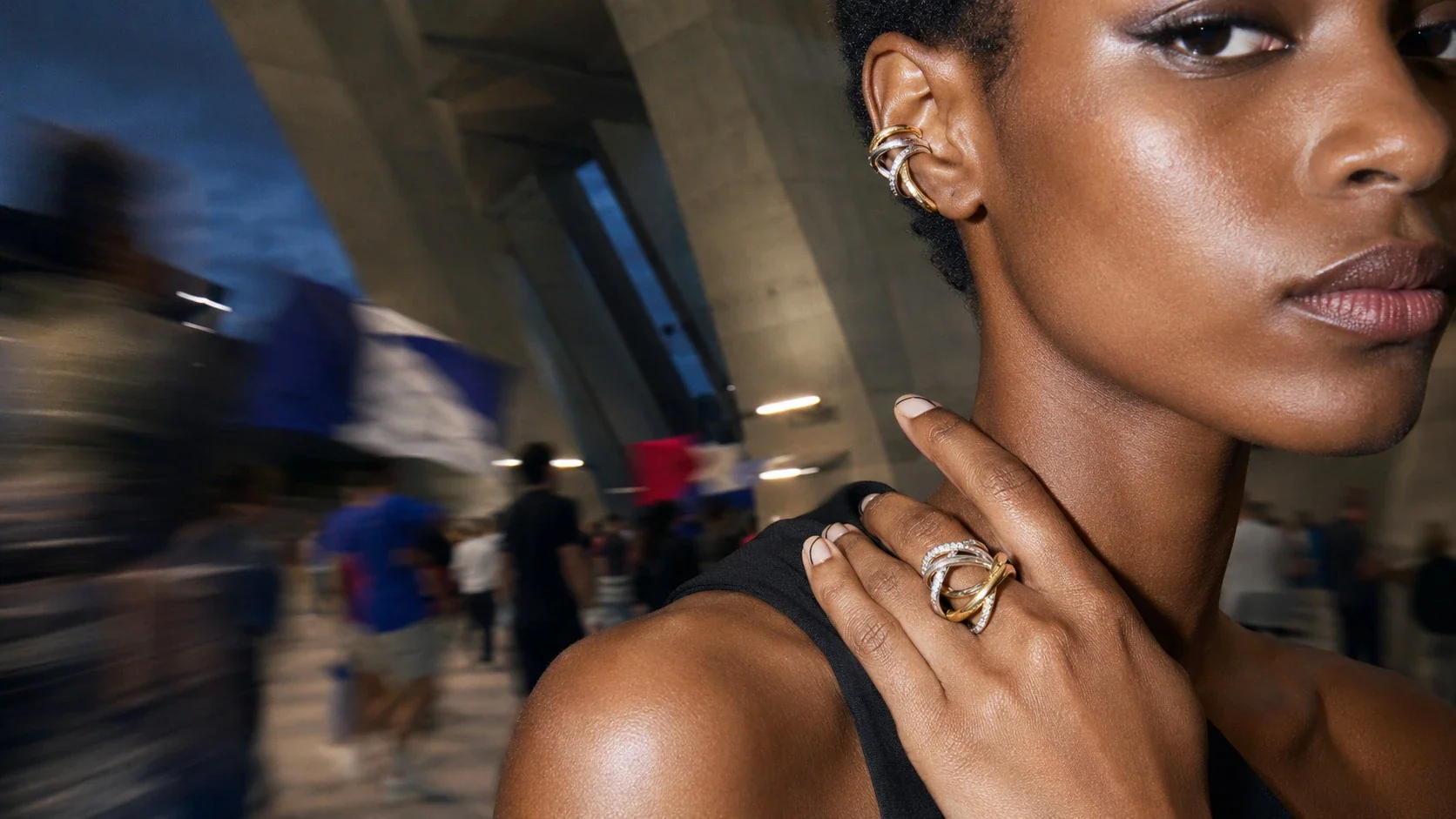
The final whistle has gone, but the most useful image is not the scoreboard. It is the crowd still moving through concrete concourses: a hand raised above a shoulder, a metal cuff catching hard light, a small flash of color appearing and disappearing between flags, phones, jerseys, and bodies. The FIFA World Cup 2026 ran from June 11 to July 19 across Canada, Mexico, and the United States. Seen retrospectively, it offered a practical lesson in sporty jewelry styling: pieces have to read at crowd scale, behave in motion, and still feel like you when the event is over. This guide turns that lesson into a wearable language rather than a costume.
Why stadium scale changes sporty jewelry styling
A stadium is visually ruthless. From a few rows away, fine detail disappears. At street level, the outfit is interrupted by security lines, transit, food, weather, bags, layers, and the constant movement of other people. The jewelry that survives this environment is not necessarily the largest. It is the piece with the clearest silhouette.
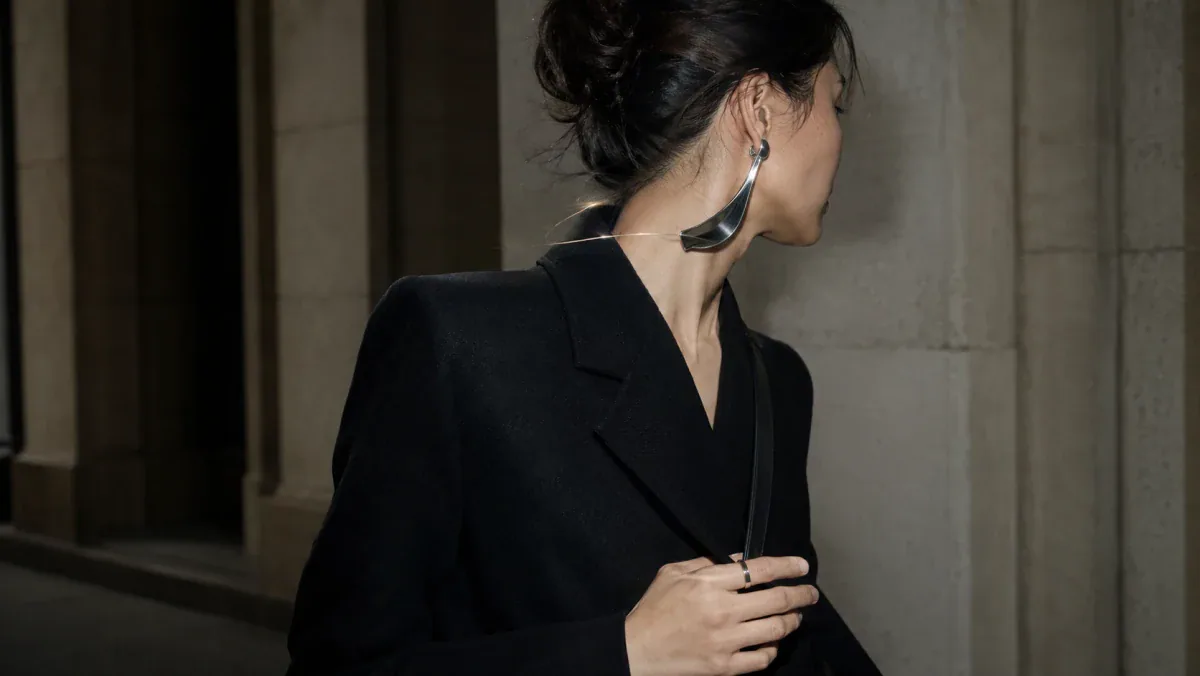
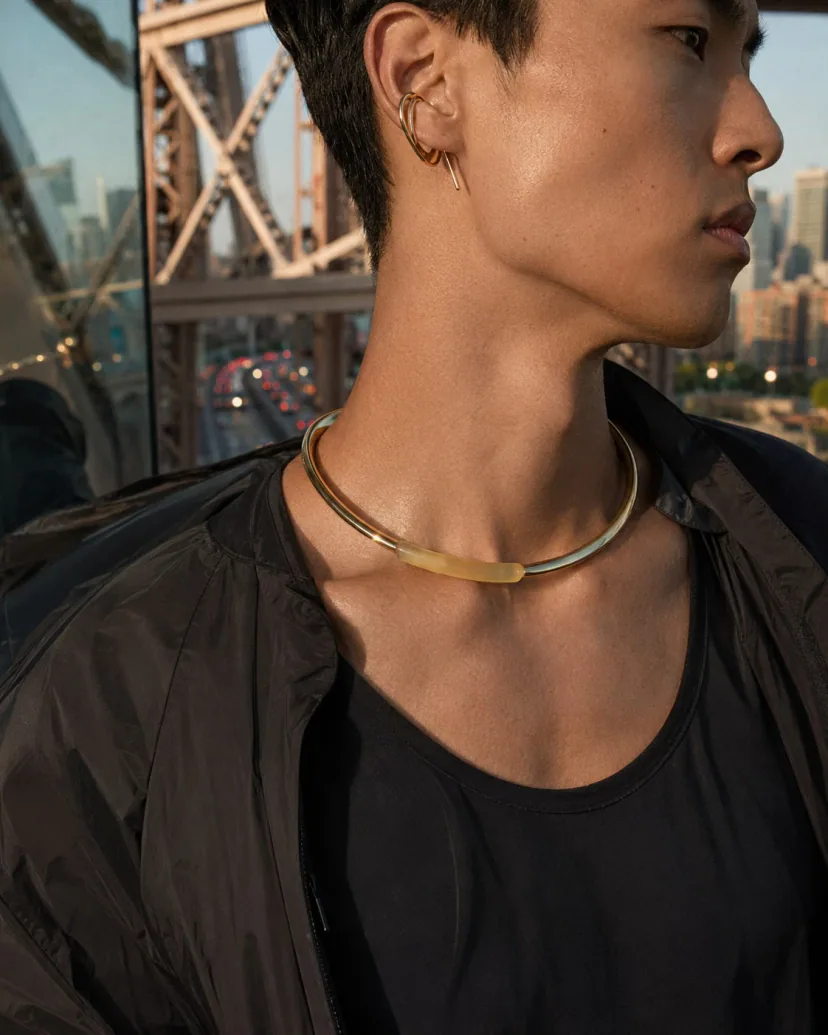
That is the first World Cup lesson: choose form before decoration. A continuous collar, an architectural ear cuff, a broad open ring, or a compact sculptural pendant can remain legible when a delicate stack becomes visual static. The most effective sports outfit jewelry often has one recognizable contour that can be understood in a second.
This does not mean flattening your identity into “minimal.” It means giving one piece enough space to lead. Explore a broader jewelry collection by looking first at outline, scale, and where the piece sits on the body—not by trying to coordinate every metal or color at once.
Think in camera distances:
- From across the concourse: the ear, neck, or wrist silhouette should be clear.
- In a phone photo: one construction detail should reward the closer view.
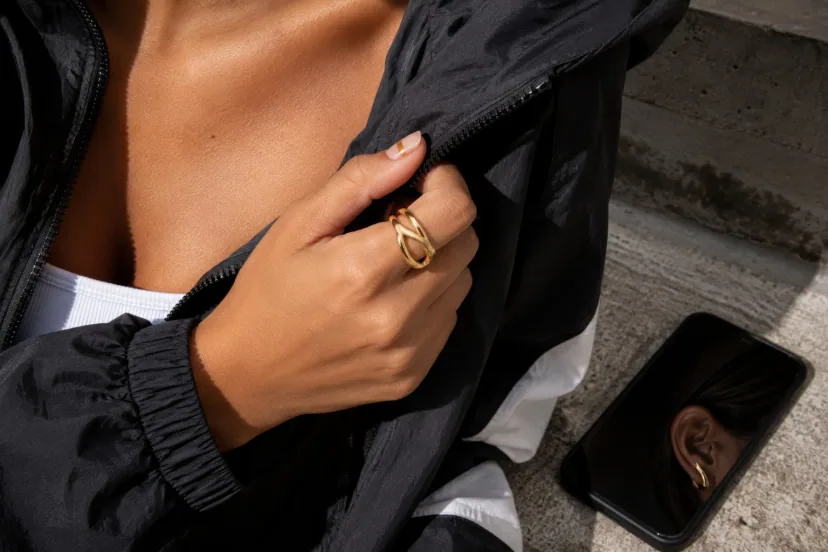
- In a hand gesture: a ring should look intentional without preventing a natural grip.
The useful distinction is between visibility and volume. A hollow form can read more strongly than a heavy solid one. Negative space, an off-center curve, or two separated bars may create more visual authority than a cluster of small components.
Wearable sculpture in motion: pass the body test
Wearable sculpture in motion is not a static piece photographed on skin. It is a structure negotiating with walking, turning, cheering, hugging, carrying, and sitting in a narrow seat. Before styling for color, test the piece against those actions.
Start with three body zones:
Ear and shoulder
Ear jewelry is highly visible in profile and close-up photography, especially when hair, a cap, or a collar frames it. For a long game day, check the weight, closure, and whether the lower edge strikes the neck when you turn. A compact ear cuff or structured earring can create strong scale without a long swing.
Neck and torso
A necklace needs a stable relationship with the neckline. A sculptural collar works best when the jersey, knit, or jacket leaves room around it. A pendant needs enough weight or structure not to disappear beneath layers. Test the full outfit while seated; a piece that looks balanced standing may fold, twist, or press into the body in a stadium chair.
Hand and wrist
Hands become unusually expressive during a match: pointing, covering the mouth, holding a drink, gripping a rail, filming, applauding. That makes rings powerful, but fit matters. Fingers can change slightly with heat, cold, salt, and long periods of movement, so avoid a ring that is already difficult to remove. Bracelets should not repeatedly strike a railing, watch, or hard bag hardware.
Sporty styling is not the same as wearing jewelry while playing sport. Gem settings, protruding forms, and chains can be damaged or create risk during actual athletic activity. The Gemological Institute of America notes that exercise, impacts, and catching can affect ring settings and recommends removing valuable rings before risky activity. Its broader jewelry protection guidance is a useful reminder: the spectator look can be sculptural; the pickup game afterward should usually be jewelry-free.
Use national color as an interruption, not a uniform
The World Cup made color public. It appeared at architectural scale—in flags, painted faces, scarves, seats, signage, and entire moving sections of a crowd. Translating that energy into jewelry for game day does not require reproducing a flag across the body.
A stronger approach is to isolate one color choice:
- Use enamel as a hard, graphic interruption inside an otherwise metallic piece.
- Use translucent resin to let color interact with skin, fabric, and light.
- Use a cord, bead, or small stone as a single chromatic hinge between jersey and jewelry.
- Use nail color only as a gesture echo, not as the commercial center of the look.
If the outfit already carries several national colors, let the jewelry introduce structure rather than more saturation. Silver-toned metal can sharpen a bright jersey; warm metal can pull warmth from a neutral jacket or skin; mixed metal can connect colors that would otherwise feel overly literal.
If you are not dressing for one nation, borrow the tournament’s logic rather than its symbols: one vivid interruption inside a mostly controlled composition. That leaves the look open enough to become part of your wider identity, not a one-day souvenir. Switchroom’s essay on why one signature style is overrated expands this idea: consistency can come from how you choose, not from repeating the same piece forever.
Choose materials for friction, weather, and honest care
A stadium day can involve sunscreen, sweat, rain, transit dust, repeated hand washing, metal barriers, and hours of skin contact. No material should be treated as invulnerable. The practical question is not “Can I wear jewelry outside?” but “What is this piece made from, how is the surface finished, and what kind of contact will it receive?”
Read the product description before buying. The U.S. Federal Trade Commission advises shoppers to understand metal purity marks and the language used for plated, filled, vermeil, sterling silver, and solid-gold products. It also notes that gold plating eventually wears depending on use and plating thickness. The point is not that one category is always superior; it is that an informed purchase begins with disclosed construction. Use Switchroom’s materials guide as a starting guide, then follow the care instructions for the exact piece you own.
For a high-contact game day, use this material-and-care filter:
- Surface: Is it polished, brushed, plated, enamelled, resin-based, or stone-set?
- Contact: Will it rub against a zipper, railing, bag clasp, watch, or another ring?
- Moisture: Can you keep it away from pools of sunscreen, perfume, and prolonged dampness?
- Construction: Are closures secure and stone settings protected from direct knocks?
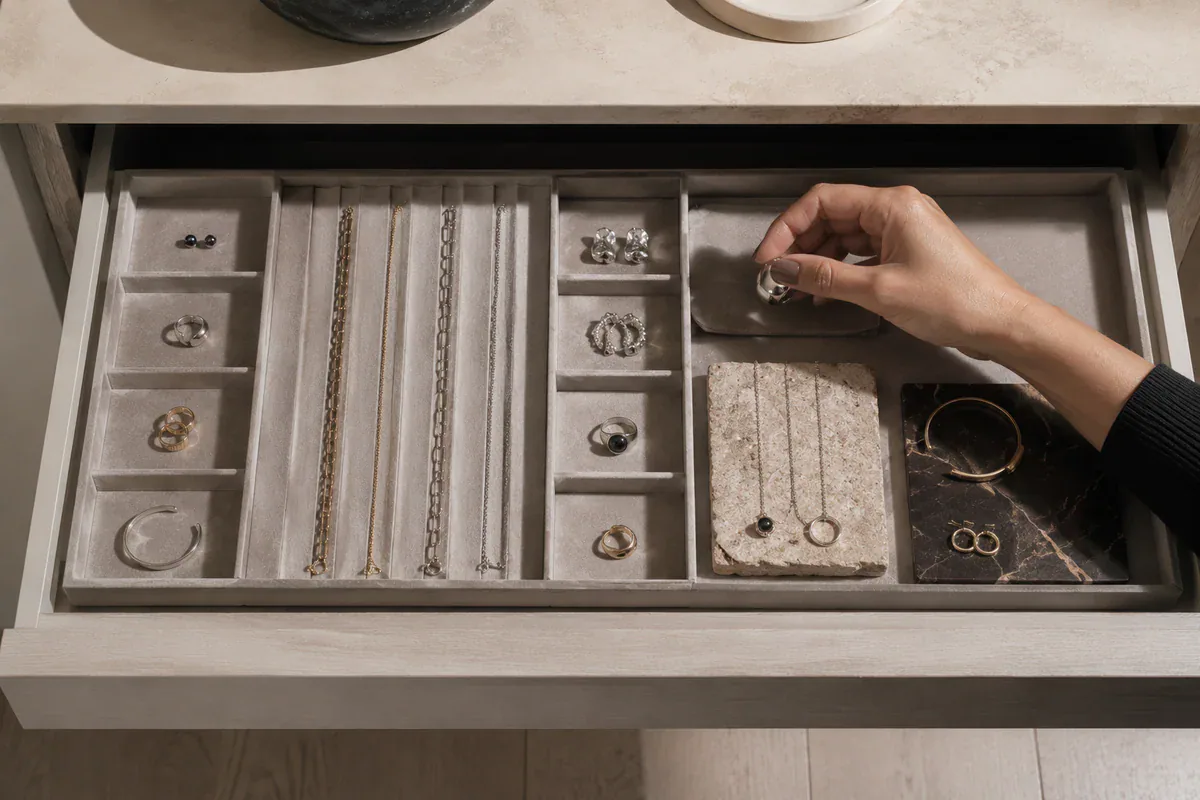
- Aftercare: Can you wipe it dry and store it separately when you get home?
Do not assume that every piece should be cleaned with the same solution. A soft, dry or slightly damp cloth may be appropriate for many surfaces, but stones, coatings, adhesives, resin, enamel, and patina can require different care. Follow the maker’s instructions and avoid abrasive household cleaners unless the specific material guidance allows them.
The three-point game-day jewelry formula
The strongest practical formula is not “more.” It is one anchor, one echo, and one gesture surface. This works because each element has a separate job.
- Choose the anchor. Pick the piece visible from the greatest distance: an ear form, collar, pendant, brooch, or strong cuff. Let it establish the silhouette.
- Add one echo. Repeat one idea—not the whole design—in a smaller piece. It might be the same curve in a ring, the same metal temperature, or one enamel interruption.
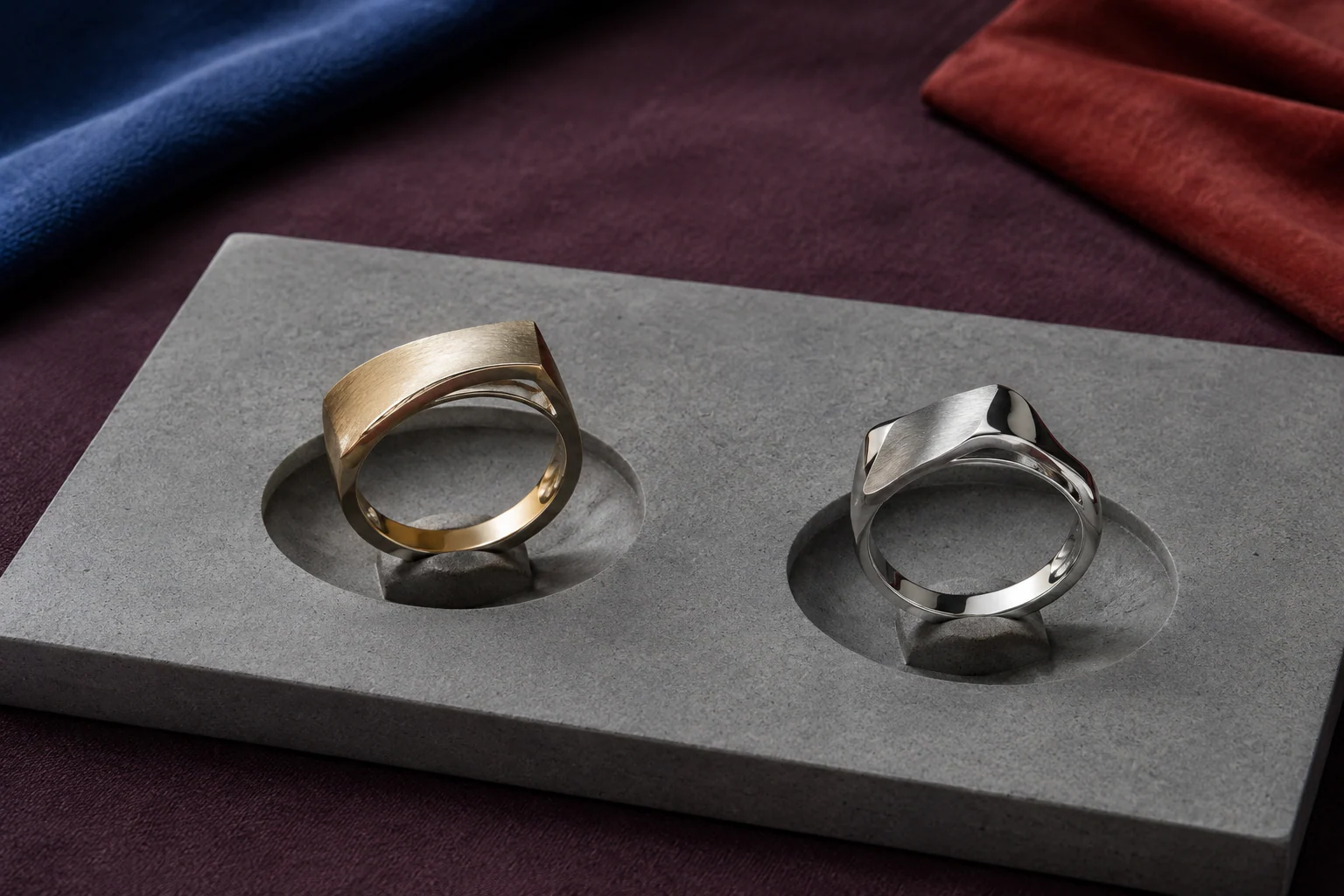
- Art-direct the gesture surface. Decide what happens when the hand enters the frame. Use one or two sculptural rings, a controlled manicure, or both, while preserving a comfortable grip.
- Run the motion check. Sit, turn, raise both arms, hold your phone, zip your bag, and put on every outer layer. Remove anything that catches or repeatedly collides.
- Run the venue check. Review current stadium and event rules before leaving. FIFA’s official fan safety guidance directs spectators to security and prohibited-item information; rules and enforcement can vary by venue and event.
Three examples show how the formula changes with context:
- Jersey-led: sculptural ear cuff as anchor, open ring as echo, short neutral nails with one line detail.
- Tailored: brooch or collar as anchor, compact ring as echo, bare or translucent nails.
- Neutral sportswear: strong ring as anchor, small ear form as echo, one national-color accent in enamel or resin.
This formula also explains what survives after the final. A literal novelty piece can become stranded in one memory; a well-chosen form can absorb the memory and continue into work, travel, dinner, or another version of you. The goal is not to erase fandom. It is to buy and style pieces with an afterlife.
For trips built around several events, the same logic can be extended into a compact hand-and-jewelry wardrobe; see the seven-day capsule hand guide. When you are ready to choose the anchor rather than collect filler, browse the Switchroom shop with silhouette, movement, and material disclosure in mind.
Frequently asked questions
What jewelry is best for a stadium?
The best stadium jewelry has a clear silhouette, secure closures, comfortable weight, and limited snag risk. Choose one visible anchor piece, then test it while sitting, turning, raising your arms, and using your phone.
Can I wear rings to a game?
Yes, if the rings fit comfortably and do not interfere with gripping, carrying, hand washing, or removing layers. Avoid tight fits, exposed fragile stones, and stacks that repeatedly strike each other.
How do I use team colors without looking like a costume?
Use one color as an interruption rather than matching every element. Enamel, translucent resin, a small stone, cord, or a single nail detail can connect the outfit to the team while keeping the jewelry sculptural.
Should I wear jewelry while actually playing sport?
Usually no. Remove rings, chains, cuffs, and protruding earrings before active play to reduce the risk of impact, snagging, damage, or loss. Follow the rules of the sport and venue.