US Open outfit jewelry is easiest to plan when you treat the day as a long spectator itinerary rather than a short styling moment. Think through body zone, weight, projection, snag risk, heat and humidity, sunscreen contact, bag friction, security screening, seated comfort, and what happens if you continue to dinner or drinks afterward. A compact piece that looks almost too simple at home can become the smarter choice once you add hours of sitting, walking, layers, crowds, weather, and repeated contact with clothing or a bag.
This is an independent spectator styling guide. Switchroom is not affiliated with, endorsed by, or sponsored by the US Open, USTA, players, venues, or event partners. Venue rules can change, so check the official US Open Plan Your Visit and A–Z information before leaving rather than relying on remembered bag or prohibited-item rules.
Start with the day, not the jewelry
Choosing the best jewelry for a spectator outfit usually starts with a few practical steps. What are you wearing for the hottest part of the day? Will you carry a bag? Are you bringing a rain layer or lightweight jacket? Will sleeves be pushed up and down? Are you likely to spend long stretches seated? Are you continuing somewhere more polished afterward?
Use those answers to evaluate each body zone. Jewelry that projects far from the body, swings freely, stacks loosely, or repeatedly collides with a sleeve, bag strap, armrest, or tabletop may become distracting over a long day. Compact earrings, shorter necklace lengths, low-profile rings, and secure bracelets can be easier to manage than larger alternatives, but that is a styling judgment rather than a guarantee of comfort, safety, or retention.
A useful order is: choose the clothing first, identify the friction points, add one or two jewelry zones only if needed, then check everything while sitting, walking, reaching, and putting on your outer layer.
Ear: keep projection controlled
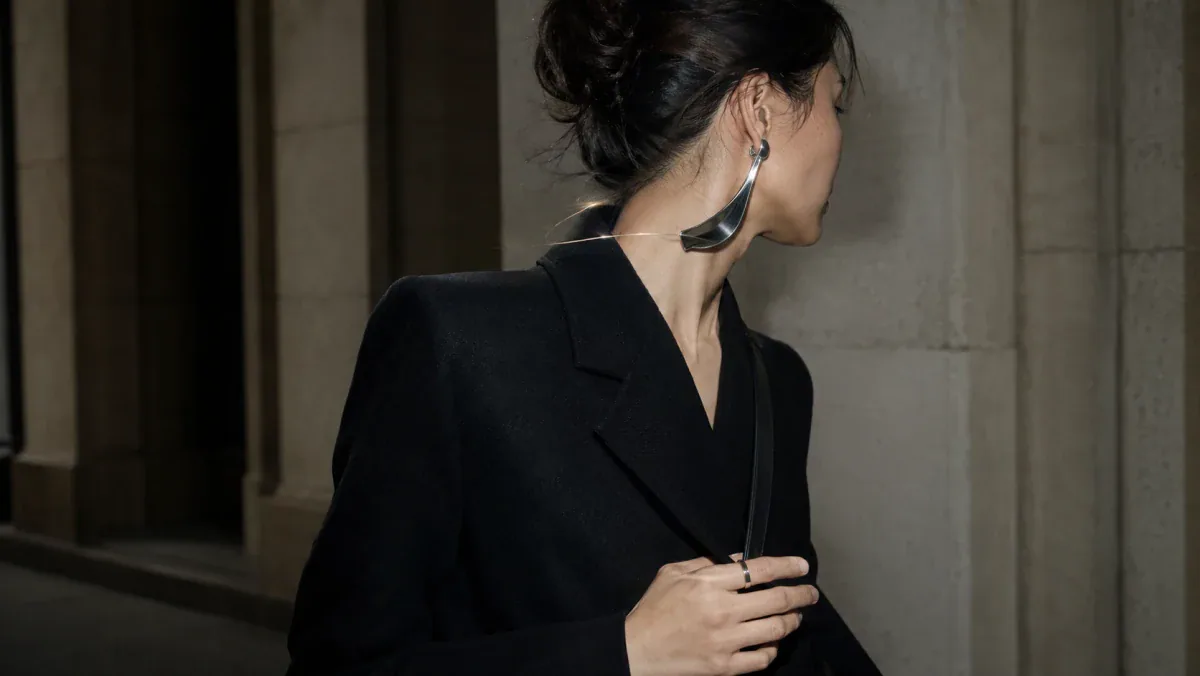
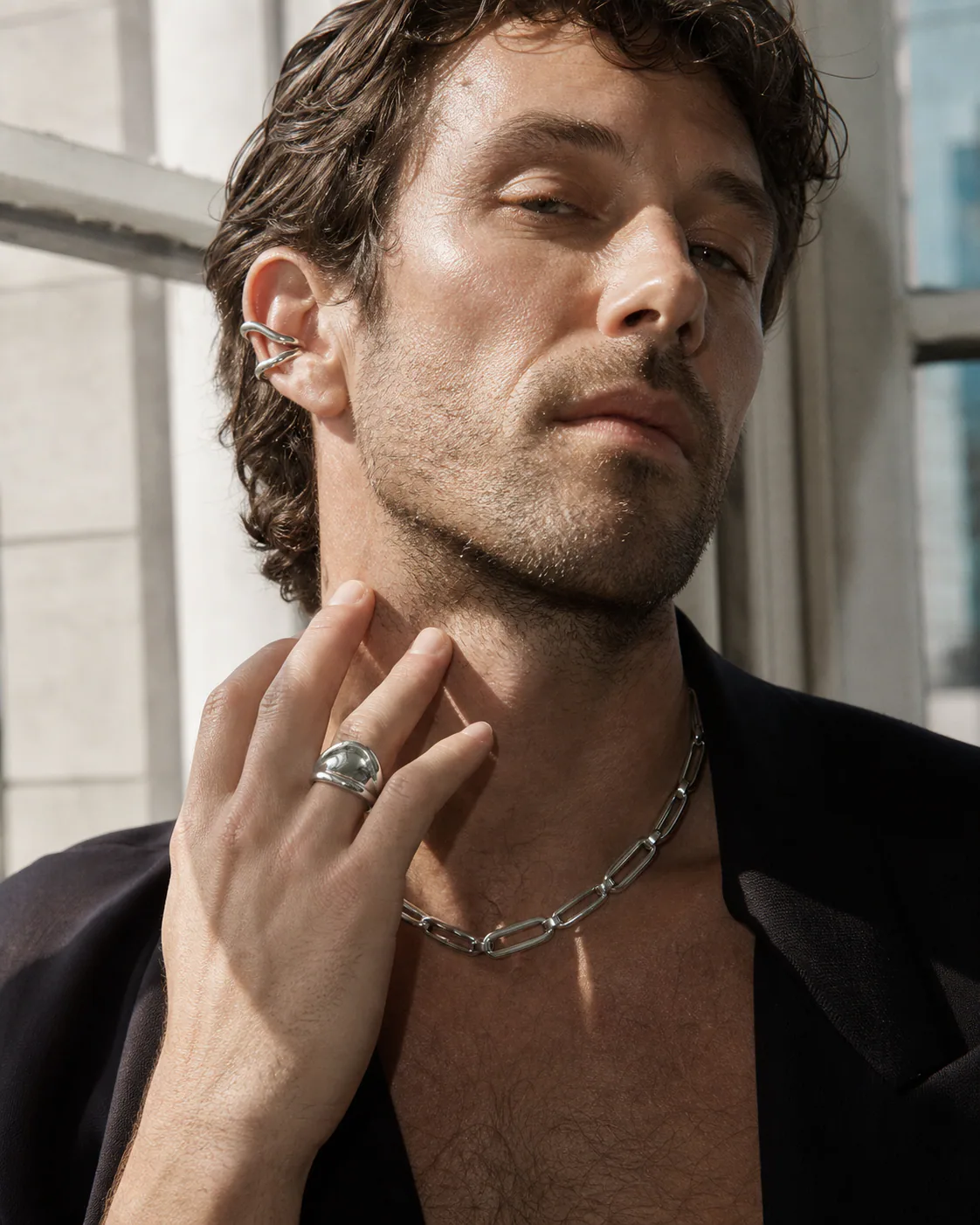
For a long spectator day, the ear is often the easiest place to add visual definition without interfering with hands, bags, or sleeves. Compact hoops, close ear cuffs, small sculptural forms, or short drops can create a clear focal point without extending far into the neck or shoulder zone.
The key variable is projection. An earring can be visually strong without being physically large if it has an unusual surface, asymmetric curve, or concentrated shape. Long swinging drops may look elegant in a static mirror but can move more dramatically while walking, turning, taking layers on and off, or brushing hair and collars.
If you are building a tennis match outfit accessories plan around a polo or crew-neck tee, a small ear piece can give enough contrast that you do not need a necklace at all. With a linen shirt, especially one with an open collar, an ear-focused composition can keep the neckline clean and reduce competition between buttons, collar points, sunglasses, and jewelry.
Neck: short and controlled usually reads cleaner
A necklace can work well for courtside jewelry styling, but length matters. Short or controlled lengths tend to stay closer to the torso and are less likely to interact repeatedly with a bag strap, open shirt, jacket zipper, or changing neckline.
With a simple tee or fine knit, a compact pendant or short sculptural chain can create one clear line. With an open linen shirt, decide whether the jewelry should sit inside the shirt opening or above it rather than drifting unpredictably between layers. If you know you will add a rain shell or lightweight tailoring later, test the necklace with those layers before leaving.
Long swinging pendants and multiple loose chains introduce more movement and more contact points. They are not automatically wrong, but they demand more attention during a day built around walking, seating, layers, and bags. If your outfit already has a strong collar, polo placket, scarf-like neckline, or overshirt, leaving the neck bare may produce a sharper composition.
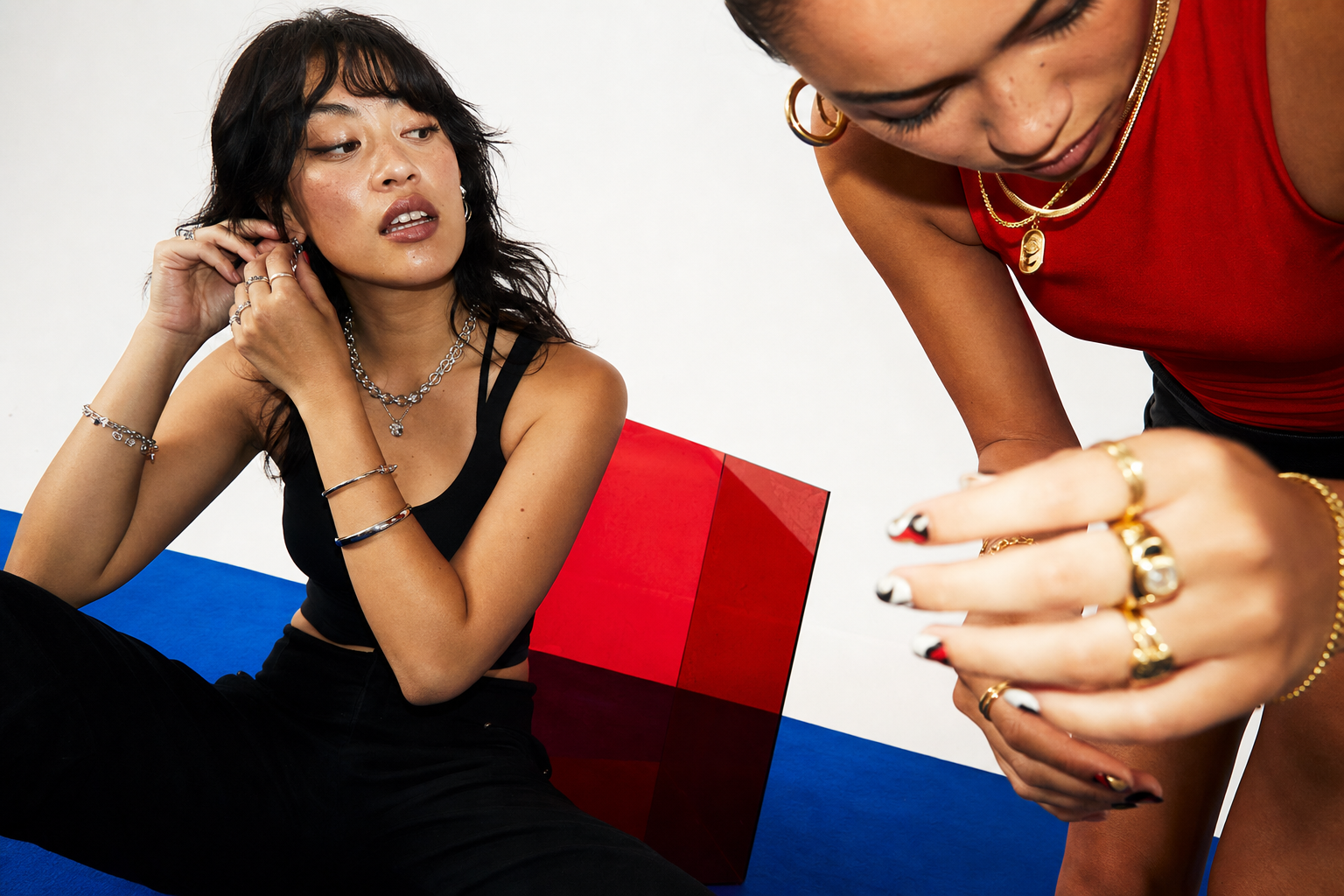
Wrist: think about armrests, bags, and sleeves
The wrist is attractive for stadium outfit jewelry because it remains visible with many casual outfits, but it is also a high-contact area. Your wrist may meet your thigh, chair edge, table, phone, bag, sleeve, or rain layer throughout the day.
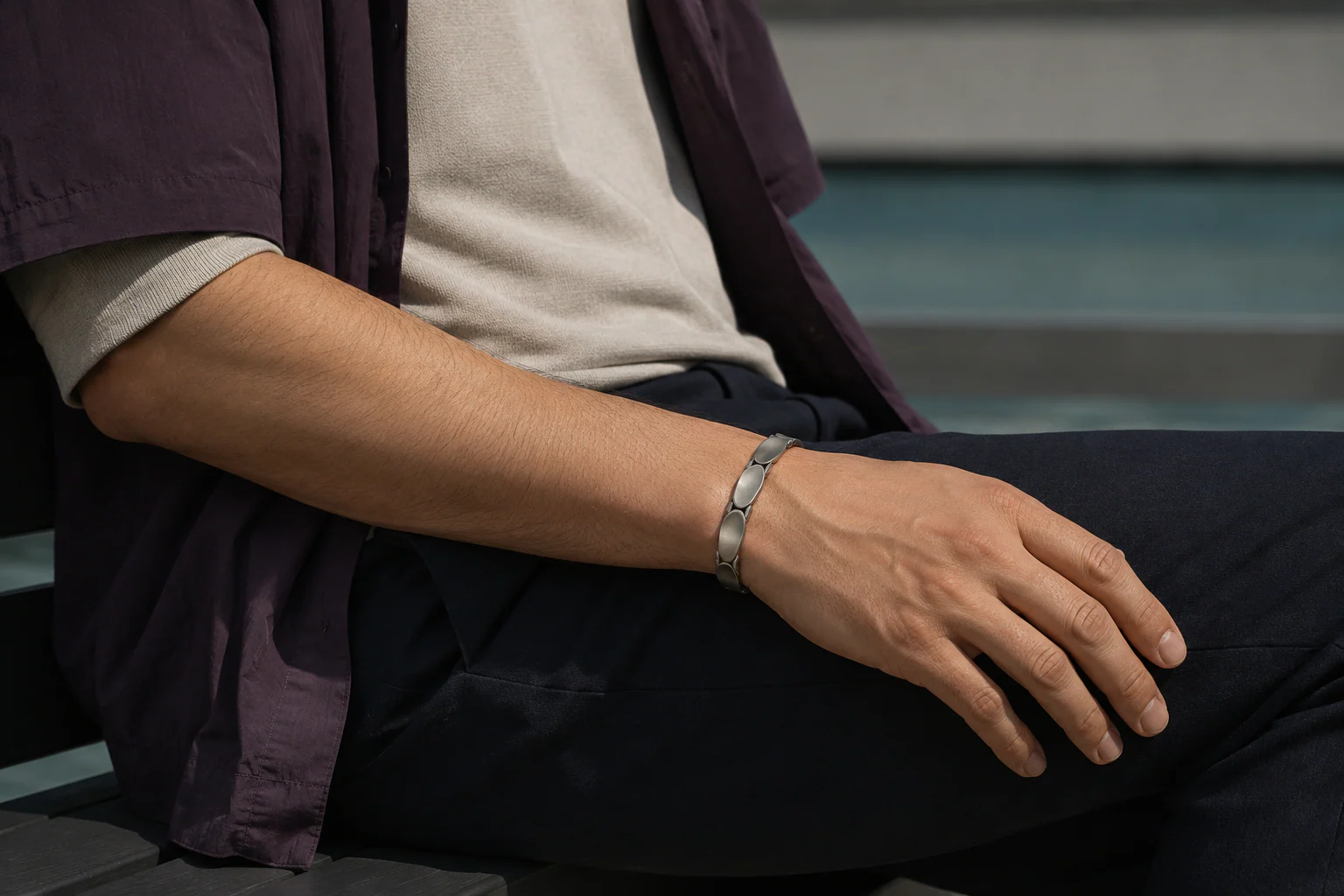
A low-profile bracelet that follows the wrist closely can be easier to integrate than a bulky cuff, long chain bracelet, or loose stack. Look for visual interest through shape, finish, articulation, or negative space rather than height alone. If the bracelet has protruding corners, dangling elements, or broad raised forms, test whether they catch on the inside of a sleeve or press against the wrist when your forearm rests on your leg.
If you like tennis-style bracelets, keep the rest of the wrist relatively quiet so the repeated line remains legible. For a deeper styling approach, see How to Style Tennis Bracelets Without Looking Traditional.
Hand: low-profile rings are easier to live with
Rings can be effective jewelry for a sports event because they occupy little visual space, but the hand is constantly active. You may hold a phone, ticket information, food, a bottle, sunglasses, or a bag handle, even if none of those are part of the jewelry styling itself.
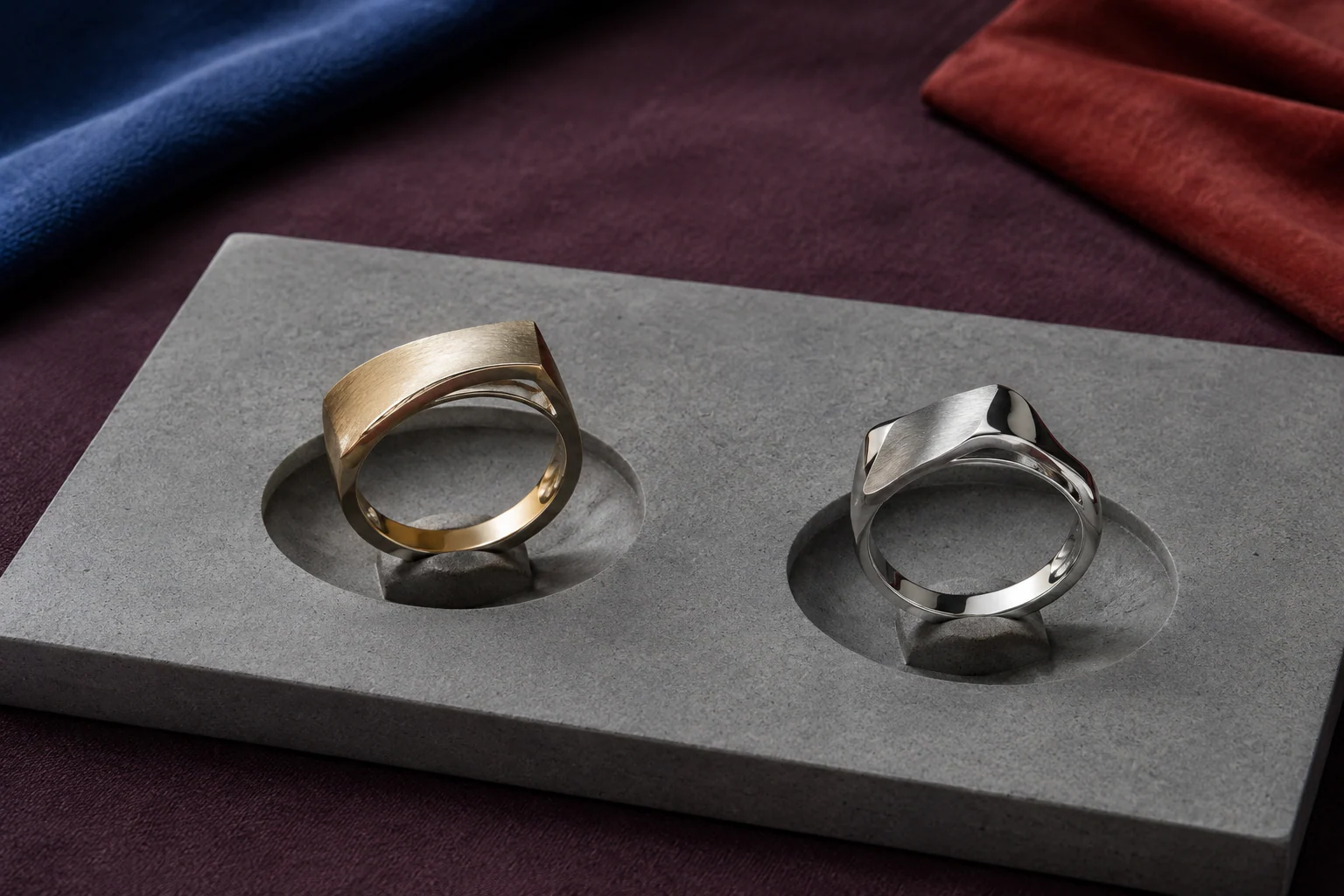
A low-profile ring with a smooth upper form generally introduces fewer contact points than a tall setting, sharp edge, or wide stack. That does not guarantee comfort or retention; it simply reduces how far the jewelry protrudes and the chance of contact with everyday items.
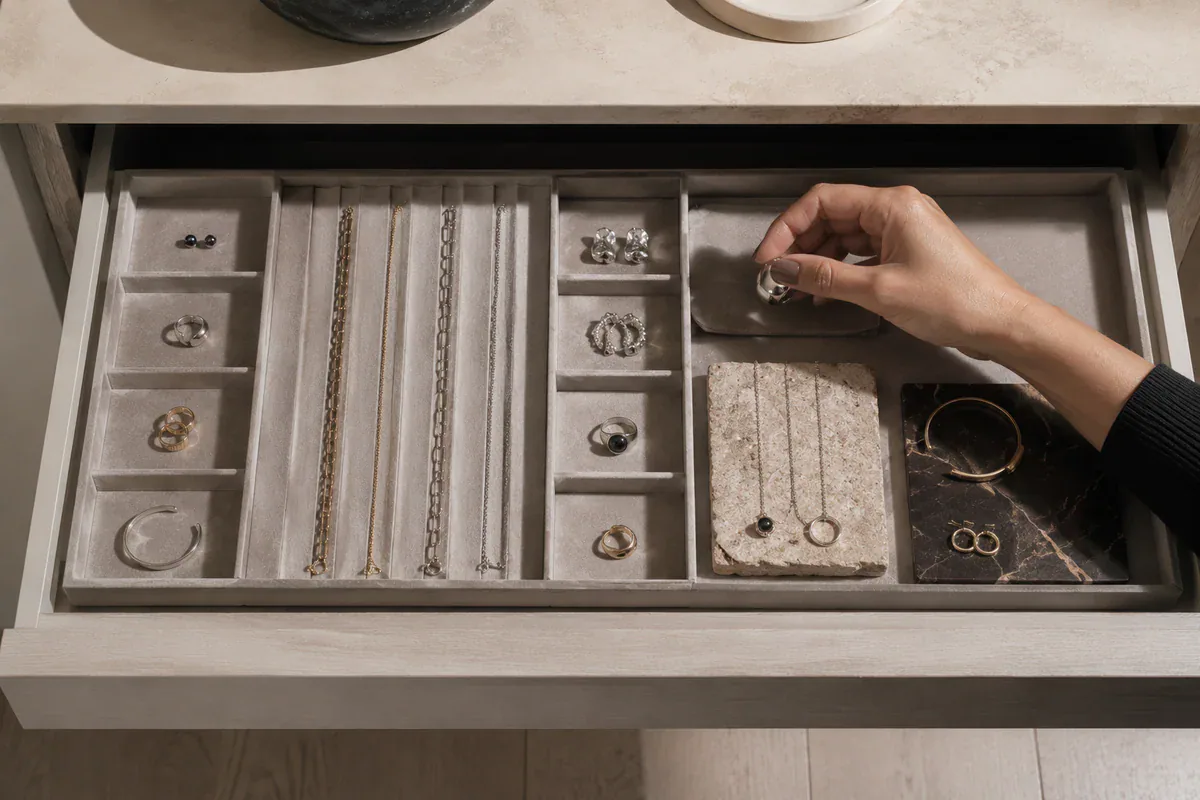
If you wear several rings, check whether they touch each other when you make a fist, hold a strap, or rest your hand. A stack that looks balanced on an open hand may feel crowded once fingers bend. One sculptural ring can often do more visual work than multiple delicate rings competing for space.
Bag and outerwear interaction
Bags and layers are often where an otherwise good styling plan becomes inconvenient. A shoulder strap can cross a necklace, press against a brooch, or repeatedly drag over a bracelet when you move the bag. A crossbody strap may change the visual balance of a necklace or chest-level jewelry. A rain layer can cover earrings, catch on projecting pieces, or compress wrist stacks.
Before leaving, put on the exact bag and outerwear you expect to use. Move the strap on and off your shoulder several times. Zip or button the layer. Push the sleeves up and pull them down. Sit with the bag beside you. These small tests reveal more than a static mirror.
For a lightweight tailored jacket, compact ear jewelry plus a low bracelet or ring often keeps the composition controlled. Denim creates a different texture: a bright or polished piece can stand out sharply against the dry fabric, while a more muted finish can keep the look restrained. With a rain layer, simplicity usually helps because smooth, low-profile forms interfere less with technical fabrics and closures.
Hot weather changes the equation
Weather aware jewelry styling means acknowledging that heat, humidity, sweat, sunscreen, and repeated skin contact can affect how jewelry feels and how surfaces look during the day. Do not assume any metal, coating, stone, clasp, or construction is sweatproof, waterproof, hypoallergenic, tarnish-proof, or safe for sunscreen.
In heat, pieces with less surface area against the skin may feel less visually heavy, but individual tolerance varies. A large collar or broad cuff can trap more heat and moisture than a smaller piece. If you know you will reapply sunscreen, consider where the product will contact your jewelry. Necklaces, bracelets, and rings can pick up residue during application or from repeated touching.
If humidity is a recurring concern, see Jewelry for Humid Weather: Materials and Care for a material-focused discussion rather than assuming one approach works for every piece.
Rain: choose fewer moving parts
Rain introduces outerwear, damp fabric, umbrellas, faster movement, and more frequent handling of bags and phones. Jewelry does not need to disappear from the outfit, but pieces with many moving components may have more chances to interact with sleeves, hoods, or straps.
A compact earring, simple ring, or low articulated bracelet can maintain the styling idea with fewer protruding elements. If rain is likely, test the outfit with the actual shell or jacket. Pay attention to hood cords, collar edges, zippers, and elastic cuffs.
Do not treat rain exposure as harmless for every material. If a piece becomes wet, follow care guidance appropriate to its verified construction rather than assuming it is water-resistant.
Clothing combinations that work for a long spectator day
Polo or tee
A polo or plain tee gives jewelry a relatively clean field. A compact earring plus one wrist or hand piece is often enough. If the collar or placket already provides structure, a necklace may be unnecessary.
Linen shirt
Linen adds texture and movement. A short necklace can sit neatly inside an open collar, or you can leave the neck bare and use the ear or wrist instead. Avoid overcrowding the collar, buttons, bag strap, and jewelry into one area.
Knit layer
A fine knit can make reflective jewelry look sharper because the fabric absorbs light. A bracelet beside a pushed-back sleeve or a compact earring against a clean neckline can be effective without feeling formal.
Lightweight tailoring
Tailoring can make simple jewelry feel deliberate. One polished low-profile bracelet or sculptural ring can provide enough contrast against matte suiting. If you remove the jacket later, make sure the jewelry still works with the layer underneath.
Denim
Denim is useful for a tennis inspired jewelry outfit because it prevents the styling from becoming too literal or polished. Instead of sports motifs, use contrast: a fine reflective bracelet, compact metal earring, or smooth sculptural ring against the rougher fabric.
Comfort is a test, not a product claim
When people search for comfortable jewelry for a long day, the useful factors are usually weight, projection, closure, surface geometry, body placement, and interaction with clothing. No article can guarantee that a particular category will feel comfortable to every person.
Do a ten-minute test at home. Sit with your forearm on your thigh. Cross your arms. Turn your head. Put on your bag. Add your outer layer. Use your phone. If a piece repeatedly presses, catches, twists, or demands adjustment, simplify the configuration before you leave.
Also check closures visually. A clasp that appears damaged, a bent ear wire, a loose setting, or a compromised connector is not a styling issue. Set the piece aside rather than relying on an event day to test it.
Day-to-evening transition
A long tennis day may continue into dinner, a bar, or another evening plan. The easiest transition usually comes from jewelry that already works with both casual and tailored layers rather than from carrying multiple replacements.
One compact sculptural earring, short necklace, low bracelet, or strong ring can read casual against a tee or linen shirt and more deliberate once a jacket is added. If you want a visible shift, change one variable: roll down sleeves, add lightweight tailoring, change the shirt opening, or move from two pieces to one stronger focal piece.
This approach keeps spectator outfit jewelry from becoming an elaborate packing problem. The strongest transition often comes from clothing context rather than adding more jewelry.
Security screening and entry planning
Do not design your outfit around remembered venue rules. Policies can change. Check the official US Open information before leaving, including current visit guidance and the A–Z resource.
From a jewelry standpoint, the practical principle is simply to avoid adding unnecessary complexity. Large detachable accessories, excessive loose components, or complicated stacks leave you with more pieces to keep track of during travel and entry. That is not a claim about screening outcomes; it is basic event-day organization.
After-event care
After a hot or humid spectator day, inspect jewelry before putting it away. Look for sunscreen film, sweat residue, moisture, looseness, or friction marks. Do not assume that every piece should be soaked, polished, or cleaned with the same method.
Material and construction determine what is appropriate. If a piece has stones, coatings, enamel, glue, stringing, plating, or unknown components, use the least aggressive verified method. The full process is covered in How to Clean Jewelry After Summer.
Court contrast, not costume
Court contrast is about a sharp accent against quieter clothes, not a head-to-toe tennis theme. One fast-looking nail surface—a crisp diagonal, for example—could sit alongside jewelry concentrated in one zone, such as the ears.
Read the look at three distances: across the concourse for the overall silhouette; from the next seat for the balance between nails, jewelry, and clothes; and at hand-held distance for the smaller details. Each view is a chance to notice what draws the eye and what competes with it.
Keep playing safety separate from spectator styling. These suggestions are for watching the match, not guidance on what to wear while playing tennis.
US Open outfit jewelry FAQs
What jewelry should I wear as a US Open spectator?
For a quieter look, you could focus on one jewelry zone and keep the rest understated. If your clothes already carry a strong print or bold color, a smaller visual accent may be all the look needs.
Can statement earrings work courtside?
They can, as a styling choice. If the earrings lead the look, a quieter neckline can keep the emphasis at the face. The balance depends on the outfit and how much contrast you prefer.
How can I style my nails with spectator jewelry?
A crisp nail design could echo one accent in the outfit without matching the jewelry exactly. If the nails are visually busy, a simpler jewelry arrangement may let both have their moment.
Do my colors need to match tennis colors?
No. A tennis-inspired accent could work, but it need not set the palette for the entire outfit. If you prefer other colors, a quieter base and one sharper note can offer contrast without a literal tennis reference.
A simple courtside checklist
- Choose the outfit first. Include the bag and likely outer layer.
- Pick one or two body zones. Ear plus wrist, neck plus hand, or another restrained combination.
- Check projection. Avoid forms that repeatedly catch sleeves, straps, or adjacent jewelry.
- Test seated clearance. Rest forearms naturally and notice pressure points.
- Consider heat and sunscreen. Keep material claims separate from visible appearance.
- Check movement. Walk, sit, reach, and add layers before deciding.
- Plan the evening transition. Let clothing do some of the work rather than carrying more pieces.
- Check current venue information. Use official sources before leaving.
The best US Open outfit jewelry is not necessarily the smallest or simplest jewelry you own. It is the jewelry whose scale, placement, movement, and interaction with the rest of the outfit make sense for a long spectator day. Think low projection, controlled movement, clear body zones, and enough visual restraint that the pieces still work when weather, layers, seating, and evening plans change.
Read next
- How to Style Tennis Bracelets Without Looking Traditional
- Jewelry for Humid Weather: Materials and Care
- How to Clean Jewelry After Summer