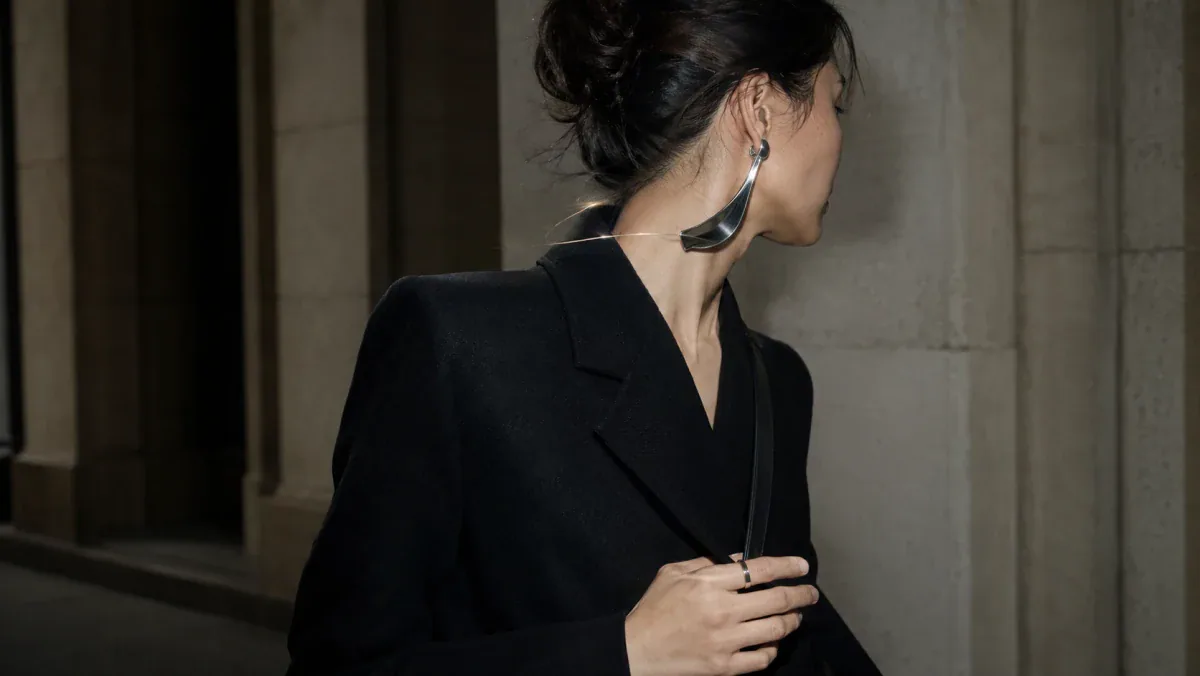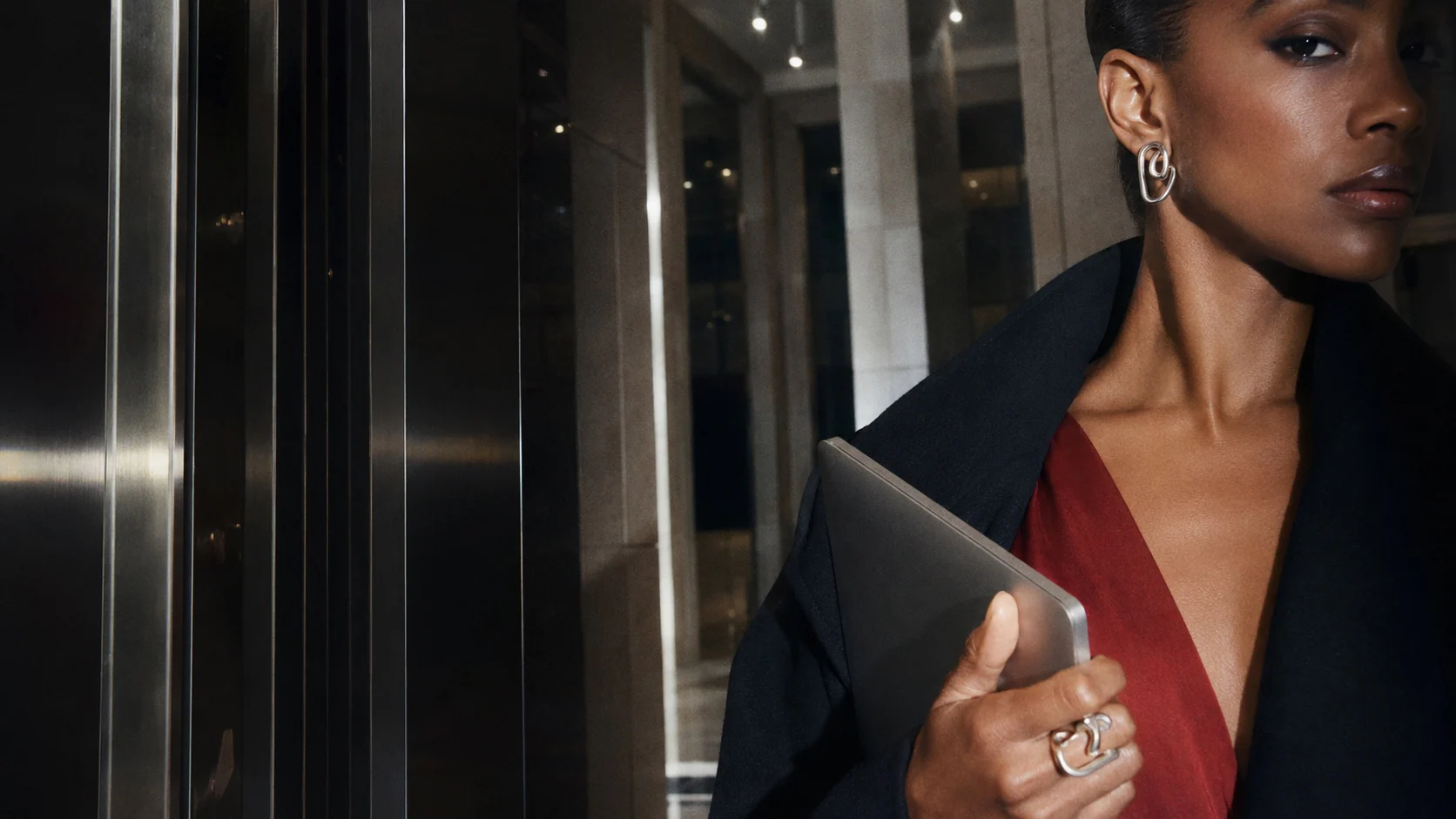
At 8:47 a.m., the elevator doors turn your reflection into a temporary portrait: coat open, laptop under one arm, one earring catching the hard ceiling light. By 6:30 p.m., the same jewelry may need to hold its own through a client dinner, a studio visit, or a train ride that becomes an evening plan. An office jewelry capsule should not make you look “appropriate” by making you less visible. It should give you control over volume, authority, and intimacy. This guide builds a six-piece capsule—with an optional seventh accent—that can move from quiet concentration to deliberate presence without becoming a corporate uniform.
What an Office Jewelry Capsule Should Actually Do
Most advice about work appropriate jewelry begins with restriction: smaller, simpler, safer. That approach confuses professionalism with visual disappearance. A better capsule begins with function. Useful work jewelry earns its place by matching the movements and contact points of your real day, reading clearly at conversational distance, and changing the reading of clothes you already own.
The fresh angle here is not “minimal jewelry for the office.” It is a study in visibility. Some days you need near-silence: a low-profile earring and one clean ring. Some days you need a visible edge that helps you enter a presentation, negotiation, opening, or review with intention. The capsule should support both without requiring two separate wardrobes.
Think in roles rather than categories. One piece anchors. One repeats a line or finish. One introduces motion. One creates authority at the hand. One can be removed quickly when the context changes. This approach extends the logic of identity-switch accessories, but applies it specifically to the pace and politics of a working day.
The Six-Piece Office Jewelry Capsule
Start with six pieces. A seventh is useful only when it adds a function the others cannot perform.
- Low-profile earrings. Choose studs, compact geometric forms, small hoops, or ear-hugging structures that sit close to the body. They are a practical starting point to compare with your own headphones, video-call setup, commute, and longer focus periods. “Everyday earrings for work” do not have to be anonymous; silhouette matters more than size. A small piece with a strong void, edge, or asymmetry can read clearly without becoming visually loud. Explore the earrings collection by looking first at construction and profile, not only color.
- A second earring with controlled movement. This might be a compact drop, climber, articulated element, or mismatched partner. Its role is to become visible when you turn your head, speak, or move through a room. Keep the movement deliberate: enough to animate the face, not so much that the piece constantly touches the neck, catches on collars, or competes with every gesture.
- A low-friction everyday ring. For typing-heavy days, look for a band or open form with a smooth interior, manageable height, and no sharp projection toward neighboring fingers. The best office rings are not necessarily thin; compare whether the proportions let your hand close, hold a phone, lift a cup, and rest on a desk without repeated adjustment.
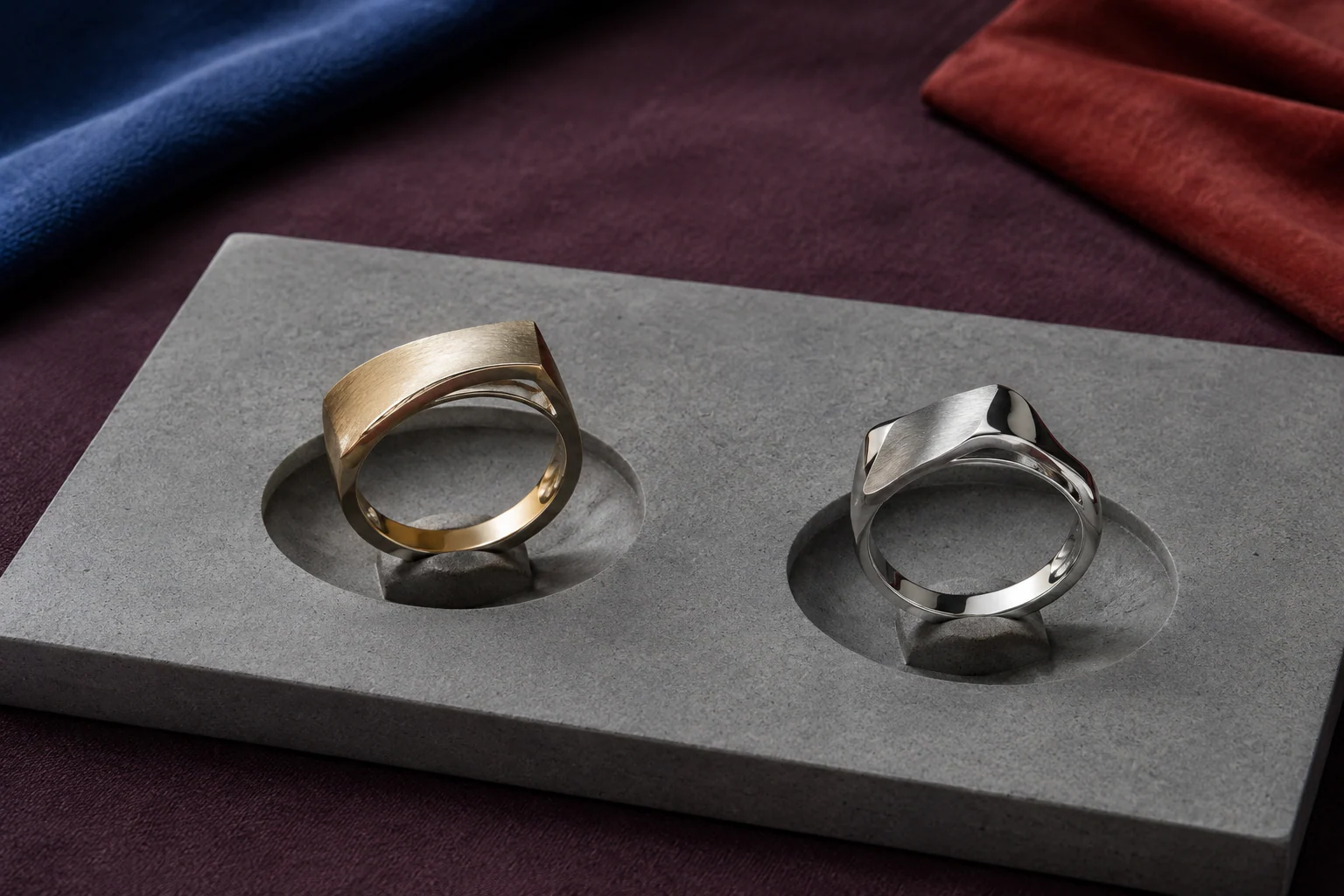
- An architectural authority ring. This is the piece that changes the hand from functional to declarative. It can be a dome, split structure, signet-like plane, sculptural loop, or directional setting. Wear it alone when you want visual clarity. In a meeting, the hand is often close to notebooks, screens, documents, and faces; one legible ring can carry more authority than several unrelated small pieces. Use the rings collection to compare width, height, negative space, and how a form would sit against adjacent fingers.
- A neck, collar, or shoulder-level anchor. Choose one piece that can hold a simple shirt, knit, dress, or jacket without needing a full styling rebuild. A short pendant, sculptural collar, compact chain composition, or brooch-like piece can create a focal point above the desk line. It should remain stable enough that you are not repositioning it all day.
- A bridge piece. This is the capsule’s most flexible piece: a bracelet, ear cuff, brooch, charm, or small wearable sculpture that connects your quiet pieces to your stronger ones. It can repeat the metal of your ring, the curve of your earrings, or one colored detail. The bridge piece is what makes mixed levels of visibility feel intentional rather than accidental.
Optional seventh: a color interruption. Add one enamel, resin, pearl, stone, or contrasting metal element only when the six-piece set is otherwise too neutral for your real wardrobe. The goal is not to add “personality” as decoration. It is to create a precise point of recognition—a color at the ear, a dark pearl at the hand, a translucent piece at the collar.

Use the 2–2–1–1 Formula, Then Set the Visibility Level
The simplest buying formula is two earrings + two rings + one upper-body anchor + one bridge piece. Before purchasing anything else, test whether those six pieces can create at least four distinct combinations.
- Level 0: Near-silent. Low-profile earrings only, or earrings plus the smooth everyday ring.
- Level 1: Composed. Low-profile earrings, everyday ring, and bridge piece repeating one finish or curve.
- Level 2: Visible. Moving earrings with the architectural ring, while the rest of the look stays restrained.
- Level 3: Directed. Upper-body anchor, authority ring, and one controlled echo at the ear or wrist.
This ladder is more useful than dividing jewelry into “office” and “not office.” It lets you respond to the actual day: solitary work, team review, interview, client meeting, public presentation, creative event, or dinner after work. It also prevents overbuying. A new piece should either create a missing visibility level or improve the comfort and coherence of one you already use.
Five-minute capsule test:
- Place all six pieces on a neutral surface.
- Remove anything that performs the same visual role as another piece.
- Build one quiet combination and one high-visibility combination.
- Check whether a single piece can move between them as the bridge.
- Photograph both at face distance and desk distance, not only as a flat lay.
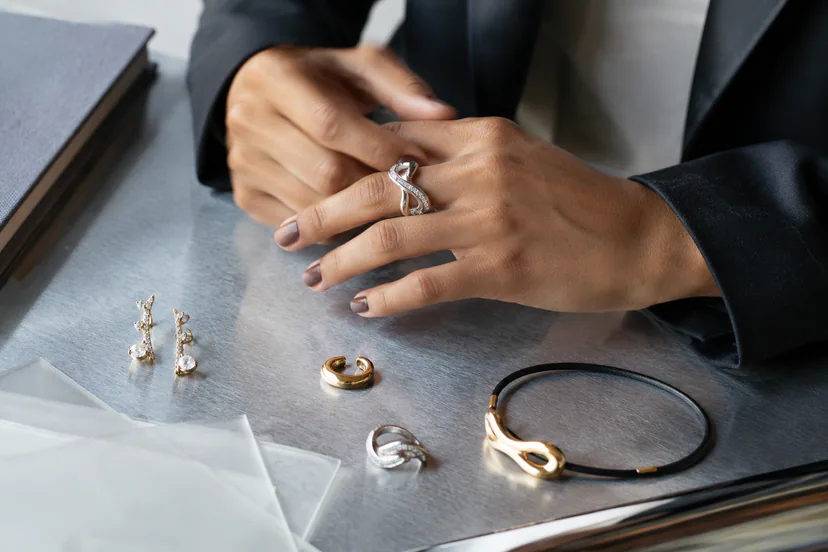
Choose by the Day, Then Test the Contact Points
An office capsule works best when its visibility changes with the work in front of you. Start with the job, choose one of the existing Levels 0–3, notice where jewelry meets tools or clothing, then make one subtraction or swap. These are styling checks, not promises about comfort, security, retention, or workplace suitability; confirm the exact piece and any written policy.
Focused desk work
Job: long stretches of typing, writing, phone handling, or concentrated screen work. Visibility: Level 0: Near-silent. Contact points: keyboard edges, neighboring fingers, the desk surface, phone, sleeves, and headphone arms. Subtraction or swap: exchange the architectural ring for the lower-profile ring already in the capsule rather than adding another small piece. Use the rings collection to compare profile and negative space, then check size, construction, and fit on the exact product page. A restrained hand does not have to mean an erased one.
Meeting or video call
Job: presenting, listening, gesturing, taking notes, or appearing in a cropped call frame. Visibility: Level 2: Visible. Contact points: glasses temples, headset cups, earbuds, hair, collar edges, a lanyard, and any microphone near the neckline. Subtraction or swap: exchange a moving earring for the close-to-ear option when repeated contact appears during a full head turn. Use the earrings collection to compare profile and movement, but only a test in your actual setup can show how one exact pair behaves. Let one upper-body point read clearly instead of making every visible zone compete.
Commute and outerwear
Job: moving through transit, carrying a bag, using pockets, and putting on or removing a coat or scarf. Visibility: Level 1: Composed. Contact points: coat collars, scarf loops, cuffs, bag straps, handles, zips, and pocket openings. Subtraction or swap: remove the bracelet if it repeatedly meets a cuff or bag hardware, and keep the repeated visual note at the ear instead. Browse the current jewelry collection to compare scale and construction, without assuming any piece is snag-free or secure for every commute. The aim is a capsule that can move, not jewelry that asks the journey to stand still.
Evening transition after work
Job: moving from the office to dinner, a gallery, or an informal event without rebuilding the entire look. Visibility: Level 3: Directed. Contact points: shirt plackets, collar points, jacket lapels, hair, bag straps, and the table edge once seated. Subtraction or swap: replace the close earring with the moving pair rather than wearing both, then let the neck or hand remain the supporting echo. Use the current jewelry collection to compare upper-body anchors, while checking length, closure, material, and garment contact for the exact piece. More presence can come from changing the lead, not increasing the count.
Fit and Proportion Matter More Than “Professional” Style
Professional jewelry styling is often judged in motion and at close range. An earring may look restrained in a product image but feel dominant beside glasses, a sharp collar, or a short haircut. A ring may look elegant alone but become awkward when the fingers bend around a keyboard or phone. Fit is therefore part of visual authority: the piece should appear chosen, not managed.
For earrings, check three distances: how close the form sits to the lobe, whether it touches hair or a collar, and how the closure and surrounding contact points feel during a short trial. For office rings, check height, underside smoothness, neighboring-finger contact, and whether the piece rotates during typing. For neck pieces, test seated posture. A collar that sits perfectly while standing may shift against a shirt placket, microphone, or laptop edge when you sit.
Proportion also changes with fabric. A broad ring can sharpen soft knitwear; a fine linear earring can create tension against a structured jacket; a rounded metal form can interrupt the severity of a monochrome shirt. Instead of matching jewelry to an imagined office code, match its scale and geometry to the surfaces you actually wear.
Choose Materials for the Friction Zone—and Care for Them Accordingly
Do not buy by metal color alone. Read the material description, base metal, finish, stone or pearl information, and care guidance. The U.S. Federal Trade Commission’s Jewelry Guides emphasize truthful representation of metallic content, treatments, durability, and other product characteristics. Switchroom’s materials guide can help you compare the language used across finishes before choosing a piece for frequent wear.
Then match the material to the friction zone. Rings meet desks, bags, handles, soap, and repeated hand movement, so surface wear becomes visible faster. Earrings usually experience less abrasion but more contact with hair products, fragrance, skin oils, and headphones. A collar or bracelet may rub against fabric or a laptop edge. The correct choice is not always the most expensive material; it is the construction you understand and are prepared to care for.
For routine care, follow the instructions for the specific piece rather than assuming one cleaner suits every metal and gem. The Gemological Institute of America advises keeping jewelry away from chemicals such as perfume, lotion, household cleaners, and chlorine; it also notes that some gems and organic materials should not be placed in ultrasonic cleaners. Its jewelry care guidance recommends separate, padded storage to reduce scratches and impact.
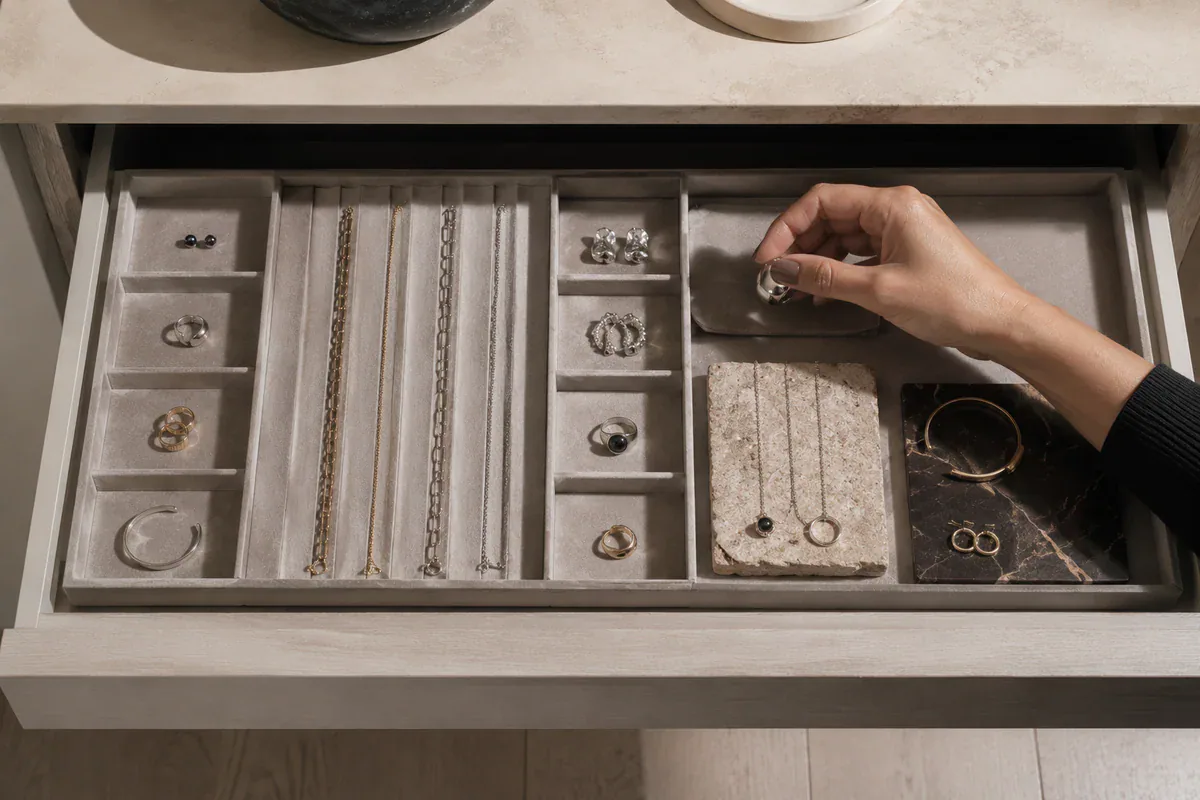
A practical office routine is simple: put jewelry on after fragrance and hair products have settled; wipe frequently handled pieces with a soft, lint-free cloth; store rings and earrings in separate compartments; and remove pieces before cleaning, swimming, or vigorous activity. The American Gem Society also recommends gentle, material-appropriate cleaning and separate storage rather than harsh or abrasive products in its cleaning guidance.
Once the roles are clear, browse the full jewelry collection or shop with a stricter question: not “Is this work appropriate?” but “Which visibility level, gesture, and friction zone will this piece serve?” A strong capsule is small because every piece has a job—not because self-expression has been edited out.
Office Jewelry Capsule FAQs
How many pieces should be in an office jewelry capsule?
Six pieces are enough for a functional core: two earrings, two rings, one upper-body anchor, and one bridge piece. Add a seventh only if it introduces a genuinely new color, material, or visibility level.
What jewelry is appropriate for a conservative workplace?
Start at visibility Level 0 or 1: low-profile earrings, one comfortable ring, and restrained repetition of a single metal or shape. Follow any written safety or dress policy, but do not assume conservative must mean invisible.
Are statement rings professional enough for work?
It can be, when you have checked its fit, construction, movement, and contact points against your actual tasks and any written workplace rules. One architectural ring can read more intentional than several unrelated small rings, but compare it at hand distance before deciding.
How do I stop office jewelry from looking like a uniform?
Keep the capsule consistent in construction but flexible in intensity. Change the visible focal point—ear, hand, neck, or wrist—rather than wearing the same complete set every day.