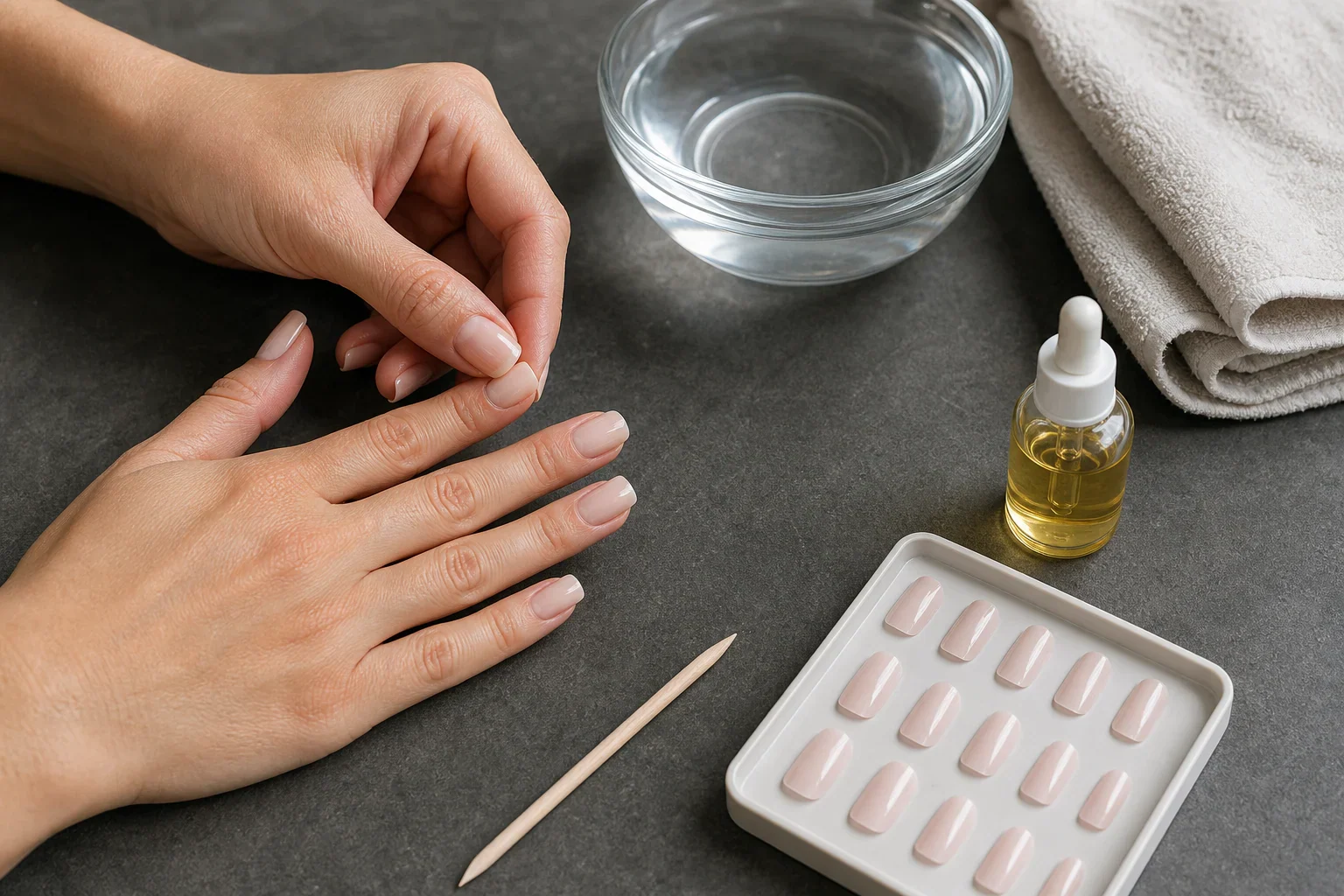
Adult hands gently loosening a press-on nail beside warm water, oil, and a reusable nail storage tray

Journal / August 11, 2026

How to Remove Press-On Nails Without Damage

Removing press-on nails well is part of making them worth keeping. This guide explains what not to do, how to loosen a set patiently, and how to care for both the natural nail and the reusable press-on after removal.

Press-on nail removal / loosen, never rip

First: do not rip them off

The fastest way to remove press-on nails is often the worst way for the natural nail. Do not pry, snap, peel, or force a firmly attached press-on just because one edge has started to lift.

A lifted corner can make the whole set feel ready, but another section may still be bonded. Pulling from one side concentrates force on the natural nail plate.

Know your adhesive

Adhesive tabs and nail glue do not remove the same way. Tabs are usually easier to loosen with patience, warmth, and oil. Glue may require a different process or a compatible remover, depending on the product instructions.

Read the adhesive directions before starting. If the maker supplies a removal method, follow that method over any generic internet shortcut.

A gentler way to take them off

  • Set aside enough time so you are not pulling in a hurry.
  • Wash your hands and inspect which nails are already loose.
  • Soak or soften according to the adhesive instructions.
  • Add oil around the edges only if compatible with the adhesive method.
  • Gently test the edge without forcing a tool under the nail.
  • Repeat softening and testing until the press-on releases with minimal resistance.
  • Clean adhesive residue according to product instructions.
  • Wash, dry, and moisturize after removal if your skin tolerates it.

Short press-on nails shown at a practical length for daily wear and gentle removal
Wearable length and fit

Short, well-fitted press-ons reduce leverage, but every set still needs an adhesive-specific removal method.

What not to do

Do not slide a hard tool under a nail that still feels bonded. Do not pull the press-on upward from one side. Do not add harsh scraping after the nail is already tender.

Do not keep soaking or filing aggressively if the skin becomes irritated. The FDA notes that some nail product ingredients can trigger redness, swelling, or pain in sensitive users. Stop when your body gives you a warning.

Aftercare for the natural nail

After removal, look at the natural nail before deciding to reapply. Thinness, tenderness, peeling, redness, swelling, or separation are reasons to pause.

The American Academy of Dermatology warns that artificial nails and their removal can leave natural nails thin, brittle, or dry. A rest period is better than forcing another set onto a stressed nail.

How to store reusable press-ons

If the set is reusable, clean off adhesive residue according to the product directions. Let every piece dry fully before storage.

Store nails by size in a tray, card, or small box so the surface does not rub against jewelry or other hard pieces. Keep the adhesive that worked best with the set.

Sources

FAQ

Short answers.

Quick notes for the details people usually check before they apply, wear, remove, or store a set.

How do I remove press-on nails without damage?

Work slowly, follow the adhesive instructions, and do not rip or force the nail. Soften or loosen the adhesive as directed until the press-on releases with minimal resistance.

Can I soak off press-on nails?

Some tabs and temporary adhesives may loosen with soaking, warmth, or oil, while some glues need a different compatible remover. Follow the instructions for the adhesive you used.

What should I do if a press-on nail will not come off?

Stop forcing it. Continue only with the product-approved removal method, or seek qualified help if there is pain, irritation, or strong resistance.

Can I reuse press-on nails after removal?

Some sets can be reused when removed gently, cleaned, fully dried, and stored correctly. Reuse depends on the set and adhesive.

When should I stop using press-on nails?

Pause if you notice pain, redness, swelling, irritation, nail separation, thinning, or persistent brittleness. Seek qualified care if symptoms concern you.

Related

More from the Journal.

A few more stories for the mood, the material, or the next styling question.

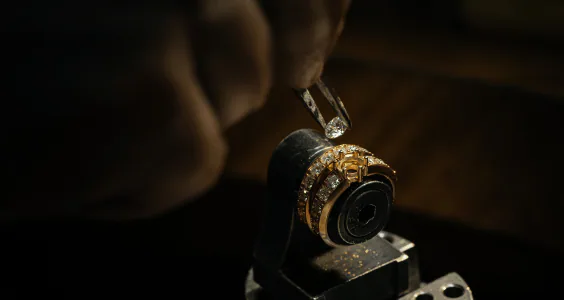
Jeweler inspecting a ring setting under magnification before choosing a care method
Jewelry care

How to Clean Silver Jewelry: A Material-First Care Guide

Silver jewelry cannot all be cleaned the same way. First check whether the piece is solid silver, plated, coated, or set with stones. Start with the gentlest method suited to its construction and dry it completely before storage.

Read story
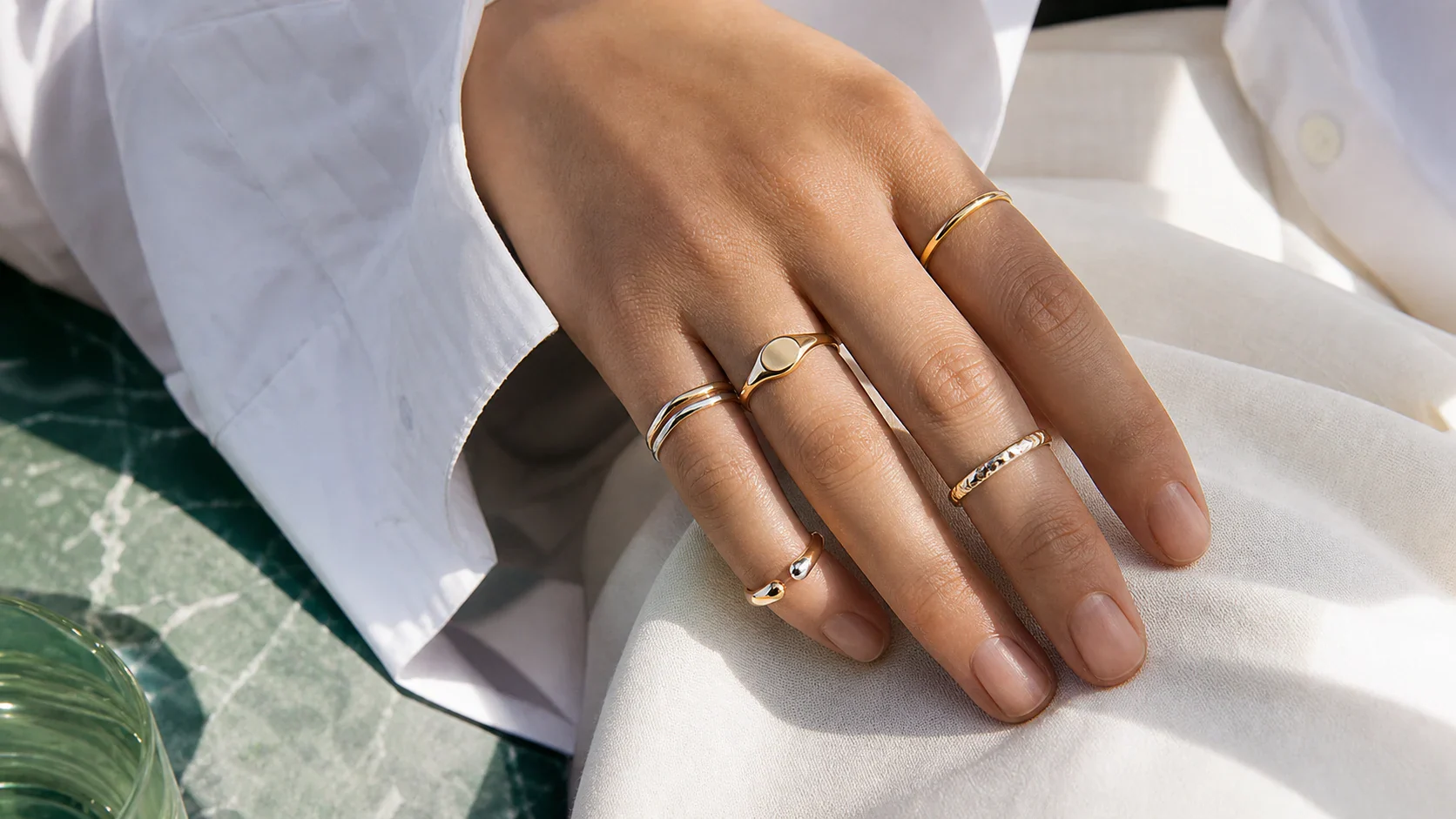
Adult hand wearing slim rings, a small signet, a contour pair, a textured band, and one compact open ring across several fingers
Ring stacking / ideas

8 Ring Stack Ideas, From Quiet Bands to One Bold Accent

Ring stacks do not need to be uniformly delicate or uniformly sculptural. These eight compositions move from small everyday bands to one optional statement accent, with practical ways to vary scale, texture, metal, and finger placement.

Read story
Sculptural rings, earrings and a necklace arranged as a small capsule jewelry collection
Jewelry capsule wardrobe

Capsule Jewelry: Build a Small Collection That Changes With You

A useful jewelry capsule is not seven neutral pieces that disappear. It is a small cast with distinct roles: some pieces repeat, one or two interrupt, and every object earns its place through wear.

Read story

Room transmissions

Get the next chapter before it opens.