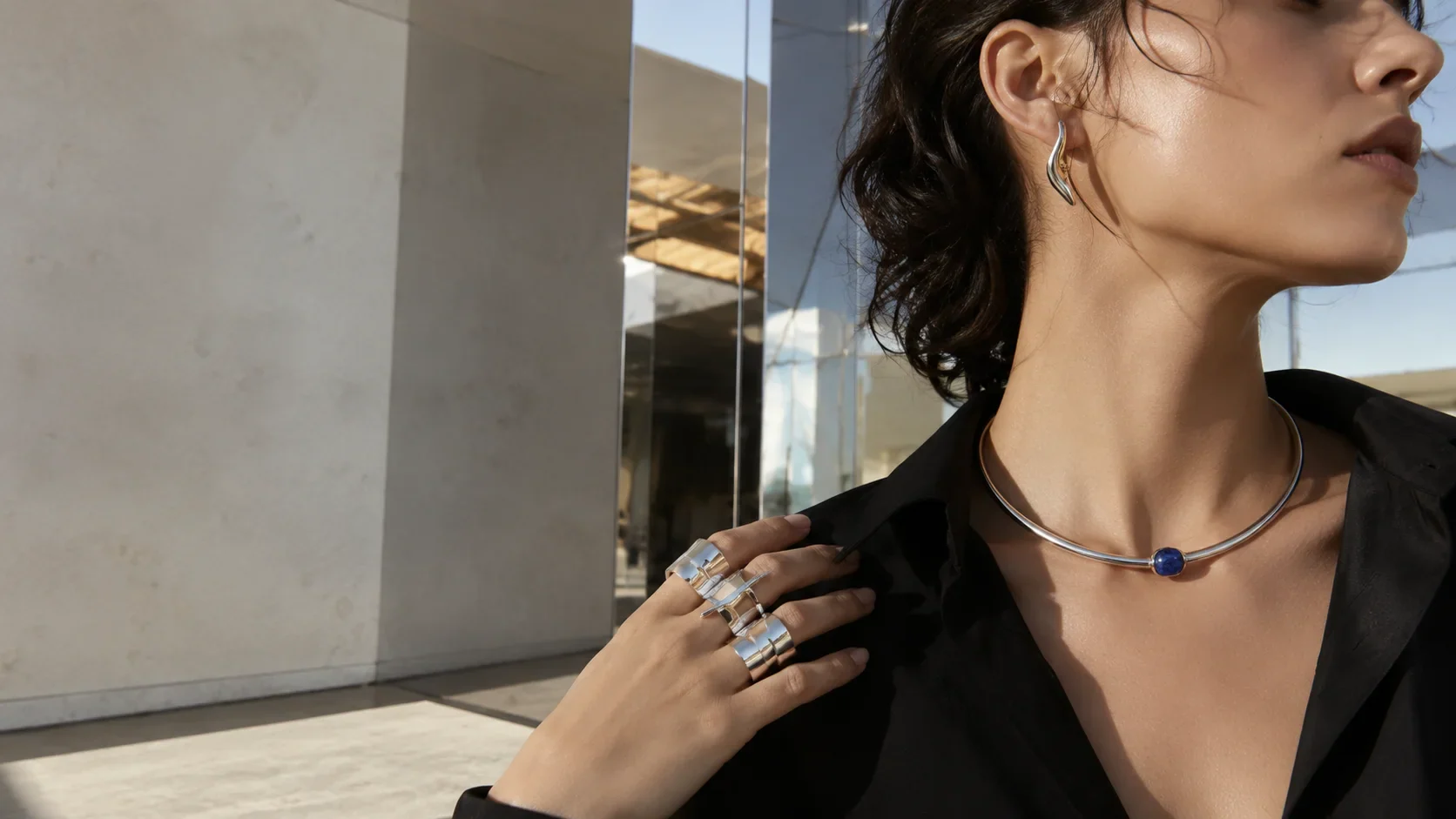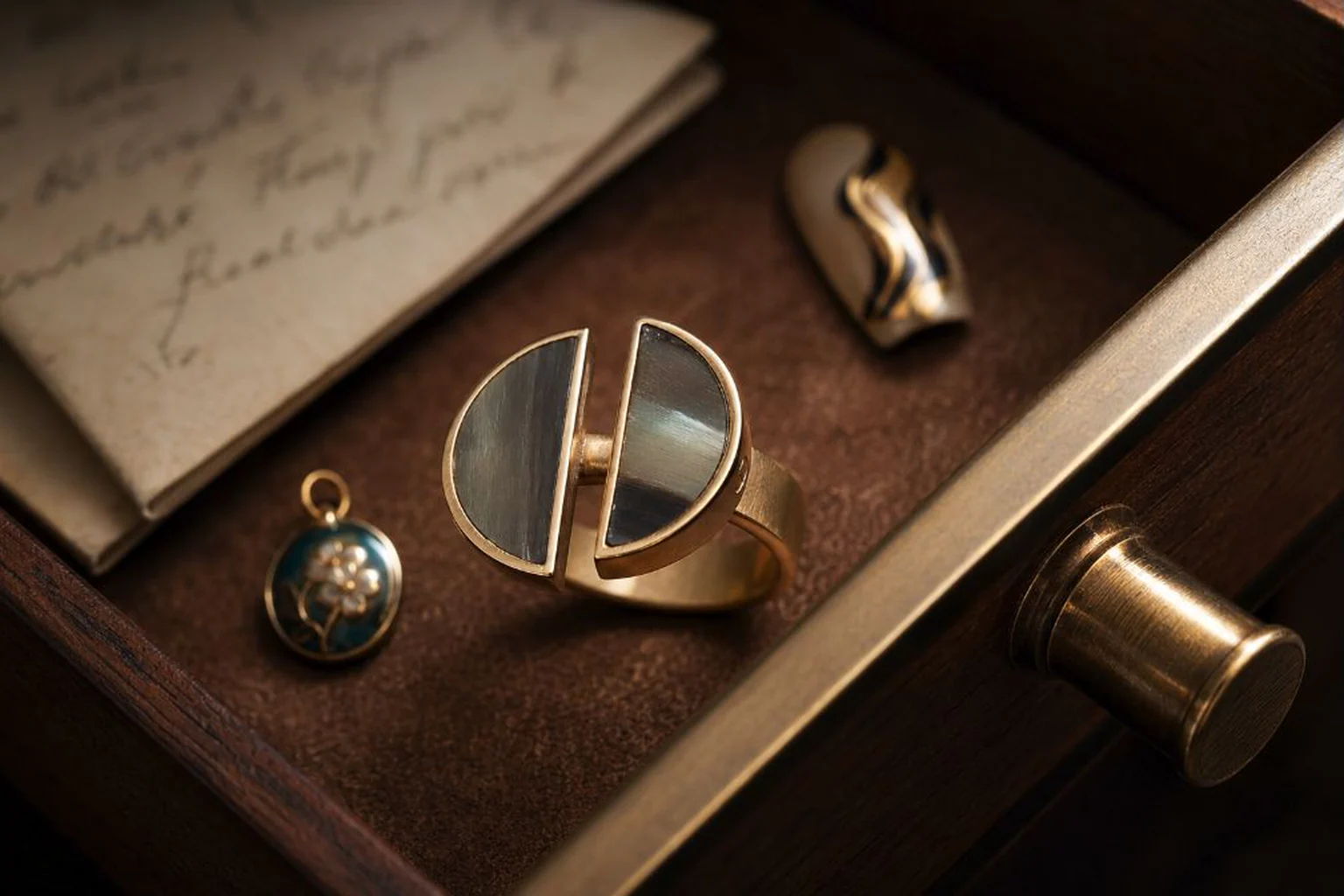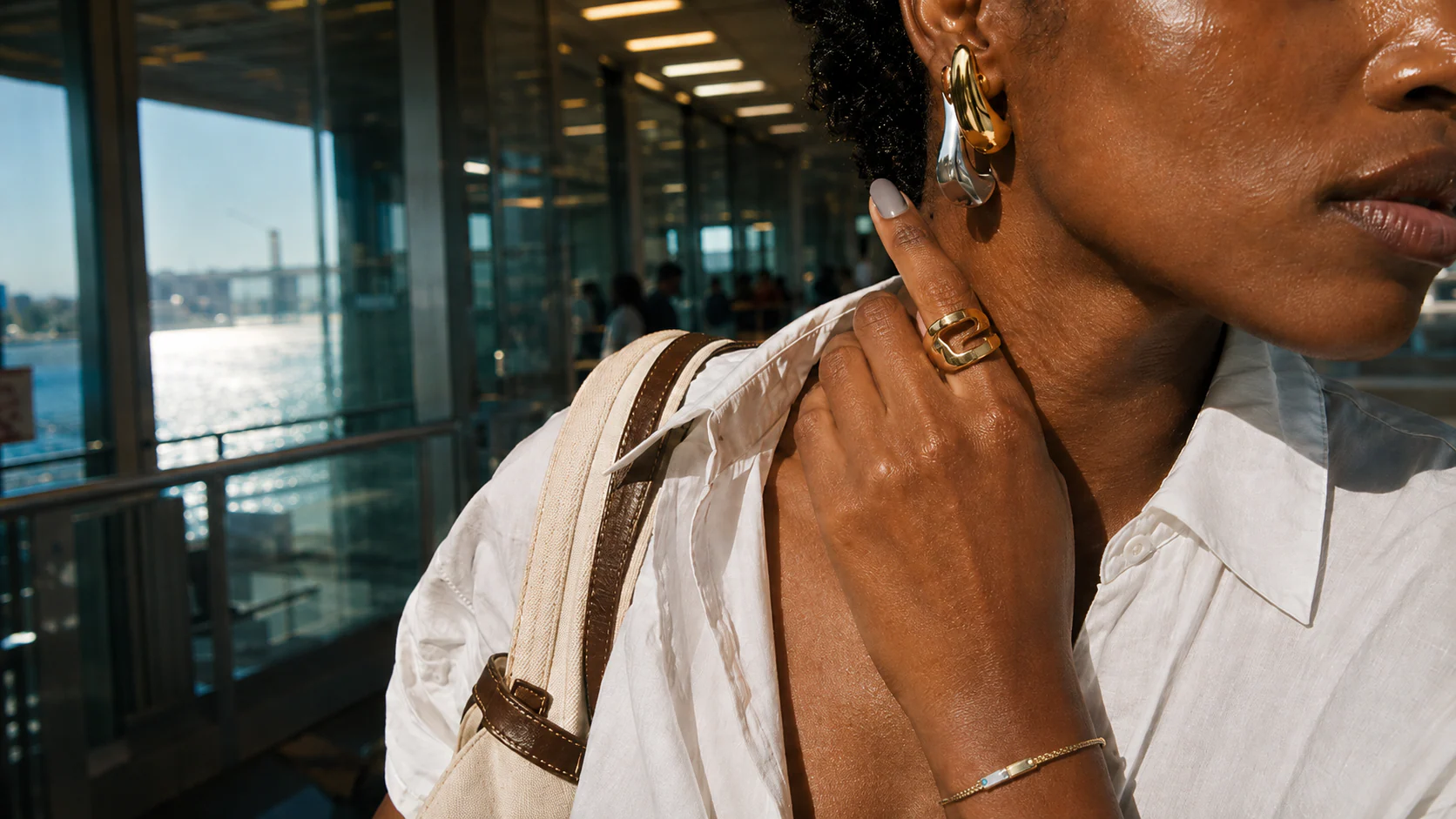
Pack jewelry by risk, not by category. A thin chain needs protection from knots, a sculptural earring needs protection from pressure, and a sentimental ring needs a plan for when it is not on your hand. The best travel edit is small enough to see at a glance and varied enough to change the mood of what you already packed.
Build your travel edit in Jewelry Profile →
Start with a four-part travel edit
Lay out the clothes you expect to wear, then choose jewelry in four roles: one everyday pair, one anchor piece, one ring or stack, and one optional layer. The point is not to fill every role. It is to notice when three necklaces are doing the same job.
- Everyday pair: comfortable, secure and simple to repeat.
- Anchor piece: the earring, necklace or ring that changes a plain look.
- Ring or stack: compact, easy to style, and checked for a reliable fit.
- Optional layer: a second chain, cuff or bracelet only when it creates a genuinely different silhouette.
Try the edit with your actual necklines, glasses and headphones before departure. A piece that catches on a knit, competes with a temple arm or becomes uncomfortable after an hour is not earning scarce luggage space.
Match the packing method to the failure mode
| Piece | Main risk | Pack it this way | Check on arrival |
|---|---|---|---|
| Thin or layered chains | Knots and clasp tangles | Fasten each chain, lay it flat, then roll or sleeve it separately | Clasp, kinks and tension points |
| Sculptural earrings | Pressure and bent posts | Use a rigid compartment with space around the form | Post, hinge, back and surface |
| Rings | Scratches and loss | Use a closed ring bar, small compartment or individual soft pouch | Setting, fit and surface |
| Ear cuffs | Distorted opening | Keep the cuff alone and do not squeeze it to fit the case | Opening, shape and maker-specific fit |
| Pearls or delicate surfaces | Abrasion and moisture | Separate from harder metal, then store only when dry | Thread, surface and any looseness |
How to keep necklaces from tangling in luggage
Fasten every clasp before packing. Lay the chain straight on a soft cloth, fold the cloth over it, then roll from one end without crossing another chain over the first. A slim individual sleeve works too. The essential step is one chain per channel.
For layered necklaces, separate the layers before they enter the bag. A layered look can be rebuilt at your destination; a tight knot at the base of two different chain weights is much harder to undo without stressing the links.
Do not hide chains loose inside a pouch with earrings or rings. The pouch may keep everything in one place, but it does not prevent the pieces from moving against one another.
How to pack earrings, ear cuffs and sculptural pieces
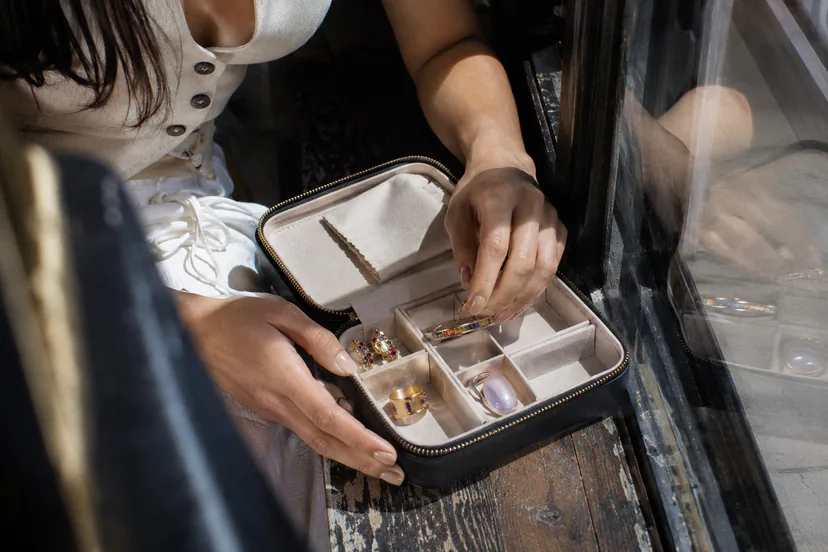
Pair earrings before they go into the case. Keep backs attached when the construction allows, or place the pair and its backs in one small closed compartment. For long drops and irregular silhouettes, check that no post, hinge or edge is bearing the weight of the lid.
Ear cuffs deserve their own space. A rigid cuff should not be bent to fit a slot, while an adjustable design should only be changed according to its maker’s instructions. If the opening or material is unknown, protect the original shape and postpone adjustment.
For a large earring, use the smallest rigid compartment that leaves clear space around the form. Shake the closed case gently. If you hear movement, add a clean soft buffer around the piece—not pressure on top of it.
Carry-on, airport and transit choices
For US screening, the TSA lists jewelry as permitted in both carry-on and checked bags and advises travelers to keep valuable items with them. Carrier, destination and checkpoint requirements can differ, so check current official guidance for the route you are taking.
Keep the jewelry case easy to identify and retrieve. Do not place a tiny pouch loose beside cables, coins and keys. If you remove bulky jewelry at screening, pause at the end of the belt and count each piece before moving on.
Value is personal as well as financial. If losing a piece would change the trip, consider leaving it at home. A photograph, receipt or insurance record cannot replace sentiment, but it can make identification and documentation clearer.
Create one hotel landing zone
Choose one visible, dry place away from the sink, bed linen and housekeeping towels. The case returns there every time. Rings do not go on a bedside table one night and into a coat pocket the next.
Use a simple count-in, count-out routine: note what you brought, what you wore, and what returned to the case. A private list in your Jewelry Profile can hold sizes, sensitivities, care notes and hard noes without turning the trip into a record-keeping exercise.
If the room has a safe and you choose to use it, follow the property’s instructions. A safe is one layer of routine, not a guarantee. The most useful habit is still consistency: one landing zone, one count, one place to check before departure.

A ten-minute packing routine
- Edit: choose pieces against the real outfits and activities.
- Inspect: check clasps, posts, hinges, settings, threads and surfaces.
- Photograph: make one private group image and close details for pieces you may need to identify.
- Fasten: close chains and pair earrings with their backs.
- Separate: give chains, hard metal, delicate surfaces and sculptural forms different spaces.
- Buffer: stop movement without compressing the jewelry.
- Count: record the small final edit before the case closes.
After a beach day, heat or heavy humidity
Remove jewelry with clean, dry hands. Wipe away visible sunscreen, salt or moisture with a soft lint-free cloth, then let the piece dry fully before it returns to a closed compartment. Do not apply one cleaning method to every material: plated finishes, pearls, porous stones, adhesives and unknown metals can need different care.
If a stone feels loose, a clasp changes shape or the material is uncertain, stop. Store the piece separately and wait for product-specific or professional advice. The Jewelry Care Card helps choose a safer next step by material and condition.
Pull a five-piece long-weekend capsule from the larger edit
A Labor Day weekend jewelry edit does not need its own collection. Pull five roles from the travel system: one close earring, one visible ear or neck piece, one everyday ring, one hand anchor and one bridge piece. Build a departure combination, a late-afternoon shift and a dinner combination before anything goes into the case.
The point is subtraction. If two pieces create the same silhouette, pack the one whose fit, closure and care you know better. Fasten chains, isolate projecting forms and give the five pieces one dry landing zone at the destination. A small capsule works because every piece has a return place.
If press-on nails are part of the weekend, pack the adhesive and removal method specified for the exact set. Jewelry and nails can share a color direction; they do not share care instructions.
Six travel-packing questions, answered quickly
- How to pack jewelry while traveling: edit the pieces first, then give chains, earrings, cuffs and rings separate containment based on how they tangle, press or scratch.
- How to keep necklaces from tangling while traveling: fasten each chain, keep it in its own channel or soft wrap, and prevent pendants from crossing loose links.
- The best way to pack earrings for travel: keep pairs together without forcing posts, backs or sculptural forms against one another; use a rigid compartment when pressure could change the shape.
- How to store jewelry in a hotel room: choose one dry landing zone away from the sink, bed linens and housekeeping traffic, then return every piece to its container before leaving the room.
- How to pack ear cuffs for travel: isolate the opening and contact points so heavier pieces cannot squeeze, bend or catch them.
- How to clean jewelry after the beach: check the confirmed material and maker’s guidance before cleaning; remove loose sand gently and avoid assuming that one rinse, polish or machine suits every finish and stone.
Frequently asked questions
Can you travel with jewelry in a carry-on?
The TSA currently lists jewelry as permitted in carry-on and checked bags and advises keeping valuable items with you. Check current airline, destination and checkpoint rules before travel; the final screening outcome remains with the relevant authority.
How do you pack jewelry without a jewelry case?
Use small individual soft pouches or cloth folds inside one rigid outer container. Fasten chains, keep each chain separate, pair small parts, and prevent the outer container from being crushed.
How do you keep layered necklaces from knotting?
Unlayer them first. Fasten each clasp and give each chain its own flat sleeve or rolled cloth channel. Rebuild the layered combination after arrival.
Where should jewelry be stored in a hotel room?
Choose one dry, consistent landing zone away from sinks, towels and bed linen. Use the room safe if appropriate and follow the property’s instructions, but keep a count-in, count-out routine as well.
How should an ear cuff be packed?
Keep it alone in a small compartment that protects its opening and shape. Do not squeeze a rigid cuff to fit the case, and only adjust a flexible design according to its maker’s instructions.
How should jewelry be cleaned after a beach trip?
Start by wiping away visible moisture, salt and sunscreen with a soft cloth and letting the piece dry. Then follow the care instructions for the actual material; stop if the material is unknown or a setting feels loose.
Choose the next path
Save sizes, earring fit, material sensitivities and care notes in your Jewelry Profile. Then browse the current jewelry edit for exact-piece details, or open the Jewelry Care Card before packing an unfamiliar finish.