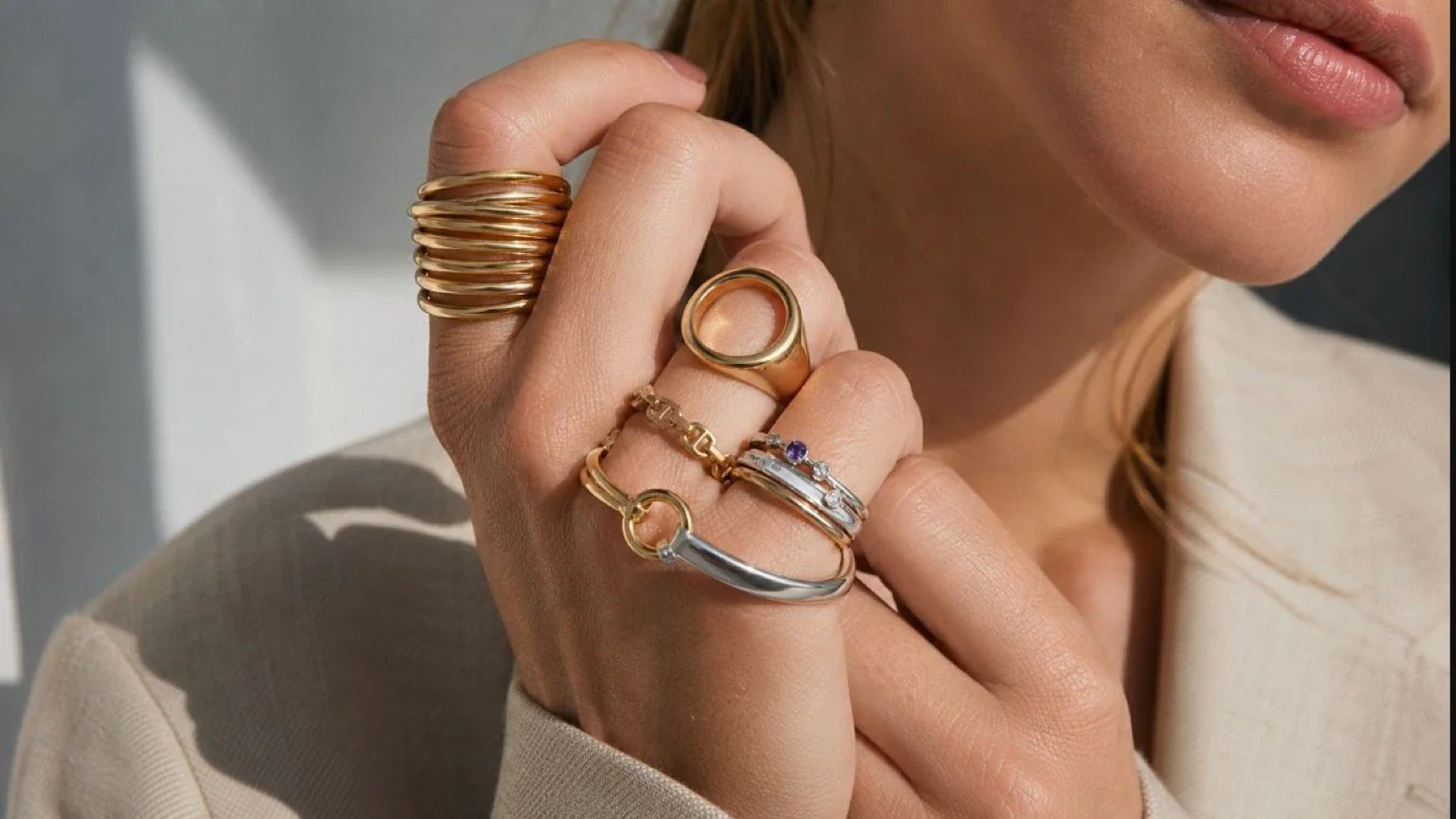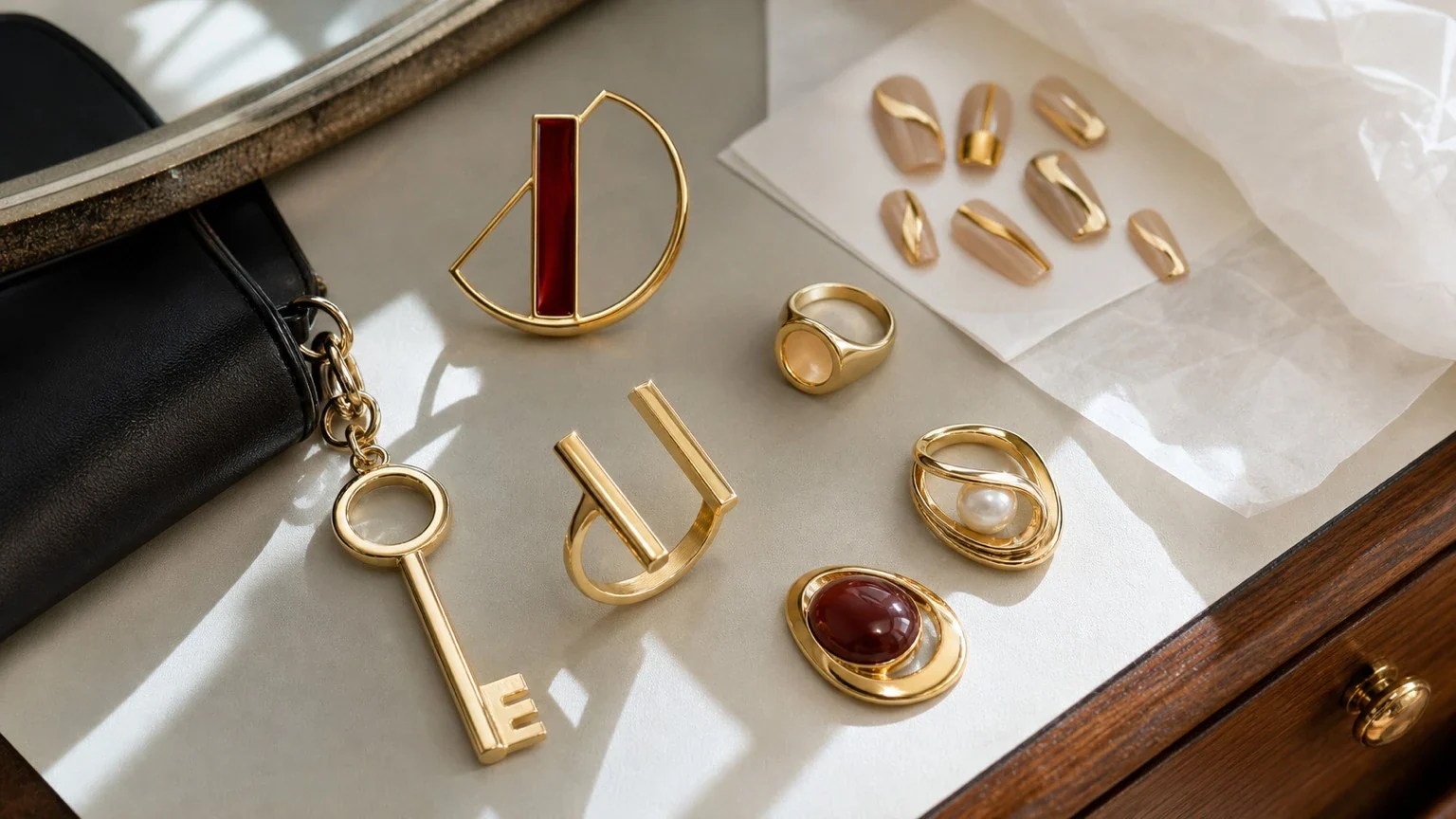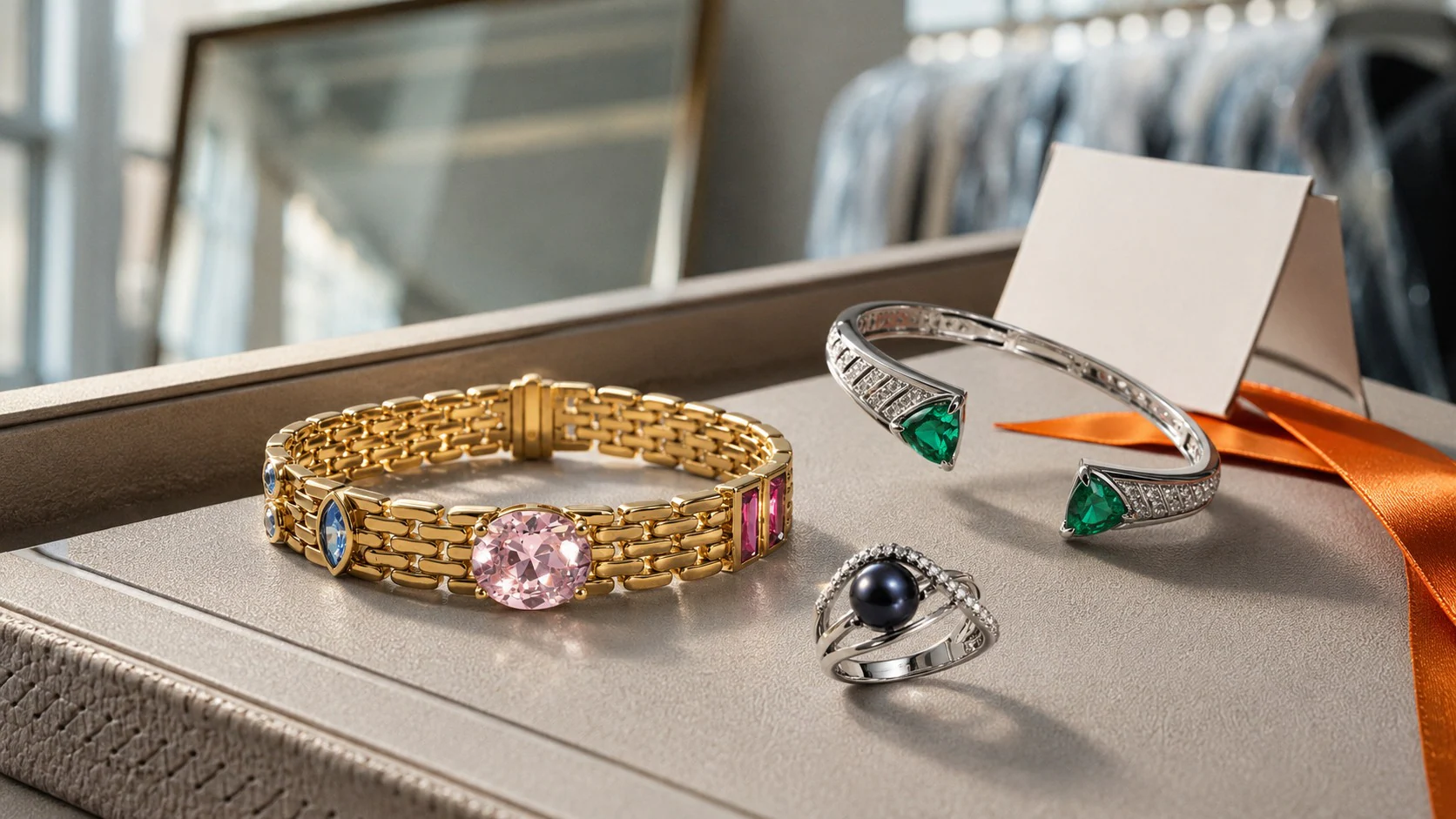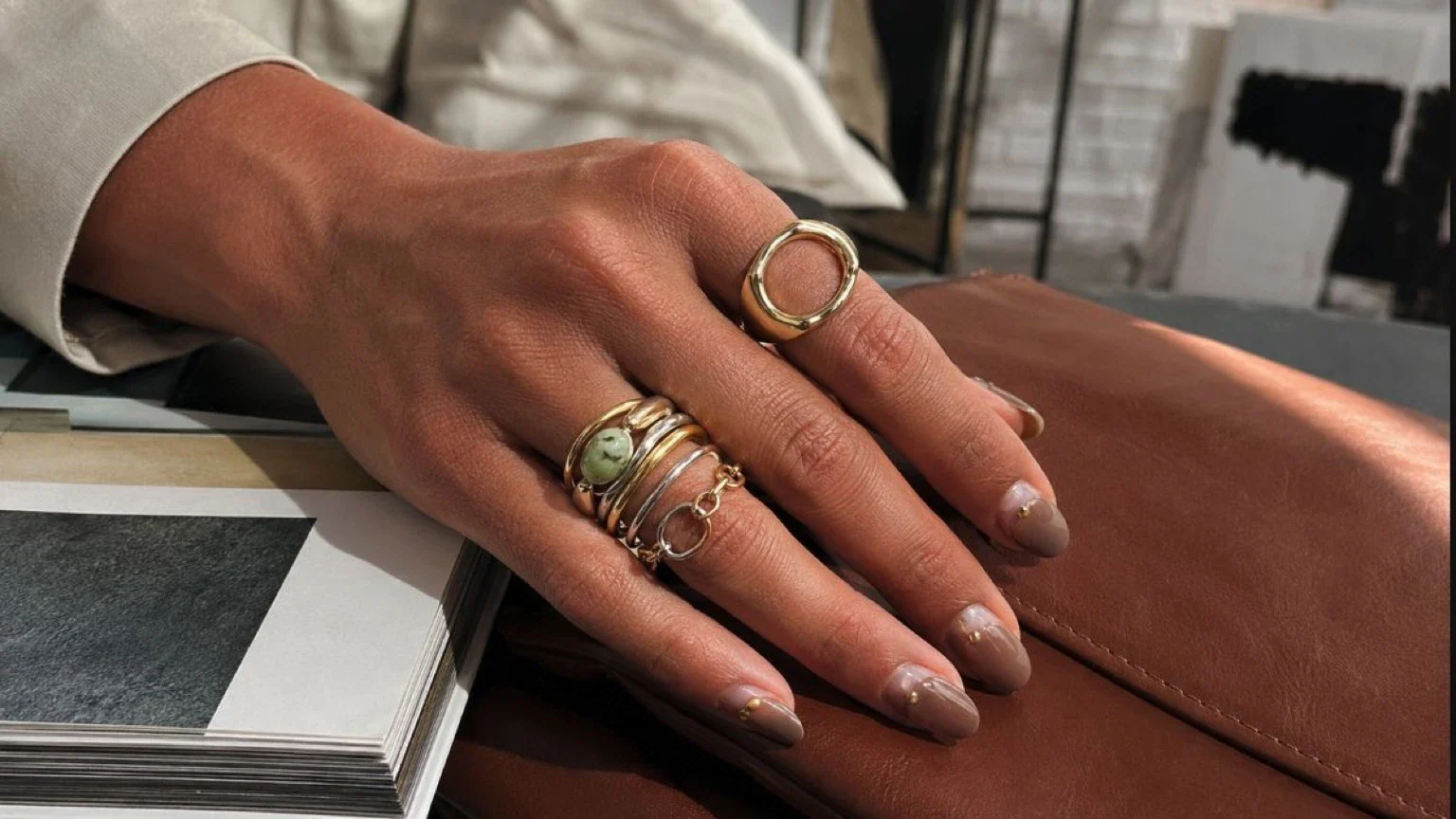
A starter mood box should feel like opening a drawer with a point of view. The light is warm gray, the piece is small, and one lacquer or enamel accent refuses to disappear. This is shopping logic with limits: not random surprise, not a full wardrobe sermon, not a race toward more. We begin with a neutral base and one vivid accent, then decide what deserves the hand.
What a Starter Mood Box Is — and What It Is Not
A starter mood box is a first room. It gives you a controlled way into Switchroom without asking you to solve every future version of yourself at once. It may contain surprise, but surprise is not the point. The point is guided curation: a room, a neutral base, one vivid accent, and a piece format you will actually wear.
That is why our Mood Boxes begin with atmosphere. The box is not a grab bag. It is a small architecture of choices. A starter mood box should answer at least one real question: What do I wear with my repeated gray shirt? What makes my black summer dress less anonymous? What turns a daily bag into a scene?
If you want the larger guide, start with our 618 entry point guide. Here, we stay practical: choose the base, choose the accent, choose the first piece, and let the rest wait.
Starter Mood Box Step 1: Choose the Neutral Base
Warm pearl gray for softness
Warm pearl gray is the base for people who like light but do not want stark white. It works with ivory tanks, pale shirts, summer knits, and skin-warmed metal. In a starter mood box, warm pearl gray lets a vivid accent glow without becoming sugary.
Mist gray for reflection
Mist gray belongs to reflective styling. It suits chrome, silver, clear resin, glassy enamel, and cobalt. If your wardrobe leans black, white, denim, or crisp cotton, mist gray gives the box a clean corridor.
Greige and taupe gray for warmth
Greige and taupe gray are the base for the person who wears brown-black leather, linen, cream, tobacco, or soft tailoring. They make rose, ruby, and lacquer orange look intentional rather than loud. This is where the Chocolate Room begins to enter.
Smoky ivory for contrast
Smoky ivory is quiet but not blank. It gives jade, malachite, peacock, and pearl a place to breathe. If you dislike bright color but still want a starter mood box that changes the look, smoky ivory is often the cleanest door.
Starter Mood Box Step 2: Choose One Vivid Accent
The vivid accent is not decoration sprinkled at the end. It is the hinge. In our visual rhythm, the accent usually occupies a focused accent of the look: enough to be read, not enough to swallow the room. A starter mood box becomes stronger when the accent is one choice.
Choose lacquer orange when the look needs heat: taupe linen, warm metal, a brown bag, a black dress that needs a lit edge. Choose cobalt or Klein blue when the look needs precision: mist gray, chrome, white cotton, denim. Choose rose or ruby when the look needs intimacy: greige, pearl, soft gold, a neckline that wants a closer read. Choose jade, malachite, or peacock when the look needs depth: smoky ivory, brushed metal, dark leather.
Material changes the mood. Enamel holds a crisp color plane, almost architectural. Lacquer feels deeper and more liquid. Pearl softens contrast. Chrome sharpens it. The same blue in enamel and silk will not behave the same way, which is why a starter mood box should specify material, not just color.
Starter Mood Box Step 3: Choose the Metal Temperature
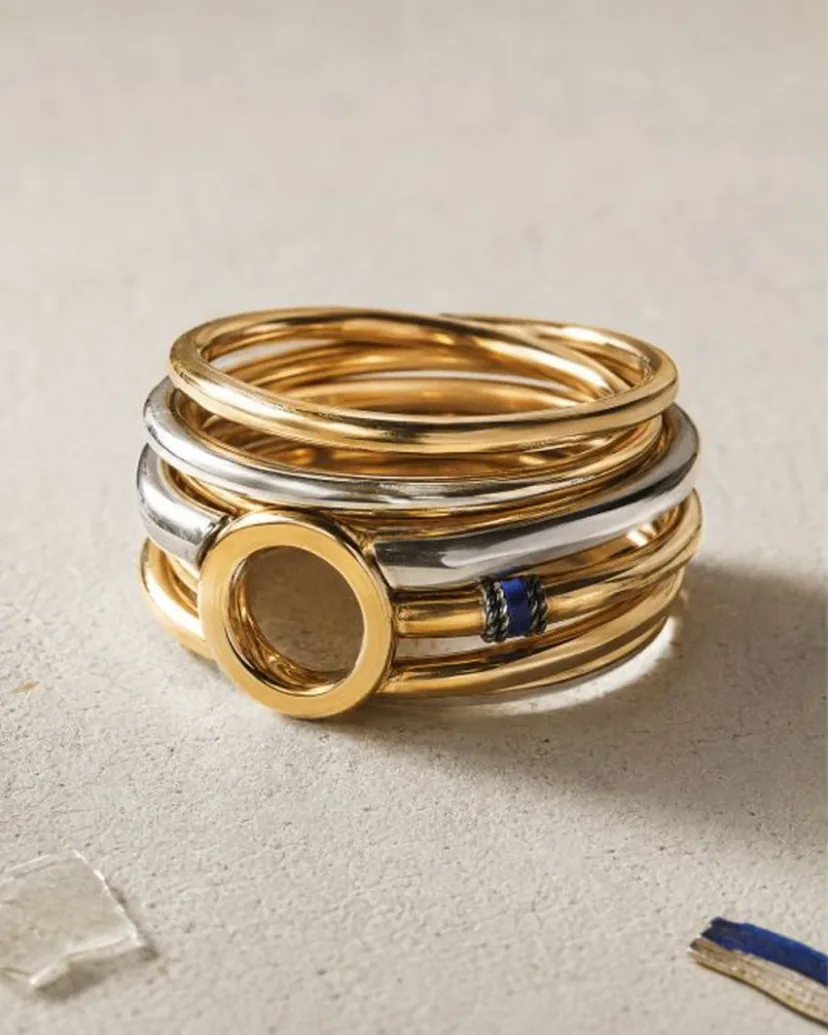
Metal temperature is the room’s climate. Silver, chrome, and white metal bring clarity; they belong easily with Mirror Room styling, mist gray, and cobalt enamel. Warm metal deepens taupe and rose. Brushed metal lowers the volume of jade and smoky ivory.
You do not have to match everything. Matching is a rule; temperature is a language. Look at what repeats: bag hardware, glasses, watch, rings, phone case, belt buckle. If those pieces are already cool, let the starter mood box echo or interrupt them with intention. If they are warm, do not force chrome unless you want the contrast to be the point.
Starter Mood Box Step 4: Choose the First Piece Format
Choose nails if the hand leads
If people see your hands before they read the full outfit, begin with curated nails or a finger-scale piece. We think of press-on nails as wearable sculpture: close-range, intimate, and precise. Choose shorter or medium scale if you type, cook, commute, or handle pieces all day. The box should serve the gesture.
Choose a brooch if the clothes repeat
A brooch is the quickest way to change a shirt, dress, scarf, or jacket. If your summer wardrobe is mostly clean shapes, one sculptural brooch can become the room key. Place it at the collarbone, pocket, shoulder, or scarf knot. Let the rest stay quiet.
Choose a bag charm if the bag carries the day
If your bag is your daily architecture, start there. A charm moves with you and stays visible even when the outfit is simple. Choose one vivid accent that stands against the bag material: cobalt on black leather, lacquer orange on taupe, jade on smoky gray, ruby against warm brown.
Choose modular adornment if you switch rooms often
Modular pieces suit the person who wants one piece to travel: bag today, jacket tomorrow, hand styling next week. The starter mood box becomes more useful when the piece can move without losing its identity.
Starter Mood Box Shopping Logic: What to Choose First, What Can Wait
Choose first: room, neutral base, vivid accent, piece format. Choose second: metal temperature, scale, surface finish. Let wait: a second vivid color, an extra metal family, a full matching set, the piece you only like because it feels new.
Here is the quick edit. If your wardrobe is already quiet, choose the vivid accent first, then the piece. If your wardrobe is already colorful, choose the neutral base first and let the piece calm the look. If your day is hand-led, choose nails or finger-scale sculpture. If your bag is constant, choose a charm. If your clothes need a focal point, choose a brooch. If you want surprise but not chaos, choose a bounded starter mood box.
The proportion rule: one sculpture before three ornaments. The first box should have one piece that can hold the eye. Smaller companion pieces can arrive later, after the room proves itself in daily wear.
Three Starter Mood Box Formulas
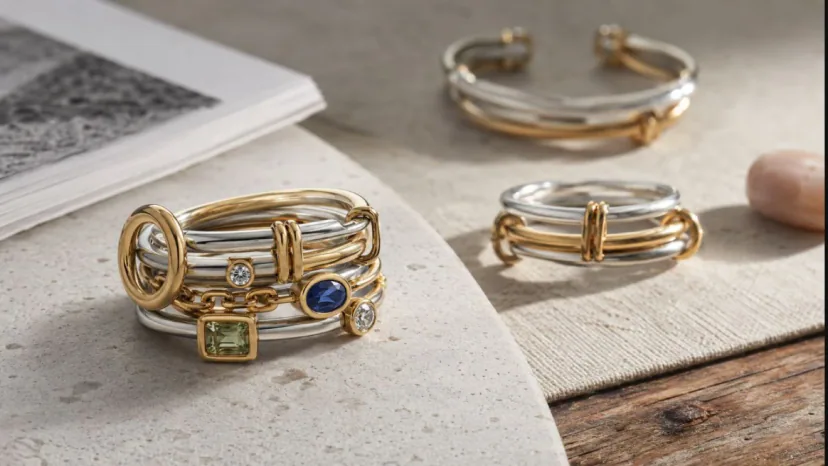
Formula A: smoky ivory + brushed metal + jade
Choose this starter mood box if you wear black, cream, gray linen, or denim. Smoky ivory keeps the room calm. Brushed metal lowers shine. Jade or malachite gives the look a mineral signal. Best first piece: hand-scale piece or charm. What can wait: ruby, orange, and extra shine.
Formula B: mist gray + chrome + cobalt
Choose this starter mood box if your wardrobe is crisp: white shirts, black tanks, silver hardware, pale denim. Chrome gives the piece movement; cobalt enamel gives it a clean stop. Best first piece: nails or brooch. What can wait: warm metal and rose accents.
Formula C: taupe gray + warm metal + lacquer orange or rose
Choose this starter mood box if you like warmth but refuse generic softness. Taupe gray holds the room. Warm metal gives depth. Lacquer orange creates heat; rose creates intimacy. Best first piece: bag charm or brooch. What can wait: chrome, cobalt, and oversized scale.
Care, Storage, and limits
A starter mood box is intimate because it lives near the body. Store pieces dry and separated. Keep nail and skin-contact pieces personal unless there is a clear cleaning routine. Follow product directions. Do not apply over irritated skin or damaged nails. Remove gently. For our broader commitments, read Our Ethics.
Sustainability, for us, is practice: fewer better-used pieces, care, repair, responsible production, and honest claims. A starter mood box should not create a drawer full of almosts. It should give one room enough clarity to be worn again.
Where to Go Next
If your box logic is clear, enter the Shop with the neutral, accent, and first format already chosen. If you want the slower argument, read our meaningful shopping guide. The starter mood box is not the end of the wardrobe; it is the first door that opens cleanly.
FAQ
Is a starter mood box the same as a blind box?
No. A starter mood box can include surprise, but it should be bounded by a room, palette, and use case. The point is guided curation, not randomness.
Can I choose a starter mood box if I do not wear much color?
Yes. Start with warm pearl gray, mist gray, greige, taupe gray, or smoky ivory, then add one controlled accent such as cobalt, jade, rose, or lacquer orange.
What should I choose first: nails, a brooch, or a bag charm?
Choose the format that touches your daily gesture. If the hand leads, choose nails or a finger-scale piece. If the bag repeats, choose a charm. If your clothes need a focal point, choose a brooch.
What can wait after the first starter mood box?
A second vivid color, a second metal family, and a larger set can wait. Wear the first starter mood box several times before expanding.