
Journal
The Hotel Drawer Effect: Why New Rooms Change Your Styling Choices

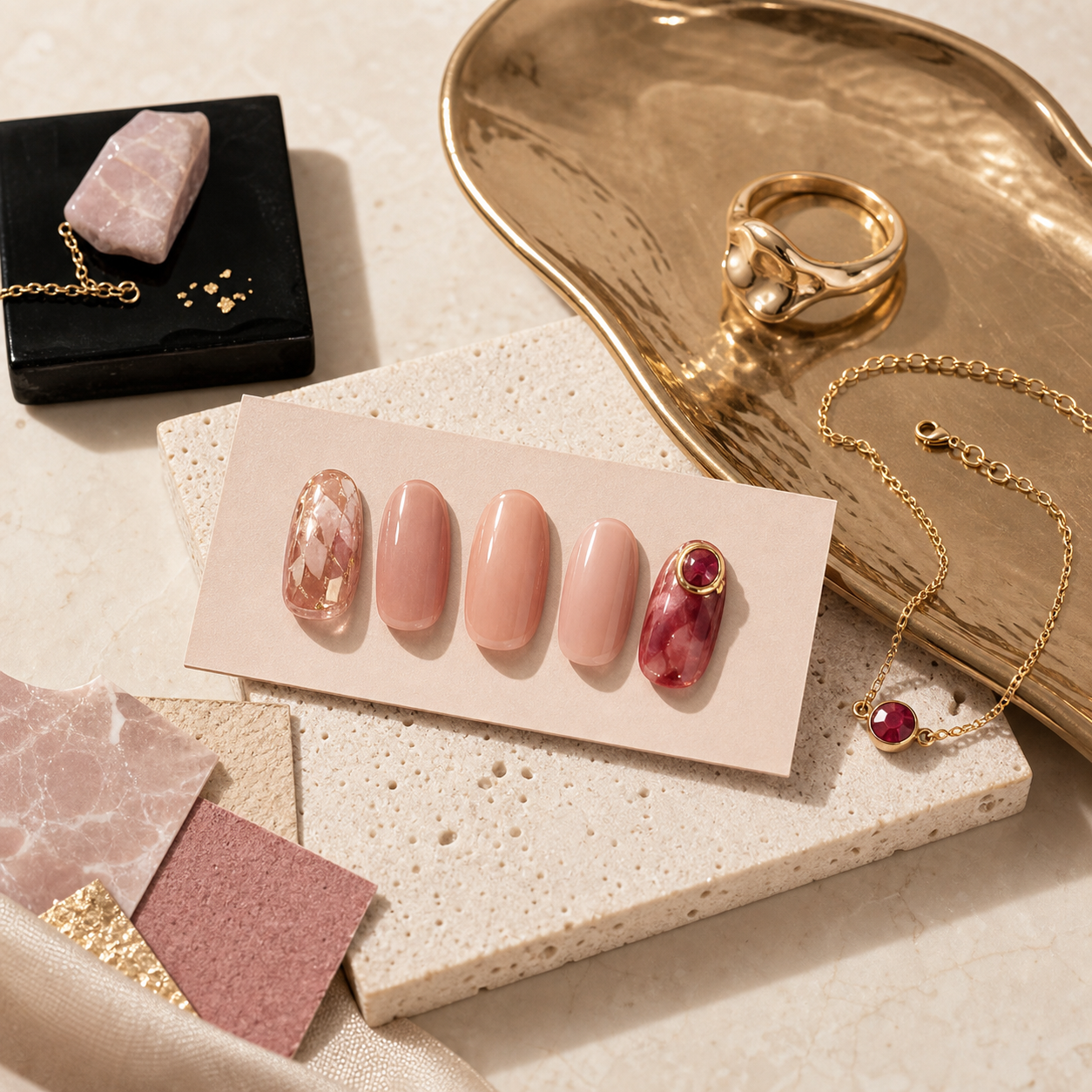
Travel style psychology begins the second a hotel drawer opens. A key card lands beside a ring, the mirror throws a different light, and the objects you packed at home suddenly look less familiar. We call this the Hotel Drawer Effect: not a science claim, not a spell, but a precise little shift in how a new room edits the self. The next move is simple—place fewer objects inside the drawer and let them speak clearly.

Travel Style Psychology Starts With the First Drawer
At home, style often moves by habit. We reach for the same ring dish, the same nail color, the same small permission slips. In a hotel, the surfaces are unfamiliar. The drawer is empty. The mirror is slightly rude. The light has no loyalty to your usual self.
That is where travel style psychology becomes useful as a lens. Research on contextual social psychology of clothing supports the idea that dress is shaped by setting and social meaning. We are not saying a room controls you. We are saying a room changes the question.
What We Mean by the Hotel Drawer Effect
The Hotel Drawer Effect is our name for a familiar moment: objects become more legible when they leave the home pile and enter a temporary room. A brooch that felt dramatic at home feels correct against a gray hotel drawer. A quiet nail surface becomes less plain beside a key card. A charm stops being an accessory and starts behaving like punctuation.
There is research often called enclothed cognition research, which proposes that clothing can interact with symbolic meaning and physical experience. There is also replication research that reminds us not to make grand promises. Good. We do not need grand promises. Travel style psychology is more interesting when it stays honest.
Travel Style Psychology and the Drawer as Gallery
A drawer is not a closet. It cannot absorb excess. It asks for selection. Place five objects inside and each one gains a border: a nail card, a ring, a brooch, a bag charm, a Room Key. Suddenly the hand is not decorated; it is installed.
Museums and cultural institutions have long treated adornment as a carrier of meaning. Fernbank Museum describes personal adornment as a way people communicate cultural and social information. In our language, jewelry is portable architecture and a wearable archive—small, private, precise.
This is why nails belong in the drawer, not just the cosmetics pouch. A nail surface can be the wall color for a ring. A reflective edge can pick up a mirror. A lacquer accent can pull a whole room into focus. If that thought interests you, our essay on press-on nails as wearable sculpture goes further.
Room Key Logic: One Object Opens the Mood
The Room Key collection is built around a quiet principle: one object can unlock a scene without naming your whole identity. It might be a brooch on a linen jacket, a charm on a black bag, or a sculptural ring beside smoky ivory nails.
In travel style psychology, this matters because new rooms already create pressure. You do not need twenty objects competing for authority. You need one object that knows what it is doing.
Choose the Room Key first in the hotel drawer. Then choose the nail surface. Then choose the metal. The outfit can follow. This is not a makeover. It’s a scene change.
Mirror Room: Why New Light Changes the Hand
Hotel mirrors are strange editors. They sharpen some colors and flatten others. They make a pearl gray nail look cooler, a gold ring warmer, a turquoise accent more awake. They are not neutral, but they are useful.
Our Mirror Room language belongs here. Reflection is not only shine; it is a second reading. In a new mirror, the hand becomes the first place to test a room before the full outfit enters it.

The Ethics of What We Bring With Us
A travel drawer is also a boundary. Not every intimate object needs to leave home. Not every story wants to pass through security, dinner, a shared bathroom, or a stranger’s compliment.
At Switchroom, we care about consent around materials and stories. We also care about care itself: cleaning, storing, repairing, and repeating. The EPA circular economy guidance frames circularity around reducing waste and reusing materials. For us, that translates into fewer objects with longer lives, not disposable drama for one photograph.
A First-Night Drawer Ritual
Before you unpack fully, open one drawer. Place five things inside: base nails, metal anchor, Room Key, vivid accent, care cloth. Close the suitcase. Look at the drawer.
Choose tomorrow’s Room Key before choosing tomorrow’s outfit. If the object feels too loud, remove the accent. If it feels too quiet, add cobalt, ruby, jade, or lacquer orange. Let the room answer back, but do not let it take over.
Where the Drawer Leads Next
If you want the practical version of this essay, build our 7-day capsule hand. If you want the packing system, use The Carry-On Mood Box. For objects currently available, browse the Switchroom shop, then read Our Ethics if you want the boundaries behind the work.
Travel style psychology does not need to be mystical to be intimate. A new room changes light, space, and attention. The hotel drawer simply makes the change visible.
FAQ
What is travel style psychology?
Travel style psychology is a lens for how clothing, objects, context, and self-presentation interact when we move through unfamiliar rooms.
Is the Hotel Drawer Effect a scientific term?
No. It is Switchroom’s editorial name for the moment a new room makes your objects feel newly visible.
Why do I dress differently in a hotel?
A hotel changes light, schedule, surfaces, and available choices. With fewer objects, decisions often become sharper.
How can I use the hotel drawer to style accessories?
Place a nail base, metal anchor, Room Key, and one vivid accent in the drawer. Choose the Room Key first, then build the hand.