Gold Vermeil vs Gold Filled: Which Feels Better for Everyday Jewelry?
Introduction – Why This “Versus” Matters
Spend just five minutes researching “gold” jewelry online and you’ll quickly run into two terms over and over: gold vermeil and gold filled.
On product pages they often sit side by side, with little more than a tiny tooltip to explain the difference. The photos all look equally shiny. The prices… not exactly.
So the real question behind gold vermeil vs gold filled isn’t just:
“Which one is better on paper?”
The more interesting version is:
“Which one feels better for everyday jewelry – on your skin, over time?”
This guide is about that feeling. I’ll break down what each material really is, how it ages over time, and how I personally choose between them when I’m picking pieces for Switchroom.
What Is Gold Vermeil vs Gold Filled?
Before we compare, we need clean definitions.
What counts as gold vermeil?
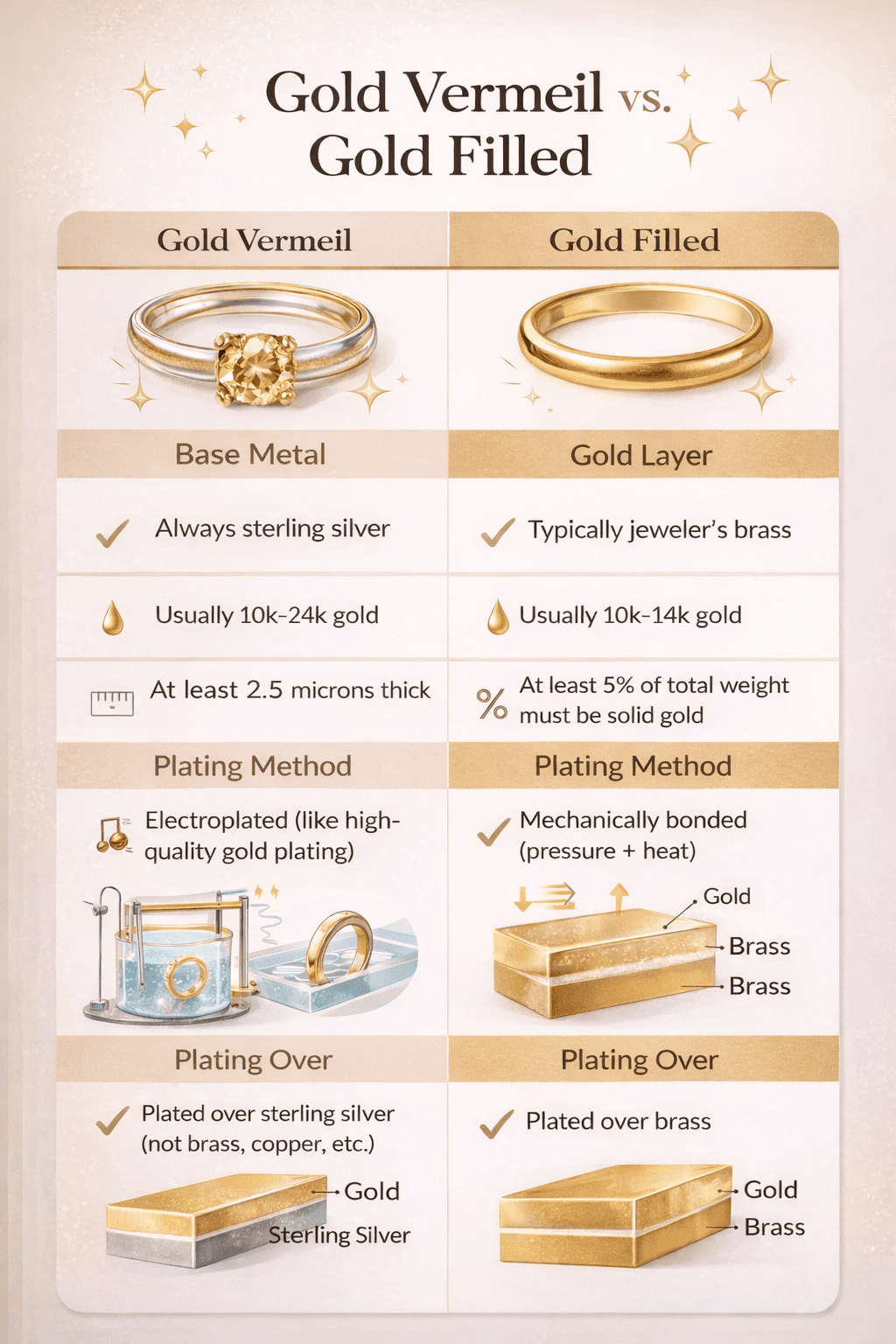
Gold vermeil (pronounced “ver-MAY”) is jewelry made from 925 sterling silver and finished with a relatively thick layer of genuine gold. In the United States, a piece typically must meet three requirements to be marketed as true gold vermeil:
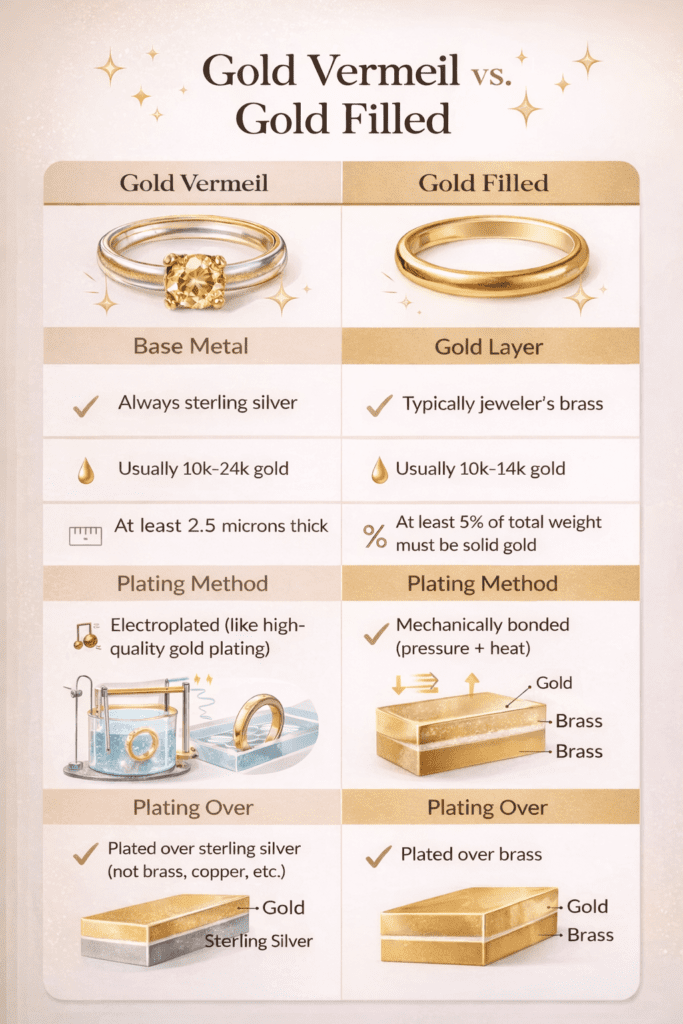
- A sterling silver base (925 silver) – at least 92.5% pure silver in the core metal.
- A gold layer of at least 10k, often 14k or 18k. Ten-karat gold means the alloy in that top layer is at least 41.7% pure gold.
- A minimum gold thickness of 2.5 microns across all significant surfaces – around five times thicker than standard fashion gold plating.
You can think of vermeil as the “high-end cousin” of normal gold plating:
- The base metal is precious (sterling silver, not a mystery alloy).
- The gold layer is significantly thicker than on typical plated pieces.
- When the plating is done well, the color and feel can be surprisingly close to solid gold.
These criteria follow U.S. jewelry guidelines and are echoed by many demi-fine brands – for example, Linjer’s explanation of what gold vermeil is and how thick the gold layer has to be.
However, it is still a surface treatment. The skin you touch is gold; underneath, the structure of the piece is sterling silver.
What counts as gold filled jewelry?
Gold filled is a different technology.
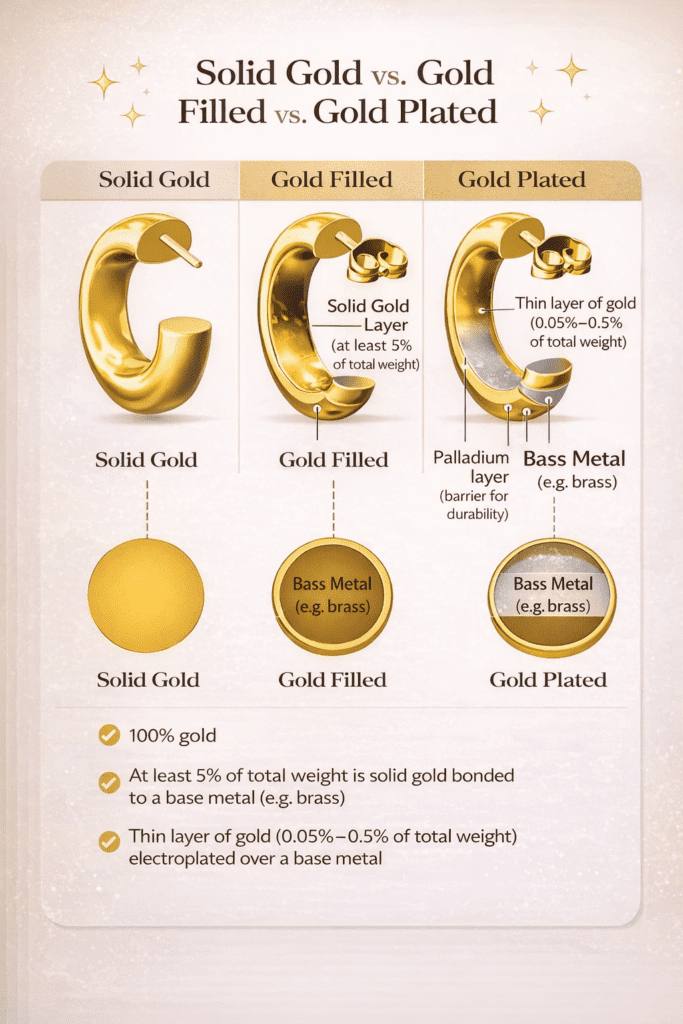
Instead of a thin bath of gold, gold filled jewelry uses a thick sheet of gold that is mechanically bonded to a base metal (often brass). The total weight of gold has to be a meaningful percentage of the piece, not just a trace.
You’ll often see stamps like “1/20 14K GF”: • 14k = the karat of the gold layer • 1/20 = at least 5% of the piece’s total weight is 14k gold
Gold-filled jewelry is also regulated in the United States; the FTC’s consumer advice on buying gold jewelry explains how quality stamps and precious-metal markings are supposed to be used for pieces made with gold, silver and platinum.
You’re still not buying solid gold, but the gold layer is much thicker than on most plating or even some vermeil. That’s why gold filled is often praised for its durability, especially for chains and everyday pieces that rub against the skin a lot.
Gold Vermeil vs Gold Filled: How Do They Actually Feel?
If you put the technical definitions aside and hold the pieces in your hands, what changes?
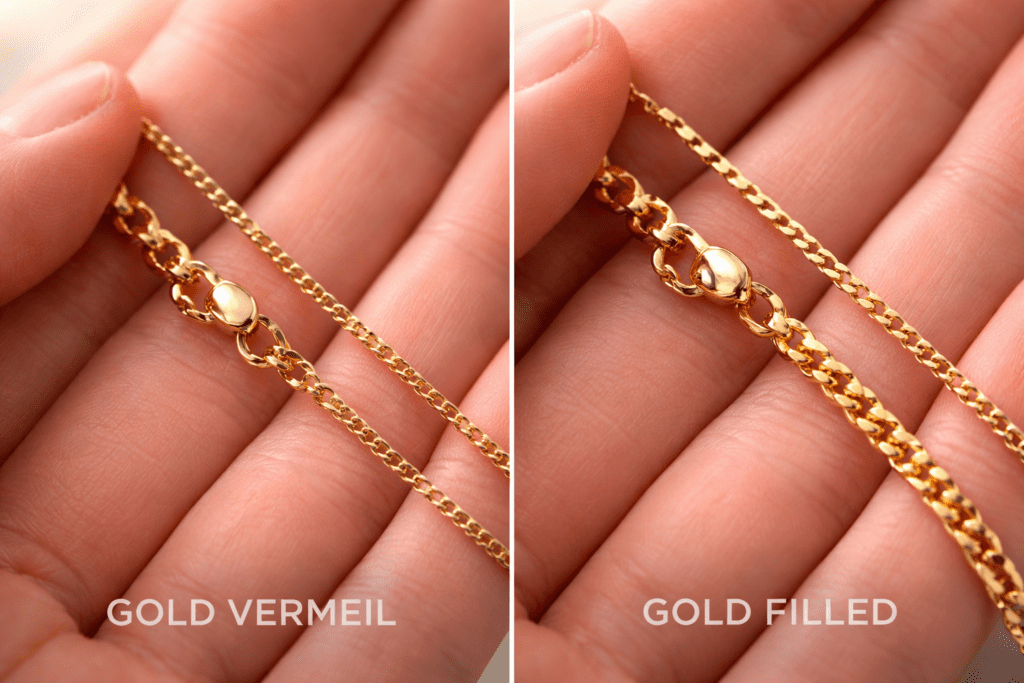
Weight, temperature and surface feel
A few tactile differences show up quickly:
Weight
• Gold filled pieces often use a brass core, which has a satisfying, slightly heavier feel.
• Gold vermeil, built on sterling silver, can feel a little lighter, though still more substantial than cheap hollow plated pieces.
Temperature
• Both silver and brass are metals that take a moment to warm up to your body.
• A well-made gold filled chain or a solid vermeil ring will feel cool at first, then slowly match your skin temperature. Plastic-heavy “gold-tone” pieces rarely behave this way.
Surface
• Good vermeil has a very refined surface. Because it is often used for delicate designs, the finish is usually smooth, with tiny details in the carving or engraving.
• Gold filled can feel a little more “workmanlike”: excellent for clean chains, bangles and simple rings; slightly less common in hyper-intricate shapes.
Neither is automatically more “luxurious” by touch. It depends on the design and execution. But the overall trend I feel in my own box of samples is: • Gold vermeil: lighter, elegant, often used for more detailed or fashion-forward silhouettes. • Gold filled: slightly weightier, practical, great for pieces you will wear hard for years.
Gold vermeil and gold filled are both durable and elegant choices for jewelry, but their tactile qualities—how they feel on your skin—are what truly make them special. Learn more about the tactile qualities of quality jewelry in our article to understand the sensory experience that makes these materials stand out.
How gold vermeil vs gold filled durability shows up in real life
This is where the everyday difference really appears.
Gold vermeil durability
• The gold layer is thick, but still a plating.
• Over time, especially on edges, you may see the sterling silver peek through – usually as a cooler tone.
• It handles occasional wear well, but constant friction (stacking with dozens of other pieces, sleeping in it every night, swimming, perfume, etc.) will eventually show.
Gold filled durability
• The gold layer is mechanically bonded and much thicker.
• On well-made pieces, the color can stay stable for years, even with frequent wear.
• It’s particularly strong for chains, hoops and bangles that experience a lot of movement.
In short: both can be durable if made properly, but gold filled usually wins the “I never take it off, I forget it’s on me” contest.
14k Gold Vermeil vs Gold Filled: Is the Karat the Same?
Sometimes you’ll see product pages saying “14k gold vermeil” and “14k gold filled” and wonder:
“If they’re both 14k, what’s the difference?”
Karat tells you the purity of the gold layer, not the construction.
14k gold vermeil
• The gold layer is 14k; the core is sterling silver.
• Great if you like the idea of “gold over silver” and want a lighter feel.
14k gold filled
• The gold layer is 14k; the core is usually brass.
• The gold portion must reach a minimum weight percentage, so the layer is thick even if the karat is the same.
“14k vs 14k” doesn’t mean the pieces have the same gold thickness—it only means the gold layer will have a similar color tone. How each item holds up over time can still be very different.
Gold Vermeil vs Gold Filled vs Gold Plated: Don’t Get Them Mixed Up
To avoid getting tricked by vague labels like “gold tone” or “gold overlay”, it helps to see all three on the same ladder.
Gold plated
• Base metal can be almost anything (often cheap alloys).
• Gold layer can be extremely thin, with no strict minimum.
• Fine for costume pieces or trends you plan to wear a few times, but not designed for longevity.
Gold vermeil
• Base metal is sterling silver.
• Gold layer is thicker and more regulated.
• A bridge between costume and fine jewelry: more precious underneath, still accessible in price.
Gold filled
• Base metal is usually brass.
• Gold layer is mechanically bonded and thick enough to count as a significant percentage of the piece.
• A workhorse option: not pure gold, but built for long wear.
When someone rattles off “gold vermeil vs. gold plated vs. gold filled” in the same breath, there’s usually a bigger question underneath it all: How much real gold, skilled labor, and time actually went into this piece?
If a brand won’t clearly explain that, I take it as a red flag—and I get cautious fast.
For a more traditional, industry-focused overview of gold-plated, gold-filled, and vermeil jewelry, see Jewelers of America’s gold jewelry guide. It breaks down how each option compares with solid karat gold in terms of value and durability.
Which Is Better: Gold Filled vs Vermeil for Everyday Wear?
Now we can finally answer the “which is better” part – and the truth is, it depends on your priorities.
When to choose gold vermeil
Gold vermeil is a beautiful choice if:
• You love detailed or sculptural designs that benefit from a silver core.
• You wear pieces in rotation, not the same ring 24/7.
• You appreciate the idea of “silver + gold” together – a slightly softer, more luminous gold tone.
• You want something that feels more precious than ordinary plated jewelry, but you’re not ready for solid gold or heavy gold filled yet.
For Switchroom, I see gold vermeil working well in: • experimental shapes • limited-run designs in the “middle” tier of our boxes • pieces where expression and silhouette matter as much as durability
When to choose gold filled
Gold-filled truly shines—literally and figuratively—when:
- You want everyday staples (chains, hoops, stacking rings) you can put on and forget.
- You’re sensitive to quick fading or that “brassy” look on your skin.
- You love jewelry that feels substantial, with a little weight and presence.
- You’re investing in a piece you’ll wear for years, not just a season.
Gold Vermeil is a high-quality jewelry material made with sterling silver and a thick layer of real gold. Similarly, Gold Filled uses a mechanically bonded layer of gold with a much thicker gold content than gold plating. Both offer durability and beauty, but their unique qualities depend on the craftsmanship and material choices. Explore the Materials and Craft Story of Switchroom to understand how we apply these materials in our jewelry pieces and what makes them special.
What I would pick for Switchroom boxes
If I had to summarise for Box planning:
• Entry / playful tiers: high-quality plating and selected gold vermeil accents, where concept and mood are the stars.
• Mid tiers: more gold vermeil, especially on rings and pendants that carry personality.
• High tiers / limited drops: carefully chosen gold filled pieces (and eventually solid gold for certain designs) that can be worn daily without babying.
So in a simple sentence:
For everyday, don’t-think-about-it wear, I lean slightly toward gold filled. For expressive, art-driven shapes with a precious core, gold vermeil has its own magic.
If you’d like a neutral, consumer-protection style comparison, jewelry insurer Jewelers Mutual has a clear breakdown of vermeil vs gold-filled vs gold-plated jewelry that lines up closely with the way I think about longevity and everyday wear.
You’ll see this logic show up in our curated Boxes – especially in the higher tiers of the Switchroom Box.
Explore how the Boxes work →
How to Care for Gold Vermeil and Gold Filled Jewelry
Whichever you choose, a few habits will dramatically extend the life of your pieces:
Take them off for heavy friction.
Gym equipment, metal handbag chains and harsh zippers are the natural enemies of any surface finish.
Keep them away from chemicals.
Perfume, hairspray, self-tanner and cleaning agents can dull the gold layer. Put jewelry on last, take it off first.
Store them individually.
Letting vermeil and gold filled pieces scratch against each other in a pile will age them faster than your skin ever could.
Clean gently.
Use a soft cloth and mild soap if needed. Skip aggressive polishing compounds on vermeil, because they can eat into the gold layer. Gold filled is more forgiving, but still doesn’t need harsh treatment.
Good care won’t turn vermeil into solid gold, but it will make both materials behave much more like fine jewelry than fast fashion.
Closing Thoughts: Feel First, Read the Label Second
At the end of the day, the debate about gold vermeil vs gold filled is not only technical. It’s about how honest a piece feels.
My rule of thumb when I’m designing or sourcing for Switchroom is:
1. First, hold it.
• Does it have weight?
• Does the finish feel considered rather than sprayed on?
2. Then, read the label.
• Is the brand clear about “gold vermeil”, “gold filled”, “gold plated”, and which base metals they use?
• Or is everything hidden behind vague terms like “premium gold tone”?
3. Finally, imagine it a year from now
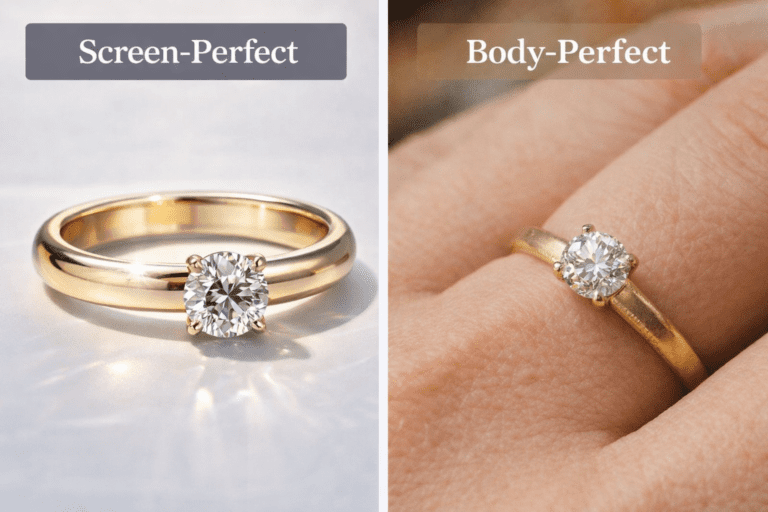
• Would you still want this on your body after a year of real life, or is it just for a photograph?
Once a piece makes it through those three steps, the question “Which is better—gold vermeil or gold-filled?” feels a lot less stressful. Either can be a great choice, as long as it’s well made and priced transparently.