Bio Jewelry: When the Body Becomes a Keepsake — Ethics, Aesthetics, and Gen Z Realness
Somewhere between a love letter and a lab label, a new kind of jewelry is having a moment. Not the “new season, new sparkle” kind. The “I turned a life event into something you can wear against your pulse” kind. If that sounds a little intense—good. Bio jewelry (often called keepsake jewelry) is intense in the way modern life is intense: overly documented, emotionally underprocessed, and deeply hungry for objects that feel real.
In late 2025, rapper Cardi B made headlines for commemorating the birth of her fourth child by casting a piece of the baby’s umbilical cord into a heart-shaped, gold-chrome keepsake. The internet’s reaction ranged from “that’s beautiful” to “please, no more close-ups.” The point isn’t whether you’d personally wear it. The point is that the story landed instantly because it sits at the intersection of intimacy, spectacle, and receipts—the holy trinity of Gen Z attention.
What is bio jewelry, exactly?
Let’s de-sensationalize it. Bio-jewelry is jewelry that incorporates (or conceptually references) human biological material—hair, breast milk, umbilical cord remnants, ashes, or other bodily traces—usually preserved inside resin, glass, metal, or another stable medium. Think: a locket for the post-digital age. A reliquary, but with better lighting.
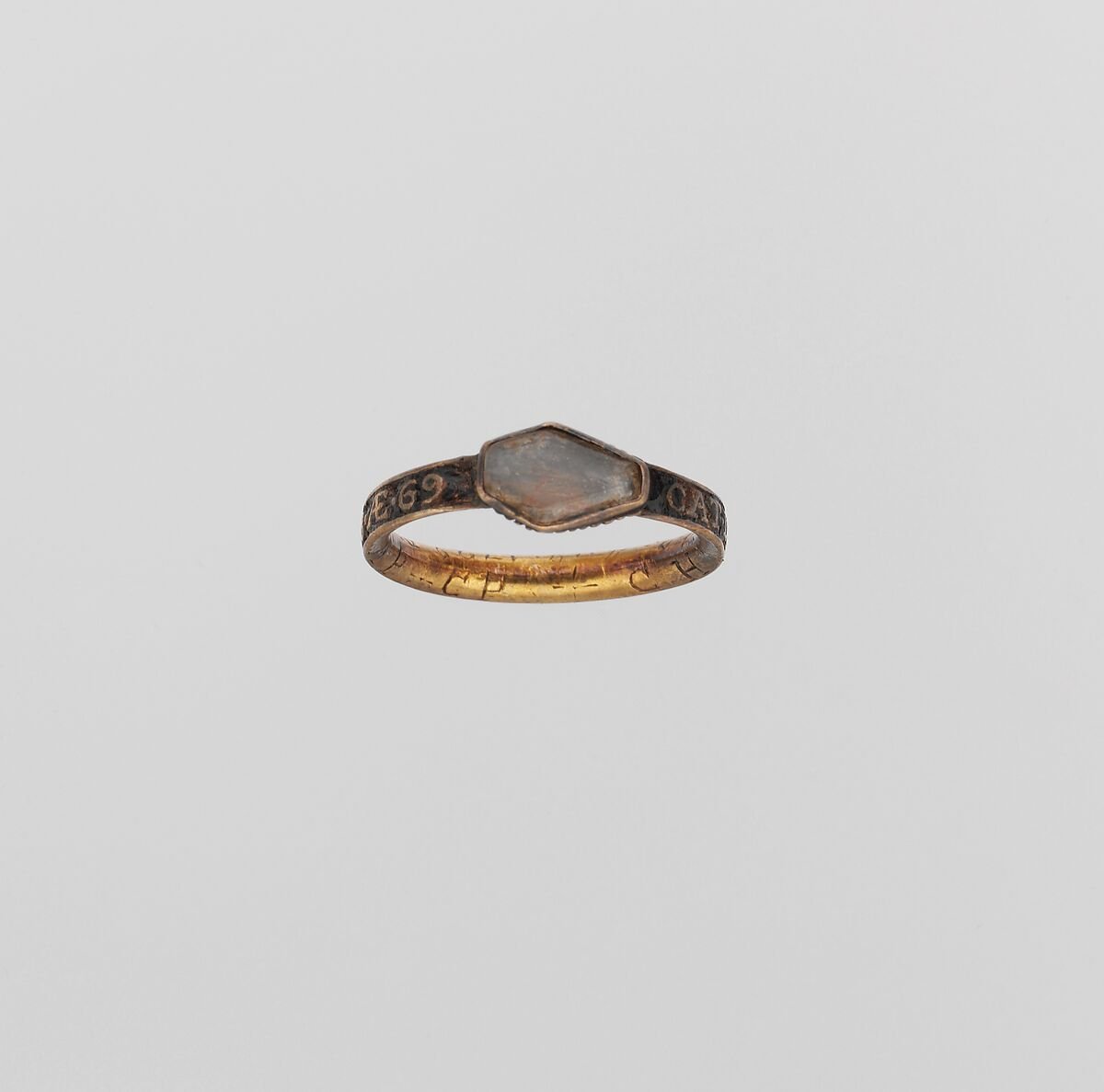
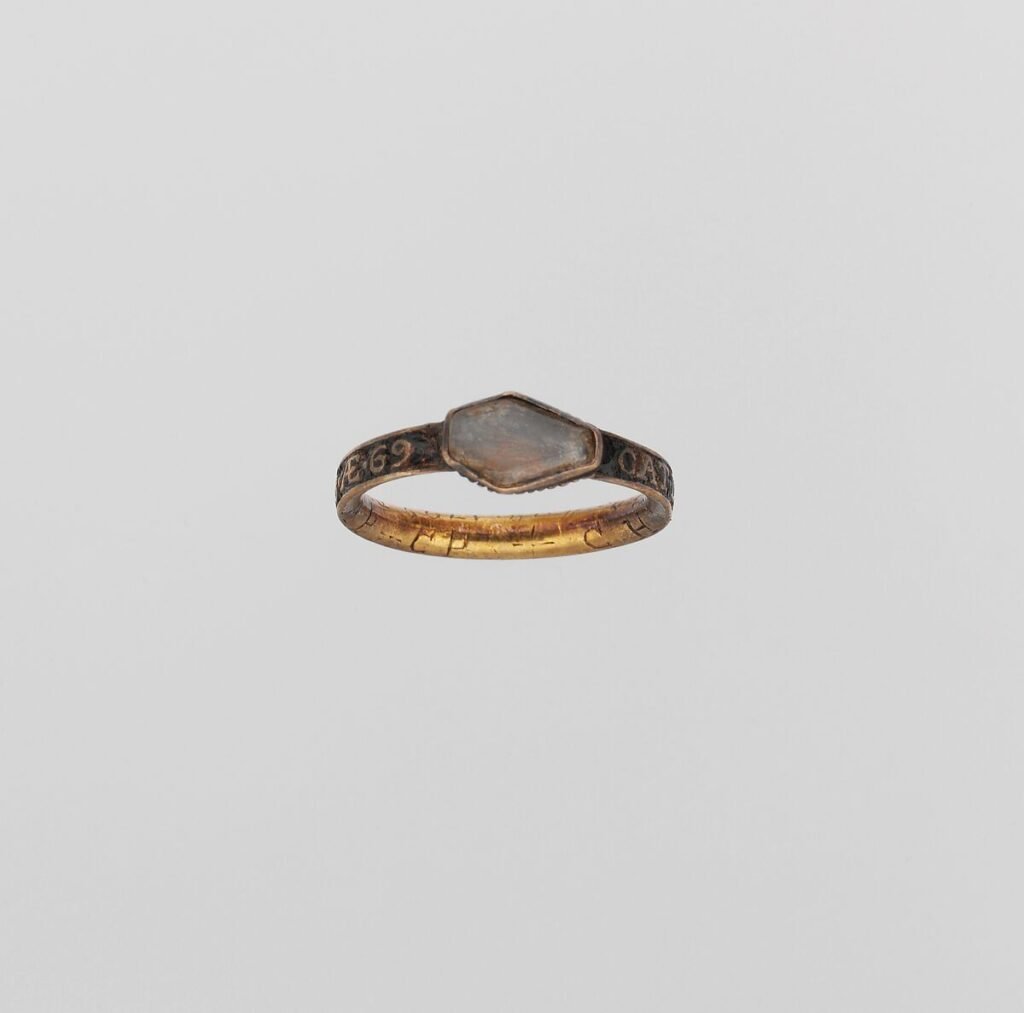
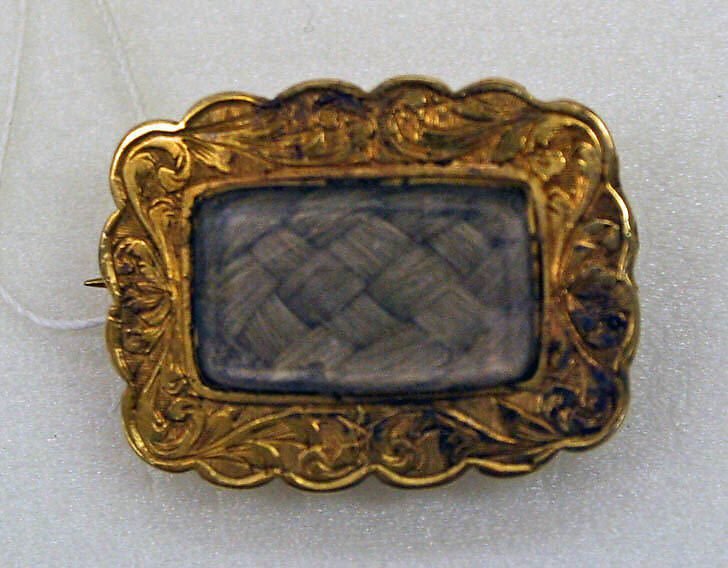
This isn’t a novelty invented by TikTok. The Victorians famously made mourning jewelry from hair, weaving it into intricate patterns or sealing it under glass as a private testament to grief. The Metropolitan Museum of Art has multiple mourning rings that list hair as part of their materials—gold, enamel, glass, and hair—making the “body as archive” impulse not a trend but a tradition with excellent provenance.
So why does it feel newly urgent now? Because the modern version isn’t only about grief. It’s about birth, healing, surgery, identity, and the desire to turn a moment into an object that won’t disappear when the cloud does.
Why now: the Gen Z logic of “intimate objects”
Gen Z gets accused of being “online,” as if the internet is a personality flaw. But the deeper story is that Gen Z is negotiating a world where identity is performed in public, and meaning is constantly questioned. Bio-jewelry works because it offers a paradox Gen Z is fluent in: private material, public narrative.
1) It’s a form of authenticity you can’t fake (at least not elegantly)
Luxury has always been about proof—hallmarks, certificates, diamond dossiers. Gen Z’s version of proof is broader: show me the process, show me the ethics, show me the boundaries. A keepsake piece is “real” in a visceral way, but it also demands real transparency: how was it handled, encapsulated, and protected? In a culture skeptical of marketing sheen, bio-jewelry can feel like the opposite of hype: a kind of anti-advertising, because the story is the product.
2) It turns life events into wearable narrative
Birth, illness, surgery, loss—these are not just “chapters,” they’re status updates in the emotional sense. The keepsake isn’t merely a souvenir; it’s a narrative device. A quiet signal: this happened. It’s also a counterweight to how quickly digital memory scrolls away.
3) It matches the new aesthetics of intimacy: clean, minimal, and slightly uncanny
Bio-jewelry doesn’t have to look like a science experiment. The most compelling pieces lean into editorial restraint: translucent forms, subtle inclusions, monochrome palettes, negative space. A keepsake that looks like a piece of modern sculpture reads as taste. A keepsake that reads as shock content reads as… shock content. And Gen Z can tell the difference.
Gen Z’s “receipts” culture: why transparency beats mystique.
The keepsake economy: from “sentimental” to “service industry”
Bio-jewelry sits inside a larger market: the keepsake economy. Companies now offer services that transform post-birth tissues into mementos—cord, placenta prints, encapsulated keepsakes—often marketed as empowerment and remembrance. Cardi B’s piece, created by a keepsake company that dehydrates and shapes the cord before coating it, became a lightning rod precisely because it made an industrial process feel intimate, and an intimate material feel industrial.
That tension—between tenderness and technique—is where most of the modern ethics live. Which brings us to the part most people skip until something goes wrong: safety, handling, and the boundary between “beautiful object” and “biohazard anxiety.”
Safety first: the unsexy details that make bio-jewelry credible
Bio-jewelry can be meaningful. It can also be mishandled. If you want to write about this with authority (or design within it), you need a clear, calm framework that borrows from public-health thinking without turning your blog into a compliance manual.
Handling biological material: why “pathological waste” is a clue, not a vibe
The World Health Organization’s healthcare waste guidance categorizes pathological waste as including human tissues, organs or fluids, body parts, and unused blood products. In hospitals, these materials are handled with structured safeguards for a reason: they can carry infectious risk when improperly managed. That doesn’t mean a dried lock of hair is the same as clinical waste. It means the category reminds us that biological material isn’t neutral. You can treat it as art, but you can’t treat it as sterile by default. A responsible maker builds protocols that reduce risk and respects the fact that different materials require different handling.
In the U.S., CDC guidance on regulated medical waste focuses on safe containment and handling, and the U.S. Environmental Protection Agency notes that medical waste is primarily regulated at the state level. Translation for creators and consumers: rules vary, and “it’s just a keepsake” doesn’t erase the need for responsible handling—especially when fluids or tissues are involved.
Resin and epoxy: the glamorous finish that demands unglamorous caution
Many keepsakes are sealed in resin or epoxy. It photographs beautifully; it also comes with real exposure considerations during production. NIOSH notes that epoxies and resins can pose reproductive health concerns and that workers should limit exposure through ventilation and protective measures. Separate NIOSH reports and evaluations have also documented skin sensitization and allergic contact dermatitis associated with epoxy resin exposure in occupational settings. None of this is meant to scare you; it’s meant to professionalize the conversation. The chicest thing a maker can say is: “Here’s our process, here’s why it’s safe, and here’s what we don’t do.”
Resin keepsake jewelry safety: what to ask, what to avoid, what to document.
Hygiene and cleaning: why your readers will trust you more if you include this
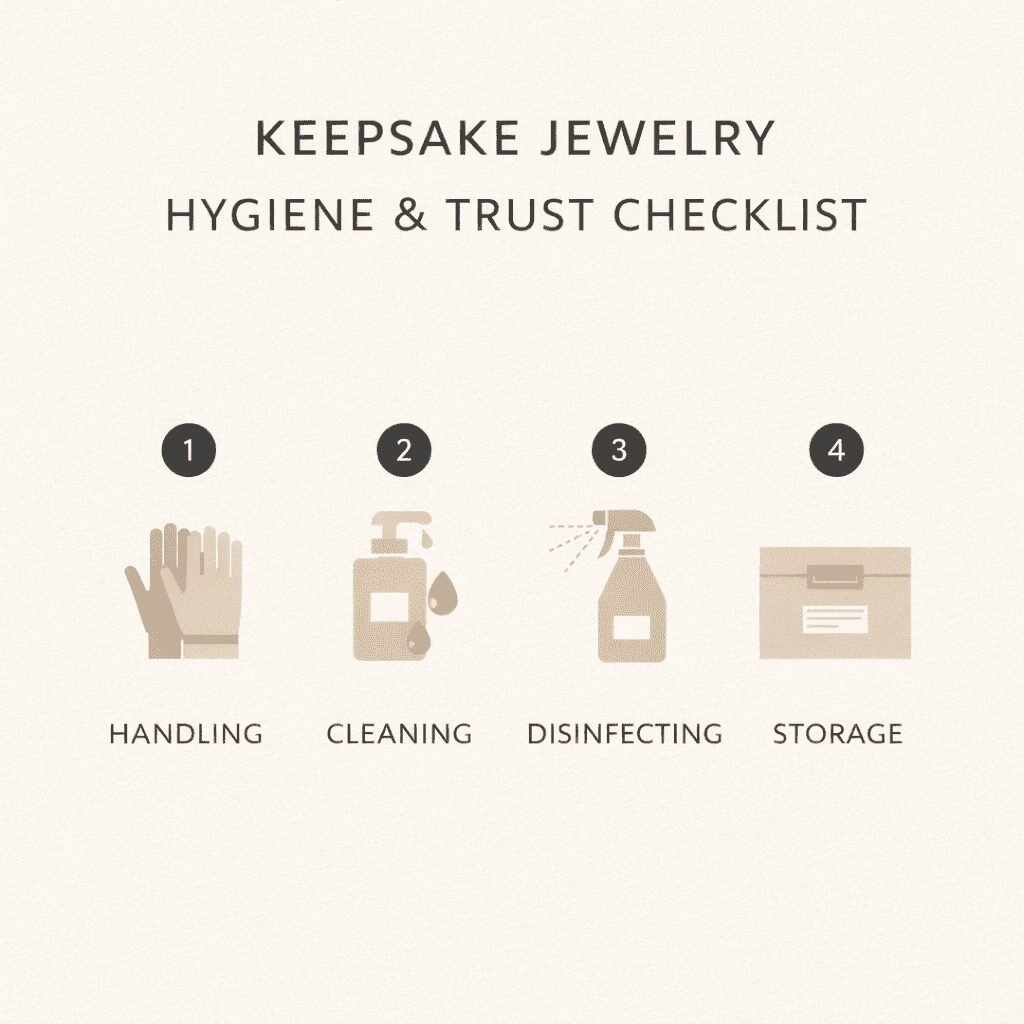
If a material has been exposed to blood or bodily fluids, public health guidance emphasizes immediate containment, cleaning, and disinfection with appropriate PPE. The CDC’s environmental cleaning procedures for blood/body fluid spills recommend wiping up promptly, cleaning thoroughly with detergent, and then disinfecting using an appropriate disinfectant. Again: you’re not a hospital. But your readers live in a world where “clean” is both a health practice and a cultural language. When you acknowledge that—and offer a simple, evidence-informed checklist—you make the conversation safer and more sophisticated.
There’s also a practical reason: jewelry itself can raise hygiene questions. Recent research has examined the implications of healthcare professionals wearing rings and other jewelry, including concerns about bacterial accumulation and biosafety. The point isn’t to moralize. It’s to show that “jewelry + microbes” is a real line of inquiry, so the bio-jewelry conversation should be more careful, not more squeamish.
The ethics: where the real “boundary discourse” begins
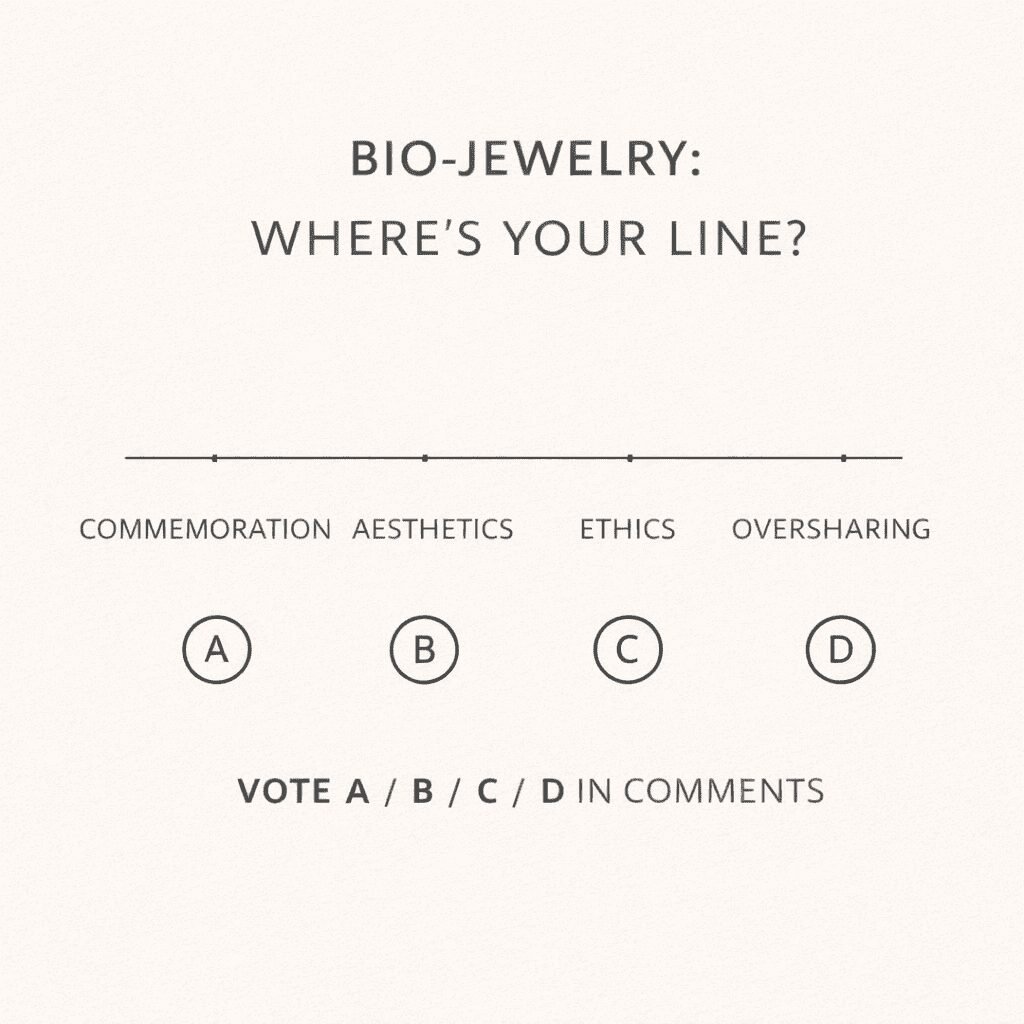
Bio-jewelry becomes controversial at the exact moment it stops being private. A keepsake in a drawer is one thing. A keepsake in a post is another. And a keepsake involving someone else’s body—especially a child’s—demands a higher standard of care.
Consent chains: a simple framework you can reuse
If you want to build trust (and not just traffic), introduce a consent-chain framework:
- Whose material is it? (You, a partner, a child, a deceased relative?)
- Who can reasonably consent? (Adults can; minors can’t fully.)
- What’s the visibility level? (Private wear vs. public content.)
- What’s the permanence? (Can it be removed, changed, or destroyed later?)
- What’s the privacy footprint? (Is it identifiable? Does it invite unwanted attention?)
When you frame it this way, bio-jewelry stops being a debate about taste and becomes a debate about responsibility. That’s a more interesting debate, and it’s one Gen Z is ready to have.
Internal read: Link to your ethics cluster post here: Keepsake jewelry ethics: consent, privacy, and where the line actually is.
Two types of “too far” (and how to avoid both)
Most backlash falls into one of two buckets:
- Too far in exposure: the process is shown in a way that reads as gratuitous or nonconsensual spectacle.
- Too far in mystique: the maker refuses to explain anything (“energy,” “ritual,” “trust me”), which triggers scam alarms.
The sweet spot is surprisingly editorial: elegant restraint + radical transparency. Show design and finish; describe handling and safety; keep the intimate material conceptually present without making it content bait.
A brief history lesson (because chic doesn’t appear out of nowhere)
When people say “this is new,” they usually mean “this is newly visible.” Victorian hair jewelry is the clearest precedent: intricate, coded, deeply sentimental, and often only meaningful to the wearer. National Geographic describes how Victorians wove hair into wreaths and jewelry as part of mourning practices—an aestheticization of grief that feels startlingly modern in its emotional directness.
The Met’s mourning rings are a museum-grade reminder that hair has long functioned as a durable, intimate material—one that doesn’t decay the way flowers do and doesn’t disappear the way digital photos can. In other words, the Victorians understood something we are relearning: hair is a time capsule.
Design notes: how to make bio-jewelry feel editorial, not exploitative
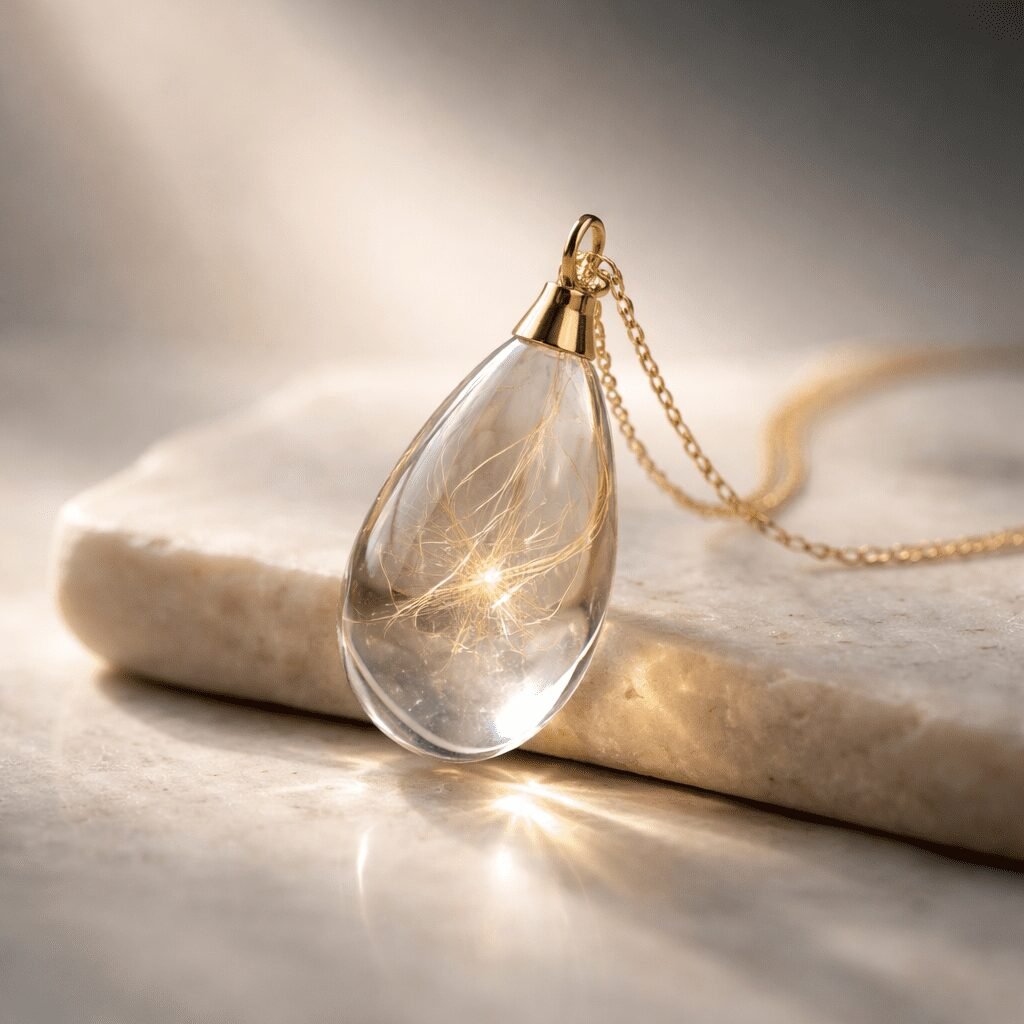
If you’re building a brand (or even just a personal aesthetic) around keepsakes, the question isn’t “how weird can we go?” It’s “how do we translate intimacy into form without violating it?” A few principles help:
1) Treat the material like a whisper, not a headline
Let the piece read as design first. The story can be present, but it doesn’t need to scream. Minimal settings, clean silhouettes, and soft translucency keep the object in the realm of jewelry, not novelty.
2) Use language that respects boundaries
Replace “gross” with “sensitive.” Replace “body part” with “trace” when appropriate. Be specific when specificity matters (safety, handling), and poetic when poetry protects dignity.
3) Provide documentation, not drama
Gen Z loves process—when it’s respectful. Offer a checklist of what you do: sanitized tools, sealed packaging, clear timelines, optional privacy. Your content becomes a trust artifact.
The Keepsake Standard: 12 questions to ask before you commission (or sell) bio jewelry
- What exactly is being preserved, and in what state (dry/encapsulated/processed)?
- What handling precautions are used during preparation (gloves, surface cleaning, ventilation)?
- What medium is used (resin/epoxy/glass/metal) and what are its limitations (yellowing, brittleness, heat)?
- What exposure controls are used during resin/epoxy work (ventilation, PPE), and what safety guidance informs them?
- How is cross-contamination prevented between orders?
- How is the material stored before sealing (time, temperature, container type)?
- What cleaning/disinfection steps are used for work surfaces and tools?
- What is the return/refund policy, and how does it handle “intimate materials”?
- How is privacy protected (no identifying labels; optional anonymous packaging; no filming without consent)?
- What does “normal variation” look like (color, texture), and how will you communicate it?
- How should the customer care for the piece (heat, chemicals, water, storage)?
- Where should customers check local regulations if shipping biological material is involved?
Regulation & shipping: the part you can’t aestheticize away
If your keepsake involves tissues or fluids (not just hair), you should acknowledge that healthcare waste frameworks treat similar materials as potentially regulated, and that U.S. regulation often happens at the state level. The EPA explicitly notes that medical waste is primarily regulated by state environmental and health departments. This matters for creators who accept mail-in materials and for customers who assume everything is shippable by default.
Where Switchroom (or any modern brand) can stand: a chic, strict, kind stance
If your brand has a “portable art” sensibility—objects that carry meaning without screaming—it can adopt a stance that feels both elegant and protective:
- We do not fetishize intimacy. We translate it into design.
- We don’t do mystique-by-default. We do transparency-by-design.
- We don’t film sensitive processes for engagement. We document protocols for trust.
- We treat consent as the real luxury.
This stance is not moralizing. It’s branding with a backbone.
Internal read: Link to your brand ethics page here: Our ethics: how we handle intimacy, materials, and boundaries.
Conclusion: not “gross”—just honest
Bio-jewelry is the natural offspring of two very human impulses: to hold on, and to make meaning. The modern twist is that we’re doing it in public, and we’re doing it in an economy that monetizes attention. That’s why it feels fraught.
But it’s also why it matters. In a world where so much is simulated, a keepsake is stubbornly real. The question isn’t whether it’s weird. The question is whether it’s done with care: care for bodies, for boundaries, for the people whose stories are inside the object—even if no one else can see them.
Recommended reading & references
- People: Cardi B casts her umbilical cord into a gold-chrome keepsake
- The Met: Mourning ring (gold, jet, glass, hair), 1770–1830
- The Met: Mourning ring (gold, enamel, glass, hair), 1733
- National Geographic: Victorian-era hair jewelry
- WHO: Health-care waste (pathological waste classification)
- CDC: Regulated medical waste (environmental control)
- U.S. EPA: Medical waste overview (primarily state-regulated)
- CDC: Environmental cleaning procedures for blood/body fluid spills
- NIOSH: About epoxies/resins and reproductive health
- Peer-reviewed (PMC): Jewelry use among healthcare professionals and biosafety